
Asaduddin Owaisi Critiques Pakistan's Army Chief in Riyadh Speech
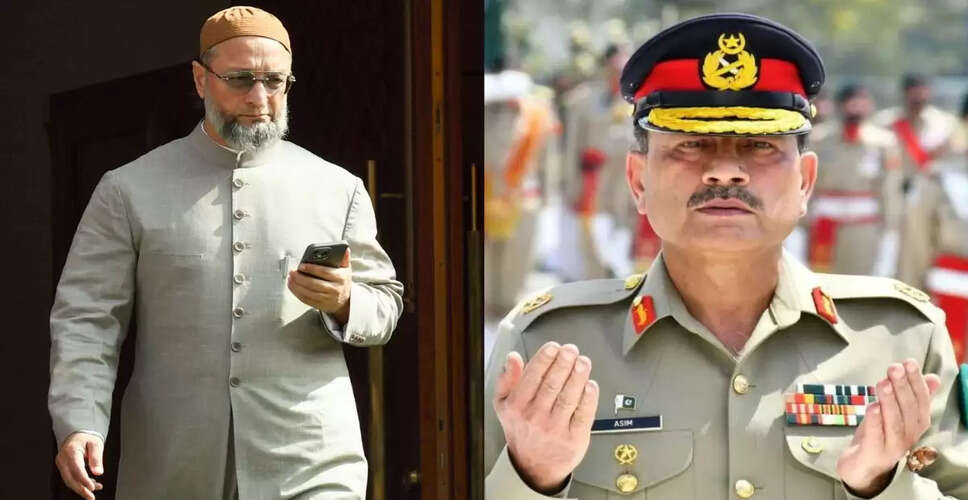
Owaisi's Remarks on Pakistani Army Chief
Asaduddin Owaisi, a Member of Parliament from the All India Majlis-e-Ittehadul Muslimeen (AIMIM), has made headlines with his critical comments directed at Pakistan's newly appointed Army Chief, Field Marshal Asim Munir. Speaking in Riyadh as part of an all-party delegation led by BJP MP Baijayant Panda, Owaisi highlighted Munir's recent promotion and his association with a person identified as a terrorist by the United States.
During his address, Owaisi emphasized the necessity of reinstating Pakistan on the Financial Action Task Force (FATF) grey list to effectively manage the financing of terrorism. He pointed out that when Munir was elevated to Field Marshal, he was photographed with Mohammad Ehsan, a US-designated terrorist, which raises serious concerns about Pakistan's commitment to combating terrorism.
Call for Action Against Terror Financing
Owaisi reiterated the importance of controlling terror funding, urging that Pakistan's return to the FATF grey list is crucial for addressing the financial support of terrorist organizations. He stated, "When this person (Asim Munir) was made a Field Marshal in Pakistan, a US-designated terrorist called Mohammad Ehsan was sitting right beside him. There are photographs of their handshake, which is alarming."
He further asserted that there is substantial evidence linking Pakistan to the recent Pahalgam terror attack, claiming that terrorist groups are thriving and receiving training in Pakistan, with the intent to destabilize India and incite communal riots.
Pakistan's Response to Terrorism Evidence
Owaisi also addressed the issue of Pakistan's inaction following the Mumbai attacks, stating that Indian investigators had provided ample evidence to Pakistan, but no significant steps were taken until international pressure mounted. He criticized Pakistan's contradictory statements regarding Sajid Mir, a key suspect in the attacks.
He recounted, "After the 26/11 attacks, Indian investigators presented all the evidence to Pakistan, yet there was no progress. It was only when Pakistan faced pressure from the FATF that they began to act. Initially, they claimed Sajid Mir was dead, but later they acknowledged he was alive. This inconsistency raises serious questions about their commitment to justice."