
Arvind Kejriwal's Non-Appearance in Court Sparks Debate on Justice and Politics
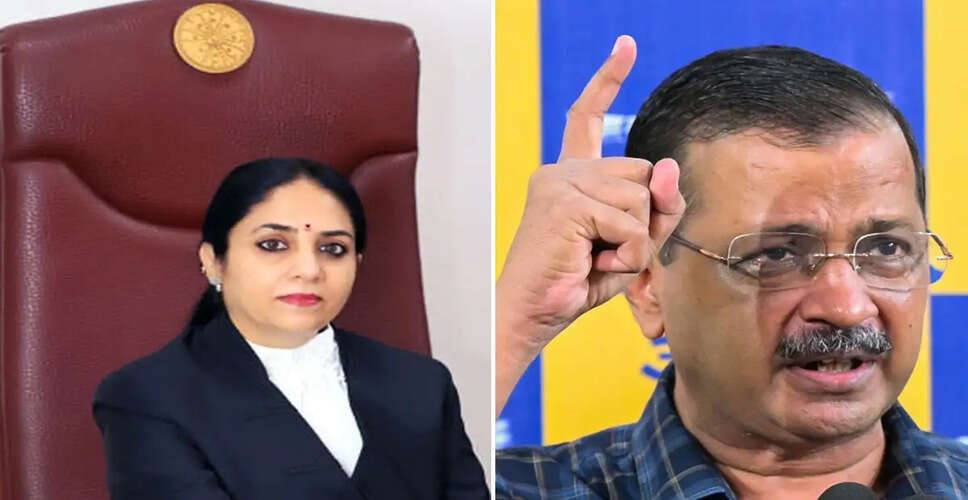

Kejriwal's Bold Stance on Judicial Proceedings
A fresh debate has emerged in political and judicial circles following a letter from Arvind Kejriwal, the national convenor of the Aam Aadmi Party, to Justice Swarna Kanta Sharma of the Delhi High Court. In his correspondence, Kejriwal made it clear that he would not appear in court, either personally or through a lawyer. He expressed his belief that the hope for justice had faded, prompting him to choose the path of Mahatma Gandhi's satyagraha. This decision, he stated, was guided by his inner conscience. Furthermore, he reserved the right to appeal to the Supreme Court against the judge's orders. This case is linked to the Delhi Excise Policy, where the CBI has leveled allegations against him.
Kejriwal Reflects on His Choices
In a video message, Kejriwal described himself as being at a pivotal moment in life, faced with the choice between a difficult and an easy path. He emphasized that sometimes, the distinction between right and wrong is more significant than winning or losing. He dismissed the allegations against him as false, asserting that he had been imprisoned and a democratically elected government had been toppled, yet ultimately, truth prevailed. He noted that on February 27, the court had declared him completely innocent and questioned the investigative agency's methods.
Concerns Over Judicial Impartiality
However, he acknowledged that the path of truth is rarely straightforward. Following the lower court's ruling, the investigative agency challenged it in the High Court, bringing the case before Justice Swarna Kanta Sharma. This led Kejriwal to doubt whether he could receive fair justice. He cited two main reasons for his decision not to appear before Justice Sharma: the judge's connections to the ideology behind the allegations against him and the fact that both of the judge's children are part of the government lawyers' panel, raising concerns about a potential conflict of interest.
Kejriwal's Intentions Clarified
Despite his stance, Kejriwal clarified that his intention was not to disrespect the judiciary but to strengthen public trust. He expressed complete faith in the judicial system, which had granted him bail and later declared him innocent. He emphasized a fundamental principle of justice: it should not only occur but also be perceived as occurring. Based on this principle, he had requested the judge to recuse herself from the case, a request that was denied. Consequently, he decided to adopt the path of satyagraha and stated he would not appear in court, while still exercising his legal rights.
Judicial Response to Kejriwal's Claims
Justice Swarna Kanta Sharma had previously dismissed Kejriwal's petition, stating that one cannot withdraw based solely on fears or assumptions. She warned that such attempts could undermine public confidence in the judiciary. She characterized the allegations as based on speculation and conjecture, failing to meet legal standards. Regarding the claims about her children being on the government panel, she noted that this was merely an accusation from Kejriwal. She further stated that if judges had to recuse themselves based on such claims, courts would struggle to hear any case involving the government. She added that just as politicians' children enter politics, judges' children can also pursue careers in law without it being inappropriate.
Implications for Politics and Judiciary
This entire episode has ignited a new discussion about the relationship between politics and the judiciary. Kejriwal's actions raise significant questions. Choosing the path of satyagraha has historically been a peaceful resistance against injustice. However, does refusing to appear in court while accusing a judge align with that spirit? If every accused party questions a judge's impartiality and refuses to appear, how will the judicial system function? Such a situation could erode the credibility of the judiciary, which is fundamentally based on delivering fair judgments according to law and procedure. If processes are rejected based on personal fears, it could set a dangerous precedent.
The Essence of Satyagraha
Satyagraha signifies opposing injustice through self-restraint and moral strength, not by putting institutions on trial. Such actions not only contradict the core spirit of satyagraha but could also be perceived as an attempt to discredit the judicial system. Therefore, it is crucial for political leaders to understand the broader implications of their actions and avoid establishing a precedent that could challenge the judicial system in the future.