
Arvind Kejriwal Challenges CBI's Allegations in Delhi High Court
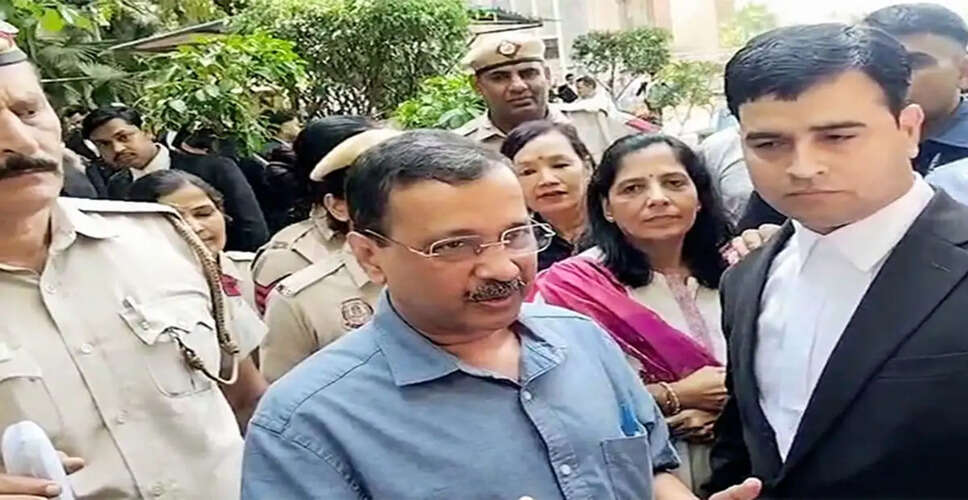

Kejriwal Appears in Court Over CBI's Alcohol Policy Case
Arvind Kejriwal, the national convenor of the Aam Aadmi Party (AAP), attended a hearing at the Delhi High Court regarding a petition filed by the Central Bureau of Investigation (CBI) related to the alcohol policy. He represented himself in court, where Solicitor General Tushar Mehta and Additional Solicitor General S.V. Raju were also present. Kejriwal began his address by expressing his respect for the judge and the court. The bench responded by stating that respect is mutual and urged him to focus on the case at hand. He then stated, 'I stand here as an accused, although the lower court has already acquitted me.' The bench instructed him to specifically present his arguments regarding the request to recuse the judge from the case.
Kejriwal Raises Objections to Orders Issued in Absence of Defendants
Kejriwal contended that on March 9, the High Court issued an order on the CBI's petition challenging the lower court's ruling without the presence of the defendants. He argued that the court ruled in favor of the CBI in the absence of any defendants and noted that the lower court's order appeared to have prima facie flaws. He pointed out that the case file consists of over 40,000 pages, and the court issued its order without reviewing the material. He emphasized that the law is straightforward, asserting that the issue is not whether the judge is biased, but whether there is a reasonable apprehension of bias from the plaintiff's perspective. Kejriwal mentioned that he would present ten reasons to clarify why he believes such apprehension exists.
Kejriwal Cites Supreme Court Rulings
During the proceedings, Kejriwal referenced several Supreme Court decisions that define what constitutes reasonable apprehension. Previously, during an earlier hearing, Solicitor General Tushar Mehta had strongly opposed Kejriwal's petition, stating that the court is not a stage for theatrics and labeled the allegations as baseless and defamatory. He also noted that seven other acquitted defendants had filed similar petitions requesting the judge's recusal. Justice Sharma indicated that if more petitions are submitted, they could be considered together for a unified decision.
Trial Court Acquittal and Subsequent High Court Proceedings
On February 27, the trial court acquitted Kejriwal, Manish Sisodia, and 21 others, criticizing the CBI and declaring that the case was not worthy of judicial scrutiny, with the evidence deemed entirely unreliable. On March 9, Justice Sharma issued notices to all 23 defendants regarding the CBI's petition, noting that some comments made by the lower court during the charge determination appeared to be erroneous.