
Arundhati Roy Warns of 'Democratic Fascism' in Delimitation Bill Critique
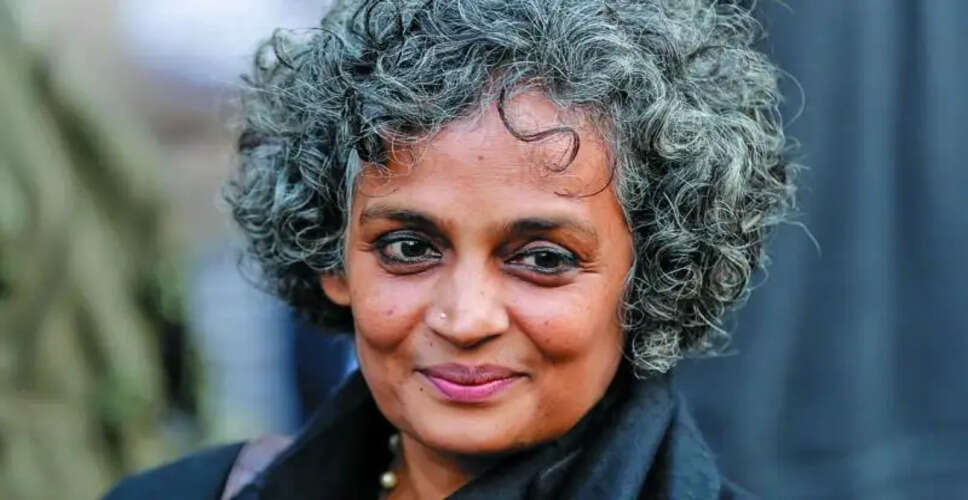

Arundhati Roy's Strong Critique at National Conclave
New Delhi: Acclaimed author Arundhati Roy expressed her concerns regarding the government's intentions behind the delimitation bill, labeling it a strategy for enduring fascism that threatens the very fabric of democracy.
Speaking at the National Conclave of Writers, Artists, and Cultural Practitioners held at Jawahar Bhawan, Roy asserted that the delimitation process is not merely about increasing the number of constituencies and MPs. She urged the audience not to be misled into thinking that the women's reservation bill genuinely supports women's rights, arguing instead that it aims to redraw constituency boundaries to reinforce divisions based on caste, religion, and community.
The government has scheduled a four-day special session of Parliament starting November 30, during which it plans to introduce three bills aimed at implementing a 33% reservation for women in the Lok Sabha and state assemblies ahead of the 2029 elections, while also proposing a 50% increase in seats for each state.
Roy characterized the current political climate as 'democratic fascism,' where those in power are undermining the essence of democracy.
She urged skeptics to examine the newly drawn constituencies in Assam and Kashmir, suggesting that these changes are designed to strengthen fascist control. Drawing parallels to historical fascism, she noted that the Nazis in Germany referred to themselves as national socialists, thereby distorting the true meaning of socialism.
The author also criticized fellow artists and writers who compromise their integrity by participating in government-sponsored events, highlighting the stark inequalities present in society where the rule of law varies based on caste, class, religion, and ethnicity.
Roy further alleged that the government is acquiring surveillance technology from Israel, which is implicated in ongoing violence in Gaza, and using it against young protesters in India.
She claimed that the government is illegally employing this technology against its citizens, citing instances where facial recognition was used during protests, raising concerns about the identification of 'repeat offenders' without transparency.
Roy warned of the severe repression that is being orchestrated, asserting that the delimitation bill is a mechanism for consolidating this control. She described it as a long-term strategy for perpetual fascism.
She compared the delimitation initiative to previous government actions, such as the 2016 demonetization, the 2019 revocation of Jammu and Kashmir's special status, and the abrupt nationwide lockdown in 2020, suggesting that these moves were designed to ambush the populace.
Roy expressed her belief that the government feels empowered to push through the delimitation and women's reservation bills due to its perceived influence over enough MPs. She warned that if the delimitation bill is enacted, it could have a detrimental impact on democracy akin to the effects of demonetization on the economy.
She concluded by stating that demonetization devastated the livelihoods of the poor, making them reliant on government aid, while also enabling the BJP to become the wealthiest political party globally, using its resources to dominate institutions meant to uphold democratic checks and balances.
The conclave featured prominent poets, writers, filmmakers, and cultural figures, including Ashok Vajpeyi, Mridula Garg, M K Raina, Mallika Sarabhai, Hussain Haidry, Kazi Neel, Neha Singh Rathore, Gauhar Raza, Joy Sengupta, N S Madhavan, Ganesh Devy, and Khalid Javed, all united in their commitment to defending the Constitution, democracy, and creative freedom.