
Arunachal Pradesh Aims for 19 GW Hydropower Capacity by 2035
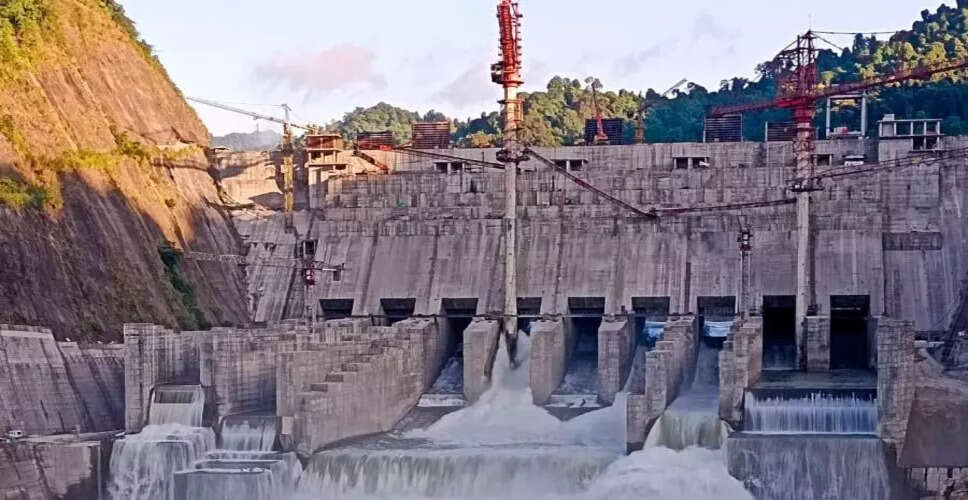
Strategic Hydropower Development in Arunachal Pradesh
Itanagar, Feb 5: Arunachal Pradesh has set an ambitious goal to enhance its hydropower capacity by 19 GW, with an estimated investment of ₹1.9 lakh crore. This initiative is part of a strategic pivot towards large-scale projects, as announced by Deputy Chief Minister Chowna Mein in the Assembly on Thursday.
During the Question Hour, in response to BJP member Tapi Darang's inquiry, Mein, who oversees the Power and Hydropower portfolios, declared the period from 2025 to 2035 as the 'Decade of Hydropower' to expedite advancements in this sector.
He highlighted that Arunachal Pradesh holds nearly 40% of India's hydropower potential, boasting a capacity of 58,000 MW, thereby positioning the state as a vital player in India's transition to clean energy and its goal of achieving net-zero emissions by 2070.
With the support of the central government, the state is revitalizing 13 previously stalled hydropower projects, which collectively have a capacity of 12.2 GW. In 2023, agreements were signed with four Central Public Sector Undertakings (CPSUs) to facilitate this revival.
Among these projects, three—Heo (240 MW), Tato-II (700 MW), and Tati-I (186 MW)—have received approval from the Cabinet Committee on Economic Affairs (CCEA), and work is currently in progress at their respective sites.
These initiatives are being executed through joint ventures between the state government and CPSUs, with the state retaining a 26% equity stake, as noted by Mein.
He elaborated that the central government is aiding these projects by financing 24% of the equity through Central Financial Assistance (CFA), limited to ₹750 crore per project. This mechanism will provide a total CFA support of ₹6,565 crore through equity participation.
Furthermore, the state is set to receive 12% of free power from these hydropower projects, with projected revenue of ₹4,520 crore anticipated between 2025 and 2035, which is expected to stabilize at around ₹4,100 crore annually thereafter.
In addition, these projects are projected to generate approximately ₹821 crore annually for local area development, while dividends from the state's equity share are estimated to reach ₹1,452.4 crore, according to the Deputy Chief Minister.
The expansion of hydropower is also expected to create over 30,000 direct skilled jobs during both construction and operation phases, along with around 16,000 indirect employment opportunities.
Mein also informed the Assembly that the hydropower development department has been restructured and is now operational, with a policy established for the restoration of large hydropower projects that have been terminated under special circumstances.
Additionally, the government has proposed a renovate-own-operate-transfer (ROOT) policy for small hydropower projects to attract private investments, optimize asset utilization, and ensure energy security.
The state is also updating its Small Hydropower Policy from 2017 to align with the latest technological advancements in the sector.
Regarding major ongoing projects, Mein reported that two units with a total capacity of 500 MW from the 2,000 MW Subansiri Lower Hydroelectric Project have been commissioned, with the remaining three units expected to be operational by March this year. Full commissioning of all eight units is anticipated by December.
The 2,880 MW Dibang multipurpose project is currently under construction, with a completion target set for February 2032.