
Arsenic Contamination Threatens Agriculture in Bokakhat
Health Risks and Agricultural Concerns in Bokakhat
Dergaon, Jan 8: The rural areas of Bokakhat, especially the Kuruwabahi region, have been facing serious health risks due to arsenic-contaminated water. This issue has reportedly led to a rise in various health problems, including cancer, among local residents.
While discussions previously focused on health implications, the detrimental impact of this contaminated water on agriculture has recently gained attention, particularly among Rabi crop farmers.
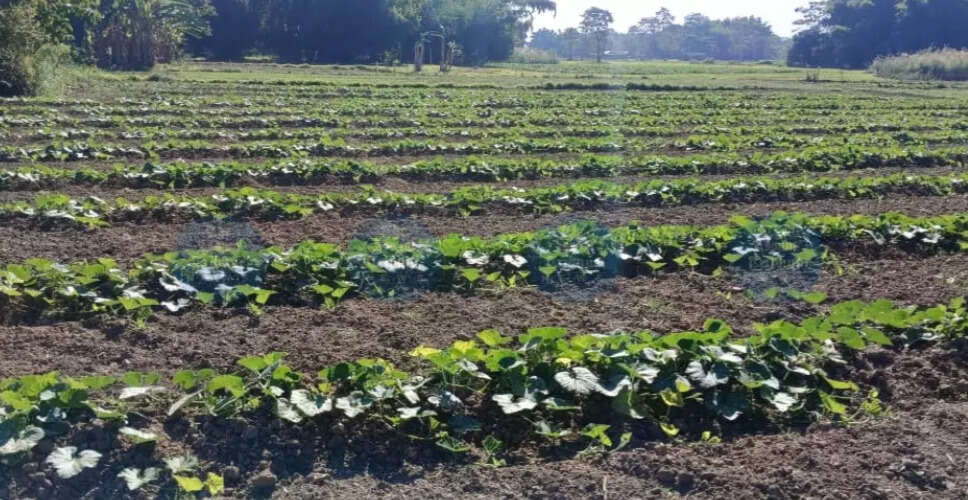
Farmers in Kuruwabahi, known for their Rabi crop cultivation, have historically attracted traders from outside the state. This year, they have cultivated Rabi crops in regions like Chinakan, Kalabaria Chapori, Yognia, Sahla, Nikri, Rongagra, Elengmari, and Dhanshiri Chapori. These farmers have procured seeds and fertilizers independently, without assistance from the State’s Agriculture Department. However, the arsenic presence in local water sources poses a significant threat to their crops.
“We were aware of the risks associated with arsenic-contaminated water. Now, it is also harming our Rabi crops. The groundwater used for irrigation seems to have degraded soil quality, leading to poor crop growth,” expressed Diganta Saikia, a farmer from Chinakani village.
Bubul Dutta, a community activist, emphasized the need for the government to supply arsenic-free water to support agriculture in the region.
Mohen Saikia, a retired headmaster from Numaligarh High School, echoed this sentiment, urging the Agriculture Department to ensure access to arsenic-free water for farmers in Kuruwabahi.
Farmers from arsenic-affected areas have reported that due to inadequate rainfall this year, they have been forced to rely on arsenic-contaminated groundwater for irrigation. This has resulted in soil hardening into dusty clods, making fertilizers ineffective and rapidly deteriorating soil quality, which raises concerns about future agricultural viability.
Local residents have appealed to their MLA and the State Agriculture Minister, Atul Bora, for improved irrigation facilities in Bokakhat. Although some farmers have taken personal initiatives to manage irrigation, they still rely on arsenic-laden water.
Farmers in Kuruwabahi are advocating for irrigation systems that utilize natural water sources like ponds, reservoirs, and rivers instead of contaminated groundwater. They highlighted the availability of sufficient water bodies near their fields and urged the government to facilitate their use for agricultural benefit. They warned that continued reliance on arsenic-laden water could pose a severe threat to the farming community in the near future.
By
Sanjoy Kr Hazarika