
Anubhav Sinha's Article 15: A Powerful Commentary on Social Discrimination
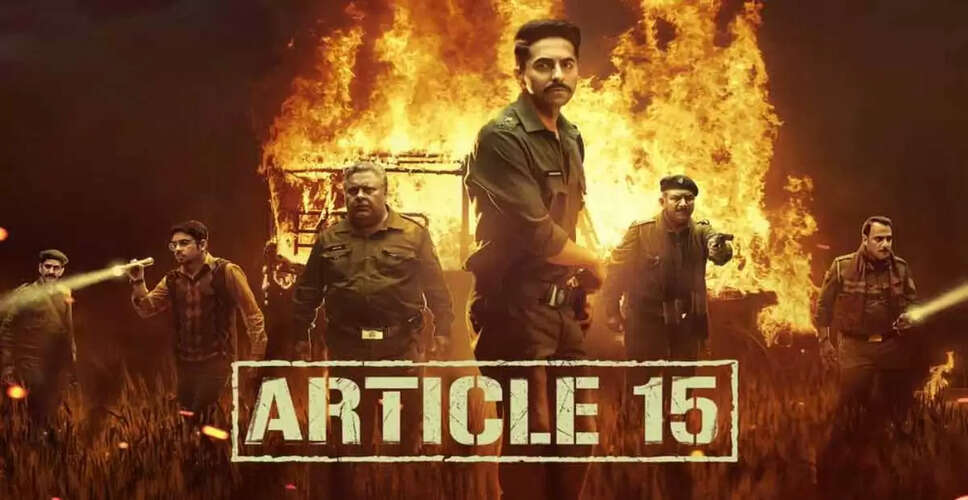
A Gripping Tale of Social Injustice
Anubhav Sinha's remarkable film, Article 15, addresses uncomfortable truths about social discrimination prevalent in the cow belt regions of India. Set in a small town in Uttar Pradesh, the story follows a progressive police officer, portrayed by Ayushmann Khurrana, who is confronted with a horrific caste-related crime involving the gang-rape and hanging of two young girls, while a third remains missing. The director skillfully weaves a thriller aspect into the narrative without compromising the film's consistently somber tone. Notably, Sinha opts for a lack of musical interludes, emphasizing the gravity of the situation.
As the narrative unfolds, Sinha does not shy away from depicting the harsh realities of caste and gender discrimination deeply rooted in rural Indian society, where some men feel justified in punishing women who defy societal norms.
One of the most impactful scenes features the protagonist interrogating the main suspect in the gang-rape case. The casual, almost indifferent manner in which the perpetrator justifies his actions echoes sentiments heard in the Netflix series Delhi Crime, where a rapist similarly dismisses the victim's humanity.
This chilling moment highlights the disturbing mindset prevalent in a patriarchal society.
While I wished to see Khurrana's character express his anger more openly in this scene, both the actor and director choose to restrain their emotions, reflecting the internal struggle of a civilized individual trying to maintain his humanity amidst a backdrop of brutality.
The film excels in its tonal balance. Although the background score occasionally feels excessive, Sinha refrains from over-dramatizing the narrative. He allows the harsh realities of the world he portrays to resonate without embellishment. The cast immerses themselves in their roles, embodying the film's grim atmosphere authentically.
In addition to Khurrana's compelling performance, Ewan Mulligan's cinematography captures the rawness and chaos of the heartland, ensuring no detail goes unnoticed. The sound design effectively captures the ambient noises of the small town, adding depth to the viewing experience.
Article 15 is essential viewing for every Indian, not because it reveals new information, but because the issues it addresses should have long been resolved. Unfortunately, oppression persists, often resurfacing when least expected.
At one point, the protagonist admits his desire to 'un-mess' the chaos wrought by social discrimination. The film poignantly illustrates the harsh realities faced by marginalized individuals. Sinha's commitment to exposing the divide between the privileged and the underprivileged is commendable, and he deserves recognition for reviving socially conscious cinema without self-aggrandizement.
In summary, Article 15 is a captivating film that embodies the essence of cinema—thought-provoking, challenging, and ultimately cathartic, as the protagonist achieves justice for the victims. However, the real world often tells a different story. By providing a satisfying resolution for the film's underdogs, Sinha and co-writer Gaurav Solanki remind us that happy endings belong to the realm of fiction.
Anubhav Sinha Reflects on Article 15
In a conversation about Article 15, Sinha expressed, 'The film and its themes have transformed me as a person and a filmmaker. We enjoyed the process so much that we didn't realize its profound impact on audiences. I am grateful to everyone involved. This film is perhaps the most humbling experience of my career. Article 15 prohibits discrimination based on caste, creed, or religion, and my film explores the various levels of discrimination we face. I was determined to cast Ayushmann Khurrana as the lead cop. Once he agreed, everything fell into place. I never intended to create Mulk or Article 15, but these stories needed to be told. In today's world, any conscientious Indian would refuse to remain silent. Article 15 serves as an investigative drama where the audience is also implicated. We were confident in our script but did not anticipate its box office success. While cinema is relatively young, the roots of caste discrimination run deep. Leading up to the film's release, we faced protests, including threats to remove the term 'Brahmin' from the script. I was uncertain about the motivations behind these protests. The film received clearance from the censor board with minimal cuts, yet I dealt with protestors for weeks before the release, which was incredibly stressful. The Brahmin Samaj and Karni Sena threatened theaters, causing advance bookings to stall in some areas. There was even a court petition seeking to halt our film's release, which was exhausting!'
Sinha also incorporated Bob Dylan's 'Blowin' in the Wind' into Article 15, stating, 'It fit perfectly. The lyrics resonate with the film's themes. I was fortunate that Mr. Dylan granted us the rights. I played the song on set frequently, never imagining it would end up in the film. The song encapsulates the journey of my protagonist, Ayushmann Khurrana. The lyrics, particularly, 'How many roads must a man walk down before you call him a man?' perfectly embody my film. I was unsure how to initiate the process of acquiring the rights, knowing it would be lengthy and costly. I reached out to a friend in the U.S. who connected me with Bob Dylan's manager, Jeff Rosen. To my surprise, he was very supportive and allowed us to use the song for a nominal fee, which was a significant relief given our budget constraints. I couldn't have made the film without Dylan's song, and the cost was worth every penny.