
Anticipated Focus of Budget 2026 Amid Global Trade Shifts
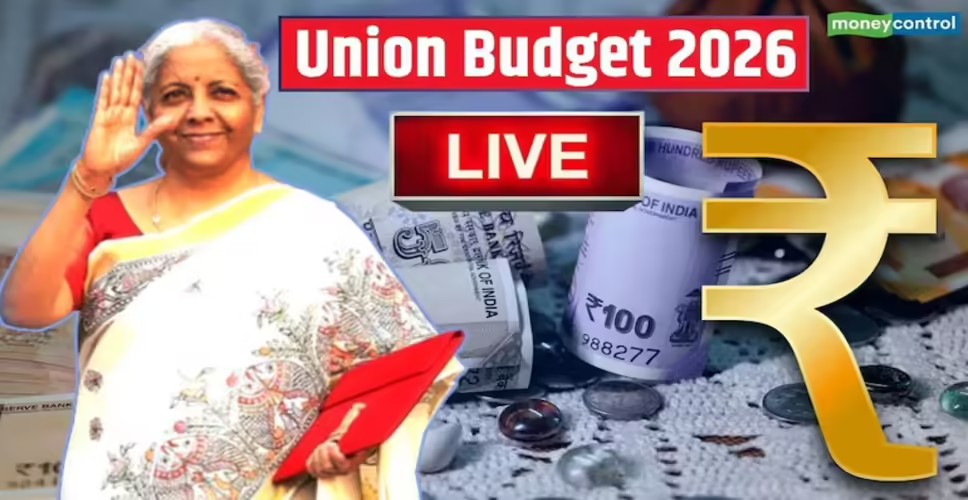
Overview of Budget 2026 Presentation
The upcoming Budget 2026 is set to be unveiled at a time when significant changes in global trade are anticipated following the return of President Donald Trump in the United States. The high tariffs and protectionist policies implemented by the Trump administration are impacting global supply chains, which could have repercussions for India's exports.
Focus on Strengthening Domestic Manufacturing
Finance Minister Nirmala Sitharaman is expected to emphasize bolstering domestic manufacturing and safeguarding the economy from external shocks in the central budget for the fiscal year 2026-27, scheduled for presentation on February 1, 2026.
Potential Impact of Trump Tariffs and India's Response
Since Trump's administration began, the U.S. has imposed additional tariffs ranging from 25% to 50% on several countries, including India, particularly affecting imports of Russian oil and other sectors. This has increased pressure on India's exports, including textiles, gems and jewelry, shipping, and auto components. Experts predict that this could negatively impact India's GDP by 0.9% to 1%, although strong domestic demand may mitigate this effect.
Key Areas of Focus in the Budget
To address these challenges, the budget is likely to prioritize the following areas:
- Strengthening Atmanirbhar Bharat: Expanding the PLI scheme, providing subsidies for domestic production, and easing raw material costs.
- Supply Chain Security: Increasing investments in critical minerals, semiconductors, and rare earth elements to reduce dependence on China and other nations.
- Support for MSMEs: Offering affordable credit, credit guarantees, and special funds or relief packages to protect against tariff shocks.
- Export Diversification: Focusing on new markets such as Europe, Australia, the UK, and UAE, while accelerating free trade agreements (FTAs).
Other Major Expectations
The budget is anticipated to focus on growth-driving sectors:
- Infrastructure and Railways: Increasing capital expenditure to boost employment and development.
- Technology and AI: Investing in AI, data centers, and local manufacturing, while promoting R&D.
- Renewable and Green Energy: A significant push for nuclear, solar, and critical minerals.
- Tax Relief and Simplification: Providing tax slab relief for the middle class, improving TDS regulations, and expediting pending tax disputes.
- Defense and Healthcare: Focusing on self-reliant defense production and preventive healthcare.
Conclusion
Overall, Budget 2026 is poised to be a strategic budget centered on self-reliance and domestic strength amid global uncertainties such as Trump tariffs and geopolitical tensions. This approach could not only shield India from external shocks but also reinforce its position as a global manufacturing hub. Experts believe this budget will accelerate the vision of a developed India by 2047.