
Andy Burnham Emerges as Leading Contender for Labour Leadership Following Starmer's Resignation

Leadership Transition in British Politics
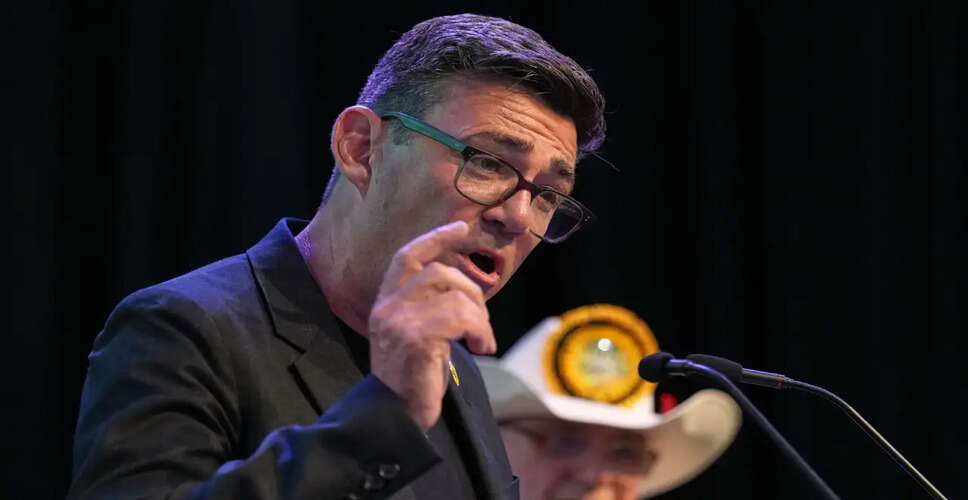
British politics is poised for another leadership change as Prime Minister Keir Starmer has announced his intention to resign as the head of the Labour Party. While Starmer will continue to serve in a caretaker role until a new leader is appointed, the spotlight has turned to Andy Burnham, who is increasingly seen as the frontrunner for the position. The former cabinet minister and current Mayor of Greater Manchester has gained renewed attention in British politics, particularly after his recent parliamentary win, which has fueled speculation that Labour MPs view him as the ideal candidate to restore the party's reputation amid declining public support for Starmer's administration.
UK Prime Minister Keir Starmer: "Every decision I have taken is about putting the country I love first. That is why I will resign as leader of the Labour Party." pic.twitter.com/txjVwzedst
— AZ Intel (@AZ_Intel_) June 22, 2026
For many within the Labour Party, Burnham symbolizes both experience and a chance for renewal. However, despite his extensive political background, there are significant uncertainties regarding what a Burnham-led government would entail.
Burnham's Political Journey
From Labour Minister to Greater Manchester Mayor
Born in Aintree, Merseyside, in January 1970, Burnham is among the most recognizable figures in the Labour Party. He pursued English studies at Fitzwilliam College, Cambridge, before embarking on a political career that began with his election as the Member of Parliament for Leigh in 2001. Over the next decade, he steadily advanced within the Labour ranks, holding several key positions under former Prime Ministers Tony Blair and Gordon Brown, including Chief Secretary to the Treasury, Culture Secretary, and Health Secretary.
His national profile grew significantly during his time at the Department of Health, where he became a prominent advocate for public services and healthcare policy. After Labour's defeat in the 2010 General Election, Burnham attempted to lead the party but was unsuccessful. He made another leadership bid in 2015 but lost to Jeremy Corbyn. Instead of remaining in Westminster, he shifted his focus to regional governance, a move that significantly altered his political trajectory.
A Mayor with a National Vision
The Mayor Who Built A National Profile
Since taking office as Mayor of Greater Manchester in 2017, Burnham has established himself as a practical and vocal regional leader. His popularity surged during the COVID-19 pandemic when he openly challenged the Conservative government regarding financial support for northern England. Burnham has consistently advocated for policies aimed at addressing regional inequalities, enhancing public transport, and tackling the rising cost of living. These issues are likely to be central to any future leadership agenda.
Burnham maintains a relatively private personal life, being married to Marie-France van Heel, with whom he has three children.
The Future of Burnham's Leadership
What Could A Burnham Premiership Look Like?
Although Burnham is recognized as an effective communicator, his stances on several key international and economic matters are not as clearly articulated as those of previous Labour leaders. He has consistently emphasized the need to bridge economic gaps between London and other UK regions and has called for greater devolution of powers from Westminster to local governments. On foreign policy, particularly regarding the conflicts in Ukraine and the Middle East, Burnham has generally aligned with mainstream Labour views, but he has yet to outline a comprehensive international strategy that would accompany a potential bid for Downing Street.