
Andhra Pradesh High Court Orders ACB Investigation into Land Transfer Allegations
The Andhra Pradesh High Court has directed the Anti-Corruption Bureau to investigate alleged attempts to transfer government land worth ₹15 crore to private individuals. The court expressed concerns over conflicting affidavits from various parties, suggesting possible misconduct and conflicts of interest. The case revolves around land in Kakinada Urban Mandal, with previous claims by private petitioners against the Municipal Corporation. As the investigation unfolds, serious allegations of collusion and attempts to mislead the judiciary have emerged, prompting a thorough review of the circumstances surrounding the land transfer.
| Jul 30, 2026, 16:17 IST
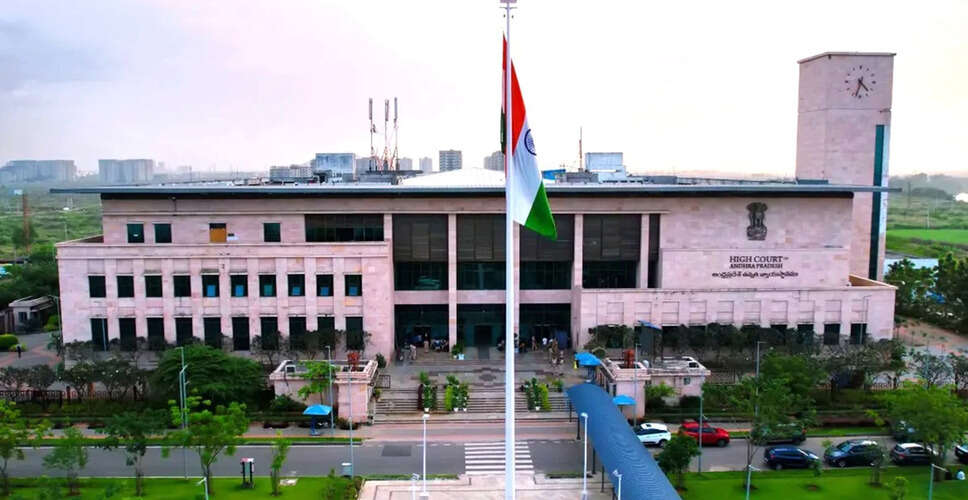

Court Directs Anti-Corruption Bureau to Investigate Land Transfer
The High Court of Andhra Pradesh has mandated the Anti-Corruption Bureau (ACB) to investigate alleged attempts to transfer approximately ₹15 crore worth of government land in the Kakinada Urban Mandal to private individuals. The court expressed serious concerns that it may have been misled due to conflicting affidavits from government lawyers, private attorneys, and municipal officials, which indicated professional misconduct and clear conflicts of interest. Justice N. Harinath approved the review petition, overturning the court's previous order issued on January 8, and instructed the ACB to complete its investigation within 12 weeks. The court specified that the investigation should not be conducted by officials below the rank of Inspector General and that the findings should be submitted to the Director General of the ACB. This controversy pertains to land associated with survey number 127/4 in Ramanayya Peta of Kakinada Urban Mandal. In 2013 and 2015, private petitioners approached the High Court, alleging that the Kakinada Municipal Corporation was constructing a compound wall on their private land.
Municipal Corporation's Response and Changing Affidavits
In response to the allegations, the Municipal Corporation filed affidavits in 2015, asserting that the land in question was not private property but reserved for public purposes, and it was their responsibility to safeguard it. Subsequently, the Jayendra Nagar Residents Welfare Association became involved, informing the court that the land claimed by the petitioners had actually been donated to the Municipal Corporation for public use. When the case resurfaced in January 2026, the Municipal Corporation submitted a new affidavit, adopting a completely different stance, stating that it would not interfere with the land claimed by the petitioners. The Residents Welfare Association also clarified that it was not making any claims over that land. Based on these developments, a single judge dismissed the petitions on January 8, directing the corporation not to encroach upon the petitioners' land. The Residents Welfare Association challenged this order before a division bench, which advised them to file a review appeal before the single judge, leading to the current proceedings.
Allegations of Misleading the Court
During the review hearing, the Association argued that the petitioners, along with government officials and Municipal Corporation representatives, had conspired to mislead the court and facilitate the transfer of valuable public property. The High Court noted that the Special Government Advocate, Singamneni Pranathi, had represented private petitioners before becoming a government law officer. After her appointment, her husband, lawyer Meka Rahul Chaudhary, appeared on behalf of the same petitioners. Furthermore, when the Municipal Corporation changed its previous stance and filed an affidavit in favor of private parties, Pranathi represented the government. Justice Harinath remarked that these events suggest potential fraud, collusion, and serious conflicts of interest. The court indicated that the sequence of events points to an attempt to mislead the judiciary and transfer valuable government land to private individuals.