
Ancient Tomb Discovered in Egypt: A Glimpse into the Fifth Dynasty
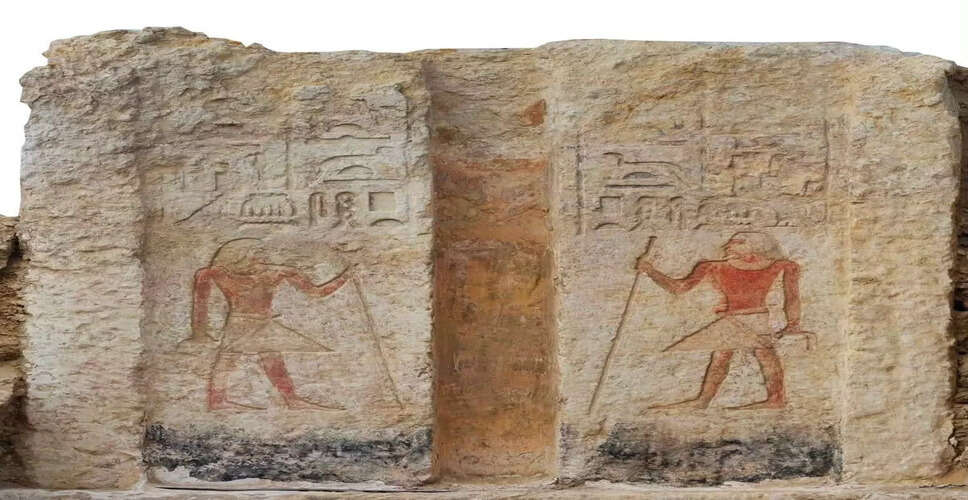

Significant Archaeological Find in Saqqara
Photo: @gazeterapor/X
Cairo, September 8: Egypt has unveiled the discovery of a tomb that is over 4,000 years old, located at the Mariette Cemetery in Saqqara, Giza Province, just west of Cairo. This tomb, dating back to the late Fifth Dynasty (2494-2345 BC), was uncovered by a collaborative archaeological mission from Egypt and Spain.
The tomb is linked to the reign of King Djedkare Isesi and features a medium-sized mastaba with two funerary chapels. One of these chapels belonged to Yunmin, a prominent official who held various roles including judge and chief of scribes, as reported by Xinhua News Agency.
Within Yunmin's chapel, excavations revealed a unique facade adorned with funerary inscriptions and an offering formula, along with a portrayal of Yunmin in a dignified stance. The walls of this chapel are richly decorated with high-quality reliefs illustrating agricultural scenes and processions that brought offerings to the tomb.
The second chapel is dedicated to Yunmin's father, Ity, who was a scribe managing agricultural lands and offerings. This chapel includes a false door and vibrant wall decorations depicting offering scenes, although much of the original paint has faded over time.
Hisham El-Leithy, the secretary-general of the Supreme Council of Antiquities, remarked that this discovery enriches the archaeological narrative of the Saqqara cemetery during the late Fifth Dynasty, providing insights into the architectural and artistic styles prevalent in tombs of that era.
Earlier in July, the Ministry of Tourism and Antiquities announced the finding of another Pharaonic tomb on the West Bank of Luxor, which was revealed during ongoing archaeological work. This discovery was made by a Dutch archaeological team operating within the Theban Necropolis.
According to the ministry, the tomb's owner has been identified as "Paser," with wall reliefs suggesting it dates back to the New Kingdom (1550 BC-1069 BC). Hisham Elleithy indicated that the archaeological team will undertake thorough documentation and analysis to uncover the identities of those interred at the site and to reconstruct their historical narratives, aiming to contextualize the tomb within its broader historical and cultural framework.