
Ancient Artefacts Unearthed in Karbi Anglong: A Glimpse into Assam's Rich Heritage

Excavations Reveal Historical Treasures
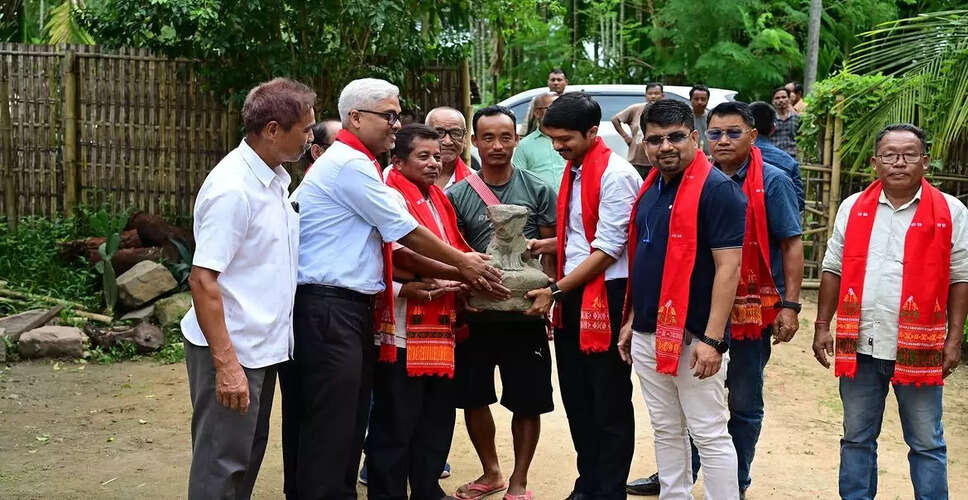
Karbi Anglong DC Aranyak Saikia (4th from right) oversees the handover of newly unearthed artefacts at Sarthe Rongphar village. (Photo:dc_karbianglong/Meta)
Diphu, Jul 19: Recent archaeological digs in the Karbi Anglong district have uncovered an impressive array of ancient stone sculptures and inscriptions, highlighting the region's significant archaeological legacy.
The excavation team discovered these rare items in Sarthe Rongphar village, situated in the Phuloni area of central Assam, emphasizing the site's historical importance.
Working around two centuries-old ponds, archaeologists and local residents have found a variety of artefacts, including intricately carved figures of dancers, deities, Shiva lingams, fragments of temples, and a remarkable depiction of Lord Ganesha on a large rock.
"During my recent visit to Sarthe Rongphar village, I had the chance to witness a fascinating yet lesser-known aspect of Assam's archaeological history. The excavations around two ancient village ponds have revealed an extraordinary collection of stone sculptures and inscriptions," stated Aranyak Saikia, the District Commissioner of Karbi Anglong.
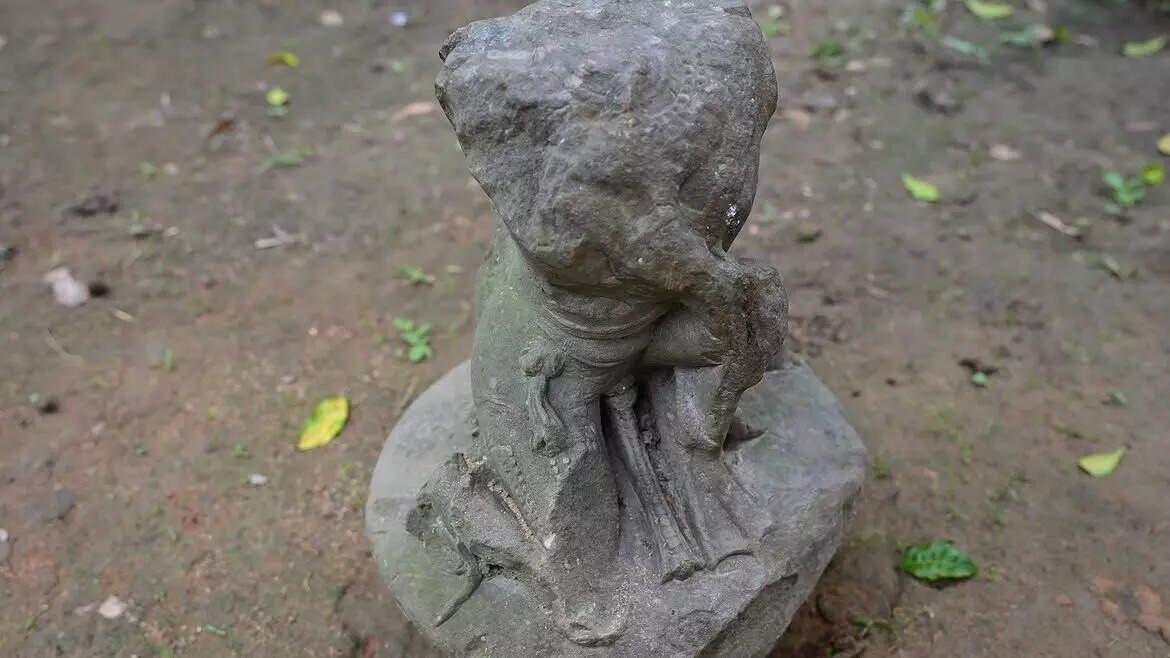
The recently excavated ancient stone artifact from Karbi Anglong’s Rongphar village. ((Photo:dc_karbianglong/Meta)
Experts suggest that many of these artefacts may date back to the 10th to 12th centuries, although local traditions associate them with the era of the Mahabharata and the legendary Ashwamedha Yajna.
"While locals connect these findings to the Mahabharata period, it is more plausible that they were created during the Ahom dynasty, although definitive records are scarce," he noted.
One intriguing observation made by villagers is that the water level in the pond remains stable throughout the year.
"Several of these invaluable artefacts have been preserved at the Hojai Archaeological Museum and the district museum in Diphu," Saikia mentioned.
He acknowledged that many of these relics are in poor condition, but the administration is now taking steps to ensure their preservation.
"Numerous remnants are still scattered throughout the village, and we have observed that some items have even been repurposed for everyday use by locals," Saikia added.
Heritage experts and community members are advocating for enhanced documentation, conservation efforts, and public awareness regarding these sites to safeguard this unique chapter of Assam's history for future generations.
"Discoveries like these make field visits incredibly rewarding. Beneath the hills and villages lie stories, traditions, and remnants of a past that often go unnoticed,” Saikia remarked.
These findings are part of a broader trend, as the Phuloni-Dokmoka-Howraghat region is rich in similar archaeological sites, underscoring its historical significance during the reign of the Kachari and Dabok dynasties.
"Among the notable landmarks is Mahamaya Hill in Dokmoka, where the remains of an 11th-12th century stone temple still stand, despite suffering damage from the devastating earthquakes of 1897 and 1950," the District Commissioner noted.
He also highlighted other significant sites, such as Buragohain Than, which has yielded ancient idols of Shiva and Parvati, and Bargonga, where rare Gupta-era Shiva sculptures and rock inscriptions have been found.
"Collectively, these monuments reveal a vibrant religious and artistic tradition that once shaped the cultural landscape of Karbi Anglong," Saikia emphasized.
Last month, the district administration announced plans to consult experts from the Institute of Tai Studies and Research (ITSAR) to decode two rare Tai manuscripts and potentially include these treasures in the Centre’s Gyan Bharatam scheme.
A collection of rare manuscripts in the district, believed to contain unknown insights from the medieval period, is expected to enhance understanding of the region's history, culture, and indigenous knowledge once the scripts are deciphered.