
Amnesty International Raises Concerns Over 2026 FIFA World Cup Human Rights Issues
Concerns Loom Over Upcoming FIFA World Cup
As anticipation grows for the 2026 FIFA World Cup, Amnesty International has issued a serious warning, suggesting that the event may turn into a platform for oppression rather than a celebration of sport.
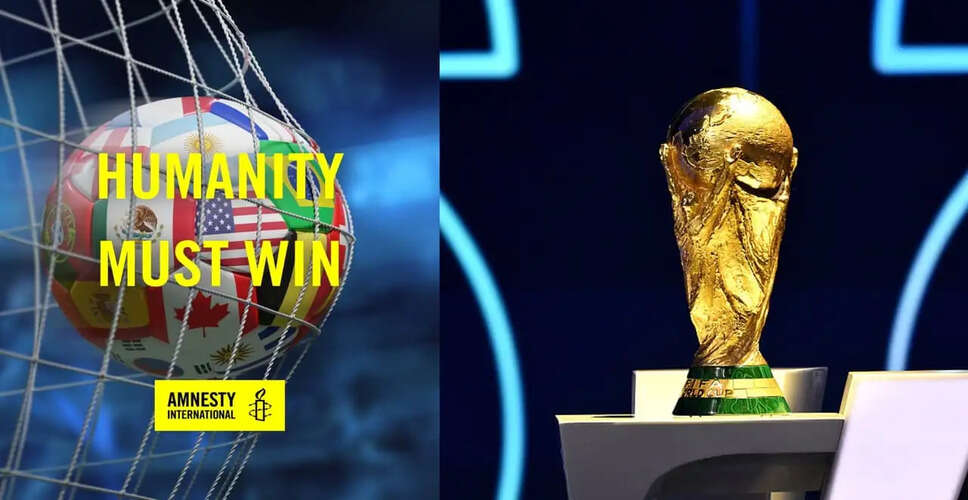
In their report titled 'Humanity Must Win,' the London-based human rights organization has called on FIFA and the three host countries—United States, Canada, and Mexico—to take urgent measures to protect the rights of fans, players, and local communities.
Contradictions Between Promises and Reality
FIFA has consistently assured that the tournament will be a safe and inclusive environment where everyone can freely exercise their rights. However, Amnesty's report reveals a starkly different reality.
The findings indicate that this assurance is in sharp contrast to the actual conditions, especially in the United States, which will host approximately 75% of the tournament's 104 matches.
Amnesty described the situation in the US as a 'human rights emergency' under Donald Trump's administration, highlighting issues such as mass deportations, arbitrary detentions, and aggressive operations by immigration authorities.
Security and Immigration Concerns
Central to the controversy is the involvement of Immigration and Customs Enforcement (ICE). The agency's acting director has confirmed that it will play a significant role in the overall security framework for the World Cup.
This announcement has raised alarms, particularly following violent protests in Minneapolis earlier this year. Amnesty pointed out that the plans for host cities do not adequately address how fans and residents will be safeguarded from such enforcement actions during the event.
The repercussions are already evident, with supporters from nations like Ivory Coast, Haiti, Iran, and Senegal facing travel restrictions to the US. Additionally, several LGBTQ+ fan groups from Europe, especially England, have expressed intentions to boycott matches in the US due to safety concerns for transgender fans.
Urgent Action Needed
Amnesty's report provides a stark evaluation of the risks associated with the tournament: 'This World Cup is far from the 'medium risk' event that FIFA previously claimed it to be, and immediate action is required to reconcile the widening gap between the tournament's initial promises and the current reality.'
Despite these issues, FIFA insists that the expanded 48-team tournament will proceed as planned, even amid geopolitical uncertainties, including questions surrounding Iran's participation.
The governing body is projected to earn an astonishing $11 billion from the World Cup cycle, which amplifies scrutiny regarding its responsibilities.
The Human Cost of the Tournament
Steve Cockburn, Amnesty's head of economic and social justice, emphasized the human implications behind the event: 'While FIFA reaps record profits from the 2026 World Cup, it is essential that fans, communities, players, journalists, and workers are not the ones who bear the burden. Football belongs to these individuals—not to governments, sponsors, or FIFA—and their rights must be prioritized during the tournament.'
World Cup Countdown
The World Cup is set to kick off on June 11, 2026, at the iconic stadium in Mexico City, with the final match scheduled for July 19 at MetLife Stadium in New Jersey.
As the countdown progresses, the focus extends beyond just the sport. For many, the tournament raises a critical question: Can the world's largest sporting event genuinely fulfill its ideals, or will it risk neglecting those it aims to unite?