
Amit Shah Launches ₹8,941 Crore Initiative for Yamuna River Cleanup

Major Initiative for Yamuna River Cleanup
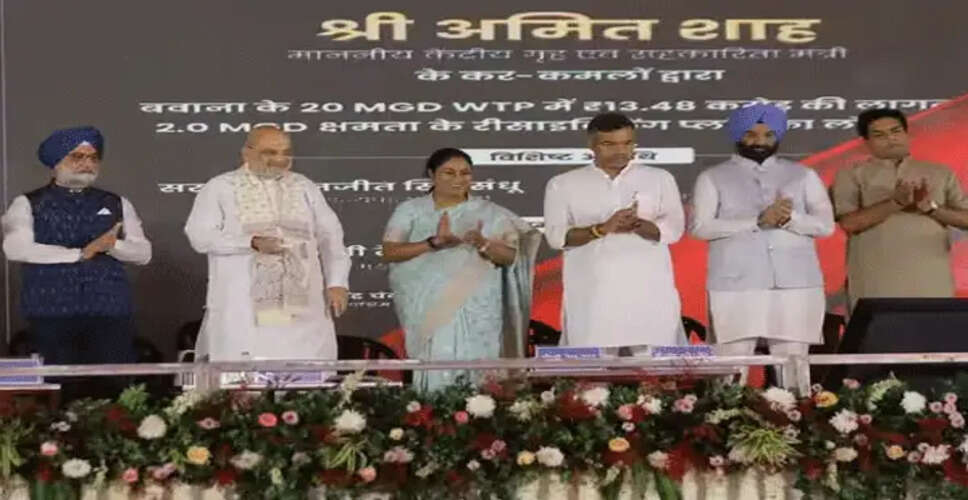
In New Delhi, Union Home Minister Amit Shah laid the foundation for 43 projects worth ₹8,941 crore aimed at cleaning the Yamuna River and enhancing sewage management in the capital. During the event, he acknowledged the efforts made by the Delhi government to reduce the volume of sewage entering the river.
Shah expressed a commitment that the Bharatiya Janata Party (BJP) government would ensure the complete cleaning of the Yamuna by May 2029. These initiatives are seen as crucial steps towards addressing water pollution in the capital, improving sewage treatment, and increasing access to clean water.
While addressing the gathering, Amit Shah stated that the newly launched projects would serve as a cornerstone for the river's cleanup. He emphasized that the central government, along with the Delhi government, Uttar Pradesh, and Haryana, is collaborating to provide clean water and restore the Yamuna.
According to him, the coordinated efforts of these four governments will help prevent the flow of contaminated water into the river and tackle pollution issues. He also mentioned that various levels of efforts are underway to meet the cleaning goals within the set timeframe.
The initiated projects include a new sewage treatment plant (STP) in Okhla, 29 decentralized sewage treatment plants (DSTPs), and the construction of a new sewer network. During the event held in Najafgarh, the Home Minister criticized previous administrations for merely making excuses regarding the river's cleanliness, asserting that the current BJP government would achieve its cleaning objectives before May 2029. He added that the government plans to provide sewer connections and clean drinking water to every household within the next three years.
Delhi's Chief Minister Rekha Gupta and Water Minister Pravesh Verma were also present at the event. The Chief Minister highlighted the significance of these projects, stating that they would involve establishing new sewage treatment plants, enhancing the capacity of existing facilities, expanding the sewer network, and improving drainage systems. She noted that these measures would help prevent untreated sewage from entering the Yamuna, thereby accelerating efforts to reduce pollution.
The construction of 29 new decentralized sewage treatment plants and pumping stations in outer Delhi is expected to benefit 358 unauthorized colonies and 113 villages, potentially aiding around 3.629 million residents. Additionally, a project to lay a new 1,034-kilometer sewer network has been initiated to enhance sewage management in areas currently lacking adequate infrastructure. The focus will be on collecting wastewater, transporting it to treatment plants, and controlling the flow of polluted water into the river.
A key component of these projects is the new sewage treatment plant in Okhla, which will have a capacity to treat 124 million gallons of water daily, making it the largest STP in the national capital. This facility is being developed jointly by the central and Delhi governments. Furthermore, the Delhi government plans to replace the old sewage treatment plant at Chandrawal with a new facility capable of treating 477 million liters of water daily, for which the foundation stone has also been laid. The upgrades to existing facilities and the introduction of new plants aim to enhance the overall sewage treatment capacity and improve the management of wastewater in the capital.
Chief Minister Rekha Gupta stated that the Delhi government has accelerated several significant initiatives related to the Yamuna's cleanup, including the establishment of 29 decentralized sewage treatment plants, improving the capacity of existing plants, providing sewer connections to homes, and expanding the sewer network. She emphasized that these efforts aim to ensure proper sewage treatment and prevent wastewater from reaching the Yamuna. The government believes that expanding the sewer system and increasing treatment capacity will help address water pollution in the capital.
Water Minister Pravesh Verma also remarked that these projects would strengthen the ongoing efforts to clean the Yamuna. He explained that they would advance key initiatives such as developing water treatment plants, expanding the sewer network, enhancing wastewater treatment capacity, and improving drainage systems. He stressed that strengthening sewage management facilities is essential for reducing pollution in the river. Upon completion of the new projects, the collection and treatment of wastewater will become more efficient.
Overall, these 43 projects, with a total investment of ₹8,941 crore, aim to significantly develop sewage treatment, sewer networks, and drainage infrastructure in Delhi. Emphasis has also been placed on coordination between the central and Delhi governments, along with Uttar Pradesh and Haryana, to enhance the cleanup efforts for the Yamuna. The government has set a target to completely clean the river by May 2029, although achieving this goal will depend on the timely implementation of projects, effective sewage treatment, and controlling the flow of contaminated water into the river.