
Amit Shah Highlights Dynamic Security Challenges at National Security Strategies Conference
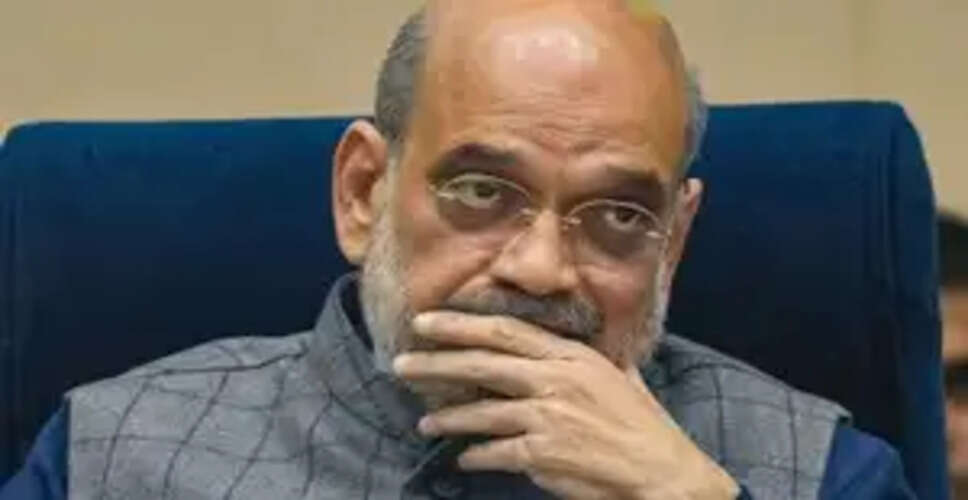
Amit Shah Addresses National Security Strategies Conference
New Delhi: Union Home Minister Amit Shah emphasized that India's internal security issues will continue to evolve due to the country's geopolitical landscape.
During his closing remarks at the eighth National Security Strategies Conference (NSSC) held on Saturday, Shah noted that Prime Minister Narendra Modi has demonstrated strong political resolve by reaffirming a zero-tolerance policy towards terrorism, particularly highlighted through Operation Sindoor.
Shah pointed out that the dynamic nature of internal security challenges necessitates that state police forces and central security agencies adopt the principles of 'Suraksha, Sajagta and Samanvay' (security, alertness, and coordination), according to an official statement.
He remarked that the Modi administration has successfully addressed various issues across states, stating, 'India is among the fastest-growing economies, and with that growth, the challenges we face are also increasing. We must remain vigilant and approach these challenges with heightened awareness.'
The home minister described the NSSC as crucial for enabling senior officers to mentor younger officers, helping them understand the challenges and guiding them towards effective solutions.
Shah urged all state and central investigative agencies to strive for excellence and become world leaders in their respective fields.
To effectively tackle national challenges, he stressed the importance of establishing a reliable ecosystem for real-time data sharing.
He advocated for a security-first approach, emphasizing that habitual alertness and coordination should be integral to their operational methodologies.
Shah highlighted that the Prime Minister's firm commitment and the support of citizens have conveyed a strong global message of zero tolerance towards terrorism.
He noted that India's economy has ascended to the fourth position globally, asserting that the nation is now a leader in emerging technologies, startups, green energy, and innovations.
Shah warned that India's growing prominence will lead to increased national security challenges in the future.
He called for improved coordination among agencies, advocating for the formation of cohesive teams from central and state agencies to develop, implement, and monitor strategies.
The involvement of young police officers in brainstorming sessions to address national challenges was also encouraged.
Shah urged the integration of national databases such as NATGRID, NIDAAN, iMoT, and the CBI's fugitive database into training programs for young officers.
He stressed that the next five to ten years are critical for the nation's development and security.
While acknowledging progress in combating Left Wing Extremism (LWE), as well as in the northeast and Jammu and Kashmir, he instructed DGPs to adopt similar strategies for the effective implementation of new criminal laws and addressing narcotics challenges.
He also emphasized the need for a comprehensive approach to combat major drug cartels and to focus on the extradition of drug offenders.
The DGPs were directed to prioritize the agenda of achieving a 'Nasha Mukt Bharat' (Drug-Free India) over the next three years.
Shah pointed out that police stations are vital for intelligence gathering and urged police leadership to create a credible platform for real-time information sharing at the station level.
Reiterating the police's primary duty to safeguard citizens' lives, property, and dignity, he directed state police forces and central agencies to pursue excellence and foster a spirit of healthy competition to tackle internal security challenges.
He called for comprehensive development in LWE-affected regions, urging DGPs to collaborate with state administrations to ensure the effective implementation of over 300 central and state development schemes at the grassroots level.
Shah also highlighted the importance of securing smaller seaports along the maritime borders and enhancing the capacity of state police to counter infiltration and smuggling.
He reviewed counter-terrorism initiatives and mandated strict legal actions against repeat offenders.
Earlier, he paid tribute to martyrs on Kargil Vijay Diwas and acknowledged the contributions of the armed forces and the BSF during Operation Sindoor.