
Amit Shah Advocates for Fish Farming and Dairy Expansion in Arunachal Pradesh

Union Home Minister's Call to Action
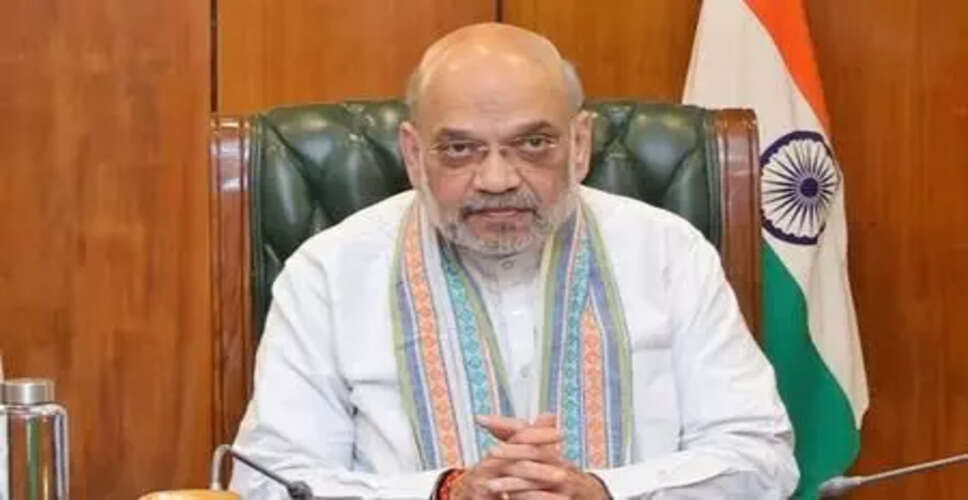
A file image of Union Home Minister Amit Shah (Photo: IANS)
Guwahati, Nov 22: During a recent visit, Union Home Minister Amit Shah encouraged the government of Arunachal Pradesh to tap into the opportunities presented by fish farming in the reservoirs created by large dams.
Speaking at a Cooperative Conference held at the Dorjee Khandu State Convention Centre in Itanagar, Shah highlighted that the state's hydropower resources could serve as a foundation for economic independence and job creation.
“I urge the Arunachal Pradesh government to consider establishing fish-rearing cooperative societies in the lakes formed by dams. These water bodies can be utilized effectively to enhance the cooperative sector and generate employment,” he stated on the final day of his three-day visit.
Shah pointed out the significant hydropower potential of Arunachal Pradesh and the existence of several large dams, advocating for the promotion of cooperative societies to engage in fish farming in suitable dam reservoirs.
He also stressed the importance of expanding the dairy industry in regions with favorable climates, suggesting that the state should aim to boost milk production through cooperative efforts.
Assuring farmers of market access, Shah mentioned that Amul and the National Dairy Development Board (NDDB) would purchase the milk produced, ensuring local farmers have a reliable outlet for their products.
“In areas where the climate is conducive, the Cooperative Department should prioritize the growth of the dairy sector. Amul and NDDB will ensure that all milk produced is utilized effectively,” he remarked.
Shah emphasized that Arunachal Pradesh should strive for self-sufficiency in producing essential food items such as eggs, milk, meat, and fish, reducing reliance on external supplies.
“By focusing on these food items, 32,000 families could achieve self-sufficiency within the state,” he noted, adding that cooperatives could significantly contribute to this goal.
He highlighted the existing cooperative framework, noting that over 56,000 individuals in Arunachal Pradesh are linked to 185 Primary Agricultural Credit Societies (PACS), 52 dairy cooperatives, and 33 other cooperative entities.
Shah also discussed the Centre's development efforts in the Northeast under Prime Minister Narendra Modi, stating that connectivity, infrastructure, education, employment, and tourism have received increased focus over the last 12 years.
“Currently, every state in the region has access to train or air connectivity. The Modi government has provided unprecedented support for road, rail, and air connectivity in the Northeast since Independence,” he asserted.
He remarked that enhanced connectivity has significantly bridged the gap between Delhi and the Northeast, integrating the region more closely with the national framework.
Regarding the Centre's financial assistance to Arunachal Pradesh, Shah mentioned a rise in funding and infrastructure investment under the Modi administration.
He stated that the state received Rs 33,530 crore from 2004 to 2014, while the allocation for 2014-24 has surged to approximately Rs 149 crore.
Shah also referenced various welfare programs, including PM-KISAN, drinking water initiatives, and healthcare support, emphasizing their impact on improving the quality of life for residents.
He further acknowledged that the Arunachal Pradesh Police has become the 17th police force in India to be awarded the prestigious President’s Colour, recognizing their service and professionalism.
Under the Vibrant Villages Programme, Shah noted that 11 border villages in Arunachal Pradesh have been equipped with mobile medical units to enhance healthcare access in remote areas.
These units come with telemedicine capabilities, AI-driven portable screening tools, digital X-ray machines, ECG devices, and other laboratory facilities, allowing residents of isolated border communities to receive essential medical care closer to home.
The Home Minister also called for increased economic involvement from residents of border villages, emphasizing that development initiatives should empower communities and bolster their livelihoods.