
American Pilot Killed in Papua: Armed Separatists Attack Aircraft

Tragic Incident in Papua
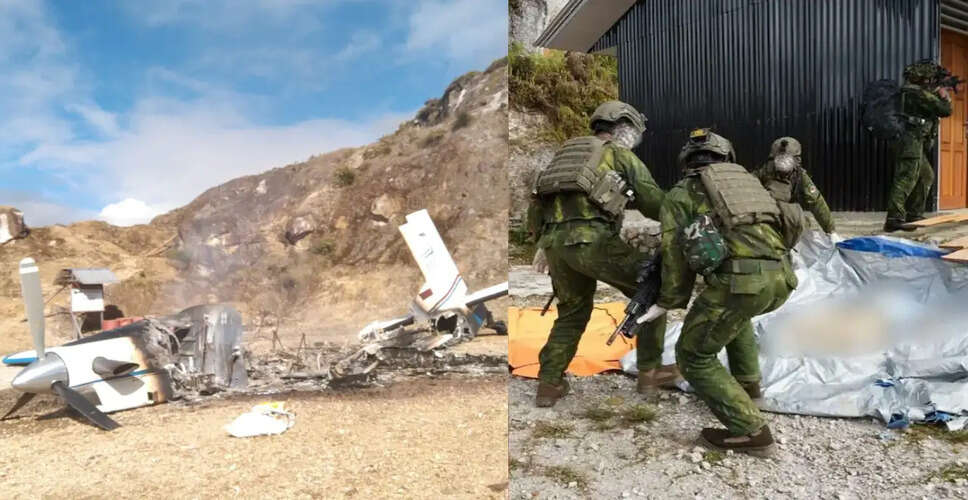
An American pilot employed by an Indonesian aviation firm lost his life following an assault by armed separatists who attacked and set fire to a small plane in Papua, Indonesia. This incident has triggered a military operation aimed at retrieving his remains. On Friday, Indonesian security forces successfully recovered the body of Nicholas F. Goselin, a pilot for PT AMA, after securing the remote airstrip where the incident took place. The evacuation operation involved ten personnel from the Habema Operations Command, as reported by Brig. Gen. Riyanto, the operation's deputy commander.
WATCH: Indonesian troops recover body of American pilot Nicholas F. Goselin shot dead by rebels in Papua pic.twitter.com/1XmZBjQb5S
— Rapid Report (@RapidReport2025) July 4, 2026
There has been no immediate response from the US Embassy regarding this incident.
Details Surrounding the Attack
What Happened to Nicholas F. Goselin?
As per Indonesian officials, Goselin was fatally shot on Thursday shortly after he landed at the Ipdeheik airstrip located in Balinggama village, within the Yahukimo regency of Papua Highlands. The Directorate General of Civil Aviation in Indonesia reported that communication with the airstrip was lost soon after Goselin confirmed his landing. The aircraft was carrying one pilot and seven passengers.
The West Papua Liberation Army, which is the armed faction of the Free Papua Movement, took responsibility for the attack through a video shared with the media. In the footage, rebels wielding firearms and axes were seen raising the Morning Star flag, a symbol of Papuan independence. Rebel spokesperson Sebby Sambom claimed that the aircraft had breached their prohibition on civilian flights in areas they consider operational zones. He accused civilian aircraft of being used to transport Indonesian military personnel and supplies into the remote regions of Papua, asserting that the American pilot was killed due to continued flights despite their warnings. These claims have not been independently verified.
The Indonesian military refuted these allegations, stating that the aircraft was not involved in transporting troops. Officials confirmed that the seven passengers, all indigenous Papuan civilians, including three women, were unharmed.
Sambom also urged Indonesian President Prabowo Subianto to initiate international discussions regarding the long-standing conflict in Papua, suggesting that the pilot's death highlights the failure of Indonesia, the United States, the Netherlands, and the United Nations to address the ongoing crisis. He cautioned that the group would persist in targeting civilian aircraft they believe are aiding military operations.
Historical Context of Violence in Papua
Past Incidents
For decades, Papua has been the site of an insurgency involving Indigenous Papuan separatists and Indonesian security forces, with violence escalating in recent times. The rebels have increasingly focused on foreign pilots. In February 2023, regional commander Egianus Kogoya kidnapped Philip Mark Mehrtens, a pilot from Christchurch, New Zealand, who was working for Indonesian aviation company Susi Air. Mehrtens was released in September 2024.
In August 2024, gunmen from the TPNPB attacked a helicopter, resulting in the death of Glen Malcolm Conning, a New Zealand pilot employed by PT Intan Angkasa Air Service, shortly after he landed in a remote village in Mimika district while transporting several Indigenous Papuans.
Historically, Papua, which was once a Dutch colony, was integrated into Indonesia in 1969 through a United Nations-sponsored ballot that has faced widespread criticism for its legitimacy, fueling a conflict that has persisted for decades.