
Allegations of Indian Involvement in Khalistani Leader's Murder Spark Tensions with Canada
Allegations of Foreign Interference
Canadian security officials have reportedly gathered evidence suggesting that staff from the Indian consulate in Vancouver provided information that may have contributed to the 2023 assassination of Khalistani separatist Hardeep Singh Nijjar, according to a report from a Canadian newspaper.
It has been alleged that one Indian official, who served as a visa officer at the Vancouver consulate, utilized his role to collect intelligence about Nijjar from the Indian community in Surrey, British Columbia, where Nijjar resided.
The claims stem from investigations conducted by the Royal Canadian Mounted Police, along with intelligence from Canada’s spy agency and its allies in the United States and the United Kingdom.
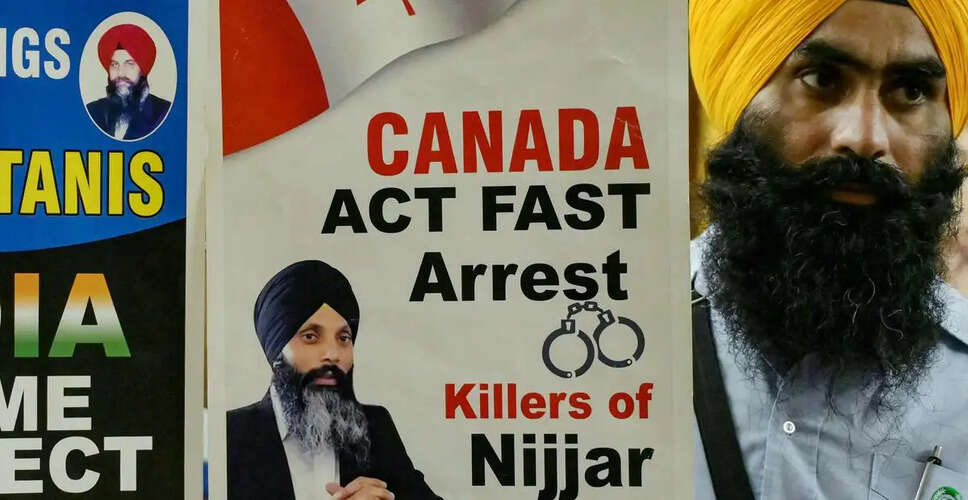
Nijjar was shot dead by masked assailants on June 18, 2023, an event that significantly strained relations between India and Canada. Following the incident, Canadian Prime Minister Justin Trudeau informed Parliament that intelligence agencies were looking into “credible allegations” that linked Indian government agents to the murder. India has firmly denied these accusations.
A proponent of Khalistan, an independent Sikh state sought by certain factions, Nijjar led the Khalistan Tiger Force, which is classified as a terrorist organization in India.
Currently, four Indian nationals are undergoing trial in Canada related to the murder of the Khalistani leader, facing charges of first-degree murder and conspiracy.
According to one unnamed official cited in the report, the visa officer at the Vancouver consulate was also believed to be an intelligence operative with India’s Research and Analysis Wing (RAW). Another official mentioned that the Canadian Security Intelligence Service had been tracking an undercover RAW agent at the consulate who was also functioning as a visa officer.
The officials indicated that the visa officer collaborated with the Indian consul general in Vancouver during this period.
Furthermore, the report claims that the intelligence gathered in Canada was allegedly relayed to another operative in New Delhi, who then communicated it to members of the Lawrence Bishnoi gang. A member of this group based in Canada is said to have played a role in orchestrating Nijjar’s murder.
Two Canadian officials identified the individual in New Delhi as Vikash Yadav, who has also been implicated in a U.S. indictment concerning a foiled plot to assassinate another Sikh separatist.
The report emerged on the same day that Prime Minister Narendra Modi engaged in bilateral discussions with Canadian Prime Minister Mark Carney at Hyderabad House in New Delhi. Carney's visit marks his first trip to India since assuming office.
On Saturday, India’s High Commissioner to Canada, Dinesh Patnaik, asserted to reporters in Mumbai that there had been no interference by Indian officials in Canada, stating, “it never happened.”
There has been no official response from the high commissioner’s office regarding these allegations.
An unnamed senior government official in Ottawa also remarked that the Canadian government believed India was no longer involved in alleged violent crimes within Canada.
Canadian Intelligence's Stance on Foreign Interference
Despite the Indian high commissioner’s denial of foreign interference, a Canadian newspaper reported that the country’s domestic intelligence agency has identified India as one of the primary perpetrators of foreign interference and espionage activities against Canada.
On Saturday, a spokesperson for the Canadian Security Intelligence Service confirmed that their assessment remains unchanged, marking a rare instance where a Canadian security agency contradicted a senior government official's statement.
A Canadian inquiry commission previously accused India of meddling in the country’s electoral processes by secretly funding political figures and engaging in disinformation campaigns.
The Indian external affairs ministry dismissed the inquiry panel’s findings, alleging that it is Canada that has been consistently interfering in India’s internal matters.
On February 8, India and Canada announced an agreement on a work plan aimed at enhancing cooperation in national security and law enforcement.