
Allahabad High Court Rules Against Slogan Inciting Violence
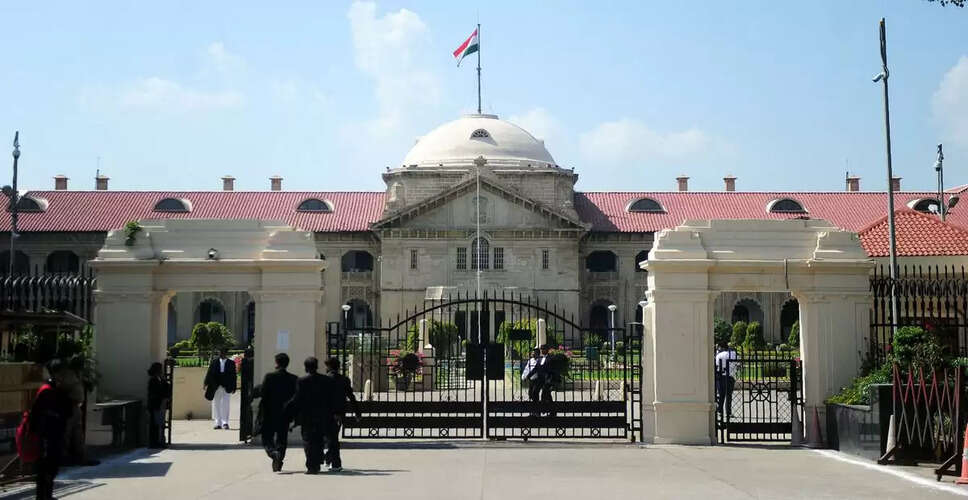
Court's Stance on Provocative Slogans
On Wednesday, the Allahabad High Court stated that the chant “gustakh-e-nabi ki ek saza, sar tan se juda, sar tan se juda” poses a direct challenge to the rule of law and the integrity of India.
This slogan translates to “the only punishment for disrespecting the prophet is beheading.”
A bench led by Justice Arun Kumar Singh Deshwal made this remark while rejecting bail for an individual implicated in the violence that occurred in Bareilly last September.
The court noted that this slogan incites individuals towards “armed rebellion” and is punishable under section 152 of the Bharatiya Nyay Sanhita, which addresses actions threatening India's sovereignty and unity.
The single-judge bench further remarked that the slogan contradicts fundamental Islamic principles, asserting that it lacks any basis in the Quran or other Islamic texts.
Additionally, the court indicated that shouting religious slogans like “‘nara-e-takbir’ followed by ‘Allahu Akbar’”, “Jo bole so nihaal, Sat Sri Akal”, “Jai Shree Ram”, or “Har Har Mahadev” is not considered an offense unless used maliciously to intimidate individuals of other faiths.
The prosecution claimed that on September 26, two Muslim leaders allegedly incited a crowd to gather at a college to protest against perceived injustices and false accusations against Muslim youth.
Despite existing prohibitory orders against gatherings of more than five people, over 500 individuals reportedly assembled, chanting slogans against the government and calling for beheading, according to the prosecution.
A confrontation ensued when police attempted to intervene, as per the prosecution's claims.
While denying bail to one of the accused, the court emphasized that although the Constitution guarantees freedom of speech, this right is subject to reasonable limitations.
The court stated that chanting a slogan advocating for beheading is “not only contrary to constitutional values but also a challenge to the lawful authority of the Indian legal system.”
The bench concluded that there was ample evidence indicating that the bail applicant was part of an unlawful assembly that not only raised objectionable slogans undermining the Indian legal system but also inflicted injuries on police personnel and caused damage to both public and private property, constituting an offense against the state, leading to his arrest at the scene.