
Air Quality Crisis: Ghaziabad Tops India's Pollution Charts This Winter
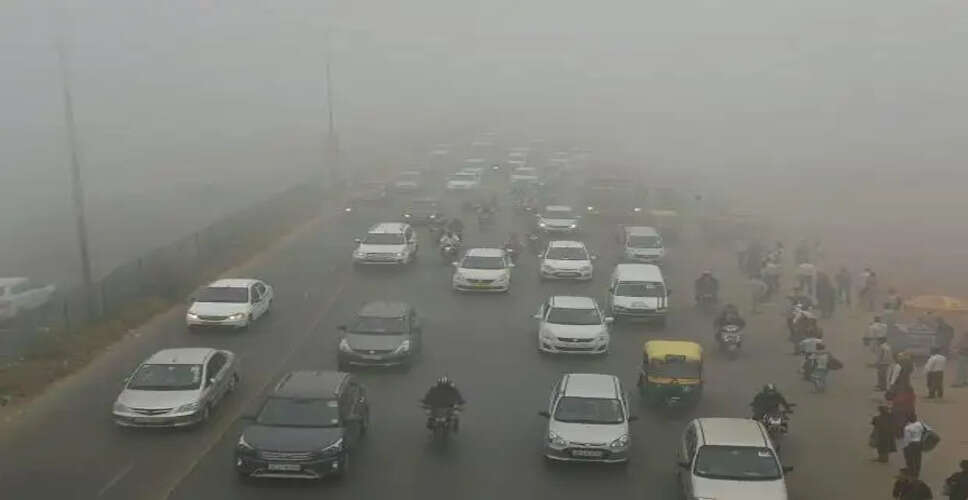
Pollution Levels Soar in Major Indian Cities
New Delhi: According to a recent air quality report by the Centre for Research on Energy and Clean Air (CREA), Ghaziabad emerged as the most polluted city in India during the winter of 2025-26, followed closely by Noida and Delhi.
The analysis revealed that out of 238 cities monitored, 204 reported average PM2.5 levels exceeding the National Ambient Air Quality Standards (NAAQS), a significant increase from 173 cities the previous year.
This assessment utilized data from Continuous Ambient Air Quality Monitoring Stations (CAAQMS) operated by the Central Pollution Control Board (CPCB) from October 1, 2025, to February 28, 2026.
Ghaziabad recorded an alarming average PM2.5 concentration of 172 µg/m3, while Noida and Delhi followed with averages of 166 µg/m3 and 163 µg/m3, respectively.
During this winter period, Delhi experienced 18 days classified as 'severe', 87 as 'very poor', 24 as 'poor', 15 as 'moderate', six as 'satisfactory', and only one day deemed 'good'.
The list of the ten most polluted cities also included Greater Noida, Bahadurgarh, Dharuhera, Gurgaon, Bhiwadi, Charkhi Dadri, and Baghpat, with Greater Noida ranking fourth and Baghpat tenth. Notably, Uttar Pradesh and Haryana each contributed four cities to this list, alongside one city from Delhi and another from Rajasthan.
At the state level, Haryana had the highest number of cities exceeding the PM2.5 NAAQS, with 24 cities breaching the standard. Other states like Andhra Pradesh (nine cities), Punjab (eight), West Bengal (seven), and Gujarat (six) also reported similar exceedances.
Rajasthan (33 out of 34 cities), Maharashtra (30 out of 31 cities), Bihar (23 out of 24 cities), Uttar Pradesh (17 out of 20 cities), Odisha (13 out of 14 cities), and Madhya Pradesh (11 out of 13 cities) also showed high proportions of cities surpassing the national standard.
In contrast, Chamarajanagar in Karnataka was identified as the cleanest city, with a PM2.5 concentration of just 19 µg/m3. The ten cleanest cities predominantly hailed from Karnataka, with one each from Madhya Pradesh and Meghalaya.
The comparison of air quality between the last two winters indicates a troubling trend of increasing non-compliance, with more cities exceeding national standards in 2025-26 compared to the previous winter.
Manoj Kumar, an analyst at CREA, emphasized the need for nationwide PM2.5 reduction targets, alongside existing goals for the National Capital Region (NCR), to effectively manage gaseous pollutants like sulfur dioxide (SO2), nitrogen dioxide (NO2), and volatile organic compounds (VOCs) that contribute to secondary PM2.5 and ozone pollution.
The air quality data for winter 2025-26 also highlighted significant exceedances in cities under the National Clean Air Programme (NCAP). Out of 96 NCAP cities with sufficient data, 84 surpassed the PM2.5 NAAQS, and all exceeded the World Health Organization (WHO) guidelines.
Similarly, among the 142 non-NCAP cities analyzed, 120 exceeded the national PM2.5 standard, with all surpassing WHO guidelines.
In the Indo-Gangetic Plain (IGP), 79 cities had adequate monitoring data, with 75 exceeding the national PM2.5 standard, leaving only four within the acceptable limits. In the National Capital Region (NCR), all 28 monitored cities failed to meet the national standard.