
Air Chief Marshal Raises Concerns Over Delays in Defense Projects
Air Chief Marshal A.P. Singh has voiced serious concerns regarding the significant delays in defense acquisition projects, highlighting the urgent need for self-reliance in India's defense sector. His remarks come in the wake of a military conflict with Pakistan, pointing to the failure of American companies like GE to meet their commitments. With the Indian Air Force facing a critical shortage of fighter jets, the implications of these delays are profound. The situation raises questions about accountability and the geopolitical dynamics at play, suggesting that the US may be leveraging these delays to influence India's defense procurement decisions. As tensions rise, the call for India to achieve self-sufficiency in defense becomes increasingly urgent.
| May 30, 2025, 11:40 IST
Concerns Over Delayed Defense Projects
Air Chief Marshal A.P. Singh has expressed serious concerns regarding significant delays in the implementation of various defense acquisition projects. In his first public statement following a four-day military conflict between India and Pakistan, he remarked that "not a single project" has been completed on time. However, during his comments at the CII Business Summit, he did not specify which projects were affected or the duration of the delays impacting the Indian Air Force. He referenced a dialogue from the Salman Khan film 'Wanted', emphasizing that commitments made regarding defense projects must be honored. Known for his candid remarks, Air Chief Marshal Singh noted that nearly a decade ago, the Indian Air Force was largely looking outward for procurement, but has since shifted its focus to domestic opportunities. He stressed that the current geopolitical climate has made it clear that self-reliance is the only solution.
Implications of the Air Chief's Statement
There are multiple interpretations of the Air Chief Marshal's statement. A significant concern that has emerged is the failure of American companies to fulfill their commitments or the intentional delays in meeting them. For instance, in 2021, India's HAL (Hindustan Aeronautics Limited) entered into a $716 million agreement with GE (General Electric) for the supply of 99 F404-IN20 engines, with initial deliveries expected to start in March 2023. As of May 30, 2025, only one engine has been delivered, despite GE's promise to provide all 99 engines by the initial deadline. Reports indicate that future delivery plans include 11 engines in 2025, 20 in 2026, 20 in 2027, 20 in 2028, 20 in 2029, and 8 by 2030, raising significant doubts about the feasibility of these timelines.
Impact on Tejas Mk1A Fighter Jets
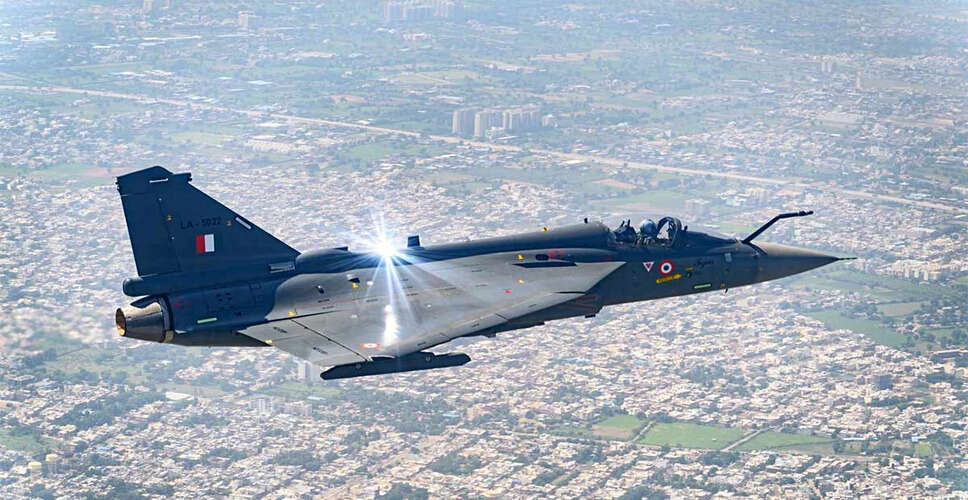
In February 2021, the Indian Air Force placed an order worth ₹48,000 crore with HAL for 83 Tejas Mk1A fighter jets, which included 73 single-seaters and 10 trainer versions. Based on GE's commitment to supply engines by March 2023, HAL assured the Air Force that the Tejas Mk1A jets would be delivered by March 2024. However, with GE halting engine supplies, HAL has also had to delay the delivery of the Tejas Mk1A. Currently, the Air Force is in urgent need of new fighter aircraft, requiring approximately 50–60 squadrons for combat, with a minimum necessity of 42 squadrons. Each squadron consists of 18 fighter jets. Sources indicate that the Indian Air Force currently operates only 31 squadrons, the lowest number since the 1965 war. In contrast, India had 42 squadrons in 1996 and 35 in 2013. This situation has led to the Air Chief Marshal's frustration over the insufficient number of combat aircraft available for warfare.
Accountability for the Delays
The question arises as to who is truly responsible for this predicament. The answer points to GE, which has not delivered engines to HAL, while the other Tejas jets are ready and only awaiting engine installation. Consequently, GE is being held accountable for this crisis. Analysts suggest that GE, a major American defense contractor considered part of the US Deep State, may be deliberately delaying engine deliveries to pressure India into purchasing fully manufactured F-35 fighter jets from the US.
Historical Context of Delays
In 2020, the Indian Army also faced delays in the delivery of six Apache helicopters from the US, for which a $600 million deal was struck. Defense analysts speculate that these delays may be a means for the US to convey a message or express dissatisfaction. The US has a history of intervening in other nations' affairs and orchestrating regime changes, leading to skepticism regarding the delays in GE engines and Apache helicopter deliveries. The US understands that delaying GE engine deliveries will impact the capabilities of the Indian Air Force, while the delay in Apache deliveries will hinder the Indian Army's offensive and reconnaissance capabilities.
Need for Self-Reliance in Defense
Ultimately, while the US claims a deep friendship with India, the reality is that it primarily looks out for its own interests. Beyond the US government and administration, there are powerful entities that continuously attempt to destabilize India. The recent military conflict between India and Pakistan has underscored the necessity for India to achieve complete self-reliance in the defense sector.