
Ahmedabad Intensifies Campaign Against Child Begging Ahead of Major Sporting Events

Ahmedabad's Initiative for Child Welfare
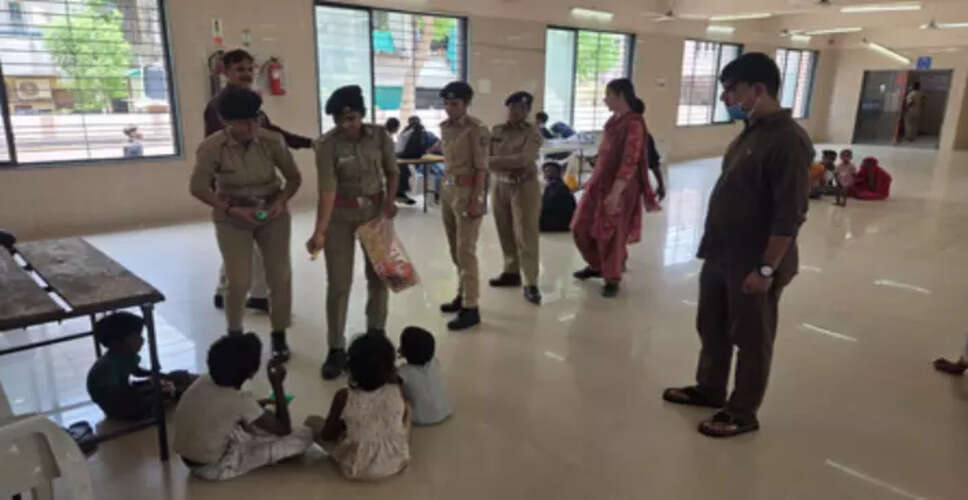
Representational image
Ahmedabad, June 24: In preparation for the 2030 Commonwealth Games and to strengthen India's bid for the 2036 Olympic Games, Ahmedabad's city officials have initiated a robust campaign targeting child begging and street exploitation. This effort aims to enhance child welfare, improve urban safety, and ensure cleaner public spaces, aligning with the city's goal of presenting a positive image for upcoming international sporting events.
In the last two days, collaborative teams made up of members from the Ahmedabad Municipal Corporation (AMC), the Mahila Cell of the Ahmedabad Crime Branch, the Anti-Human Trafficking Unit (AHTU), local police, social welfare organizations, and child protection agencies have conducted extensive operations against child begging in several of the city's busiest commercial and tourist areas.
This initiative has successfully rescued numerous children and adults, while also intensifying efforts to identify at-risk minors, verify their family backgrounds, and reduce instances of exploitation.
The campaign is particularly timely as Ahmedabad positions itself as a global sports hub.
Confirmed as the host city for the 2030 Commonwealth Games, officials view this event as a crucial step towards India's ambition to secure the 2036 Olympic Games. To support this goal, significant sports infrastructure projects are already in progress throughout the Ahmedabad-Gandhinagar region.
On Monday, a targeted anti-begging operation was executed in the city's north-west and south-west zones, covering 41 identified hotspots. This drive resulted in the rescue of 44 children, who were subsequently placed with the Child Welfare Committee (CWC).
Four children were relocated to child protection homes, while the remaining 40 were reunited with their parents after receiving assurances that they would not be exploited for begging in the future.
Additionally, 15 men and five women were brought before a court and later transferred to beggar homes in Odhav and Dabhoda.
The following day, another operation in Ahmedabad's west zone targeted over 34 hotspots, leading to the rescue of 16 children. Nine of these children, along with their parents, were moved to AMC-operated shelter homes, while seven were returned to their families after the parents committed to not involving them in begging again.
Thirteen men and 39 women were also presented in court and sent to rehabilitation facilities.
According to officials from the Ahmedabad Crime Branch, this current operation is part of a larger initiative that has been ongoing for over two years.
DCP (Crime) Ajit Rajian stated that the Mahila Cell of the Crime Branch has been actively addressing the issue of child begging since 2024.
"For the past two years, the Mahila Cell has been rigorously pursuing individuals who exploit children for begging. Over 200 children have been rescued from such activities during this time, with more than 60 successfully enrolled in AMC schools," he reported.
Data from the Crime Branch indicates that since 2024, authorities have rescued 276 children, reunited 33 missing children with their families, and registered 22 cases under the Juvenile Justice Act involving 67 children rescued from begging. Additionally, 33 raids against child labor have led to the rescue of 107 children.
Authorities also reported the rescue of a 15-day-old infant in a case that uncovered an interstate trafficking ring.
"Over 40 anti-begging operations have been conducted in the past two years, with regular joint efforts involving the AMC and other departments continuing into 2026. This year alone, more than 60 children and 89 adults have been rescued through these operations and referred for rehabilitation," he confirmed.
The latest week-long campaign commenced with collaborative planning sessions involving police and municipal officials.
Teams from women and child welfare departments, nutrition units, medical services, and law enforcement were deployed together, incorporating counseling and rehabilitation measures into the operation. "This drive will continue for at least one week until next Monday," Rajian stated.
Officials have identified 124 hotspots across Ahmedabad where begging is prevalent. These locations include the Sabarmati riverfront, CG Road, SG Highway, South Bopal, and other busy commercial areas where crowds and traffic create opportunities for soliciting alms.
The children encountered during these operations range in age from four to 16 years. Police have noted that begging is not the only activity in which these children are involved.
"In addition to begging, some children are forced to sell low-quality toys at inflated prices, while others are made to clean vehicles at traffic lights or perform dangerous stunts," Rajian explained.
Investigators have not found evidence of kidnapping or organized forced begging during the current operations. However, they have observed a pattern of families arriving from neighboring states, lured by the belief that begging in Ahmedabad is financially rewarding.
"It has been discovered that several families, through agents from outside Gujarat, come to Ahmedabad under the impression that begging here is a lucrative opportunity," Rajian noted.
According to police, many children found begging are accompanied by their parents or relatives and are often moved from one location to another seasonally.
While most of those rescued do not have serious criminal records, authorities are verifying backgrounds with neighboring states. Police have also raised concerns about broader forms of exploitation associated with street life.
"Some past cases have indicated that children were used by relatives to transport alcohol for sale," Rajian added.
ACP (Mahila Cell) Himala Joshi stated that the current three-day intensive operation aims to expand an existing program that has been active for two months.
"The motive behind this drive, which has been ongoing for the past two months, is to cover more areas of Ahmedabad in a shorter time frame," she emphasized.
The operation has targeted traffic junctions, flyovers, commercial centers, railway stations, bus terminals, temples, and shopping districts across both eastern and western parts of the city.
Joshi mentioned that every rescued child is presented before the Child Welfare Committee and processed under the Juvenile Justice Act.
"Medical examinations are conducted to identify signs of abuse or violence, while officials verify the relationship between accompanying adults and the children. We are particularly vigilant for any signs of abuse or violence," she stated.
She added that cases could be filed against parents if they knowingly involve their children in begging activities. "We have also registered cases under the Juvenile Justice Act even if children are found with their parents," Joshi noted.
The police officer indicated that authorities remain vigilant for potential links between begging networks and other criminal activities. "If we discover any rackets or illegal activities, we will apply the relevant criminal sections of the law and take appropriate action," she said.
The recent drives have covered areas including Bodakdev, Sola, Satellite, Vastrapur, Shahibaug, Sindhu Bhavan Road, SG Highway, the Riverfront West stretch, and commercial zones surrounding major shopping centers and traffic intersections.
Officials assert that the anti-begging campaign is also part of Ahmedabad's broader efforts to establish itself as a "safe and inclusive city" in preparation for hosting significant international events.
The city and its surrounding region are undergoing extensive infrastructure development, including sports venues, transport facilities, and urban upgrades linked to these ambitions.
When asked why the anti-begging drive is associated with future international sporting events, Joshi explained that the focus extends beyond the city's image to include the protection of vulnerable individuals. "When discussing safety, we cannot overlook the safety of children and women," she stated.
She emphasized that while giving money to beggars may be well-intentioned, it can inadvertently perpetuate the cycle of exploitation and undermine efforts aimed at education, rehabilitation, and long-term livelihood opportunities.
Simultaneously, she noted that authorities are working to ensure that elderly, disabled, and mentally challenged individuals receive shelter, counseling, and government support through beggar homes and night shelters.
"Our goal is to protect the dignity and rights of those engaged in begging activities and to guide them towards better income-generating options," she concluded.
The anti-begging campaign reflects an effort to address social vulnerabilities that authorities believe remain hidden behind busy traffic junctions, shopping districts, and tourist attractions.
Through school enrollment, rehabilitation programs, shelter homes, and criminal investigations, officials argue that the city's preparations for hosting international events increasingly include a parallel focus on the welfare and protection of children found on its streets.