
Ahmed Shehzad's Controversial Claims on India's Doping Protocols Stir Debate Ahead of T20 World Cup Semifinal
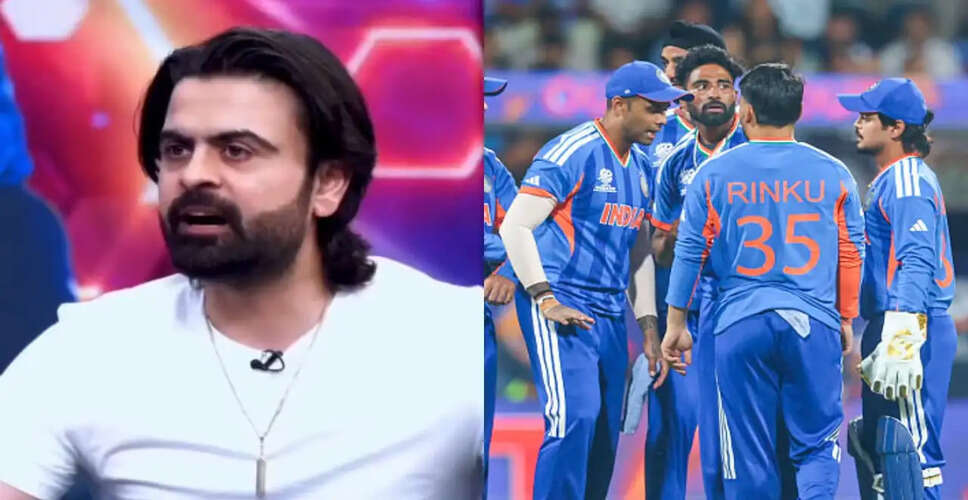
Controversy Erupts Over Doping Claims
Ahmed Shehzad, a cricketer from Pakistan who has fallen out of favor, ignited a debate regarding India's anti-doping measures just before the T20 World Cup 2026 semifinal against England, scheduled for March 5 at Mumbai's Wankhede Stadium.
The Indian team, the reigning champions, secured their place in the semifinals by defeating the West Indies by six wickets, with Sanju Samson's impressive 97 runs leading the charge to chase a target of 196 runs.
This upcoming match marks the third time India and England will meet in a T20 World Cup semifinal, having previously faced each other in 2022 and 2024.
Shehzad's Unverified Allegations
As the Suryakumar Yadav-led squad prepares for the crucial match, Shehzad made unsubstantiated claims on a Pakistani television program, 'Haarna Mana Hai', suggesting that the Board of Control for Cricket in India (BCCI) prevents ICC officials from conducting doping tests on Indian players.
"The ICC conducts doping tests globally, except for India, where their own board manages the process," Shehzad stated.
He further claimed, "India asserts that they do not trust external technology and prefer to conduct their own doping tests."
Criticism of Shehzad's Claims
Shehzad's assertions have faced backlash from cricket fans and analysts, many of whom have labeled his statements as unfounded, especially in light of his own past doping ban.
Critics took to social media to express their disapproval, pointing out that the ICC oversees doping tests for all member nations, while individual boards, including the BCCI, manage their own protocols.
Fans highlighted Shehzad's history, noting his 2018 ban for a failed drug test, which undermines his credibility.
Reactions from the Cricket Community
The cricket community has reacted strongly to Shehzad's comments, with many fans accusing him of spreading conspiracy theories aimed at discrediting India.
Comments on social media included remarks about the absurdity of his claims and calls for accountability among former players who make such allegations.
The ICC has maintained strict anti-doping regulations since 2006, ensuring that all member nations, including India, adhere to the World Anti-Doping Agency (WADA) standards.
BCCI's Anti-Doping Measures
The BCCI conducts doping tests for Indian players under the National Anti-Doping Agency (NADA), which it joined in 2019, ensuring compliance with WADA regulations.
Indian cricketers are subjected to rigorous testing protocols, equivalent to those enforced by the ICC.