
Acharya Prashant Highlights Deep Crisis in Education Amid NEET Paper Leak

A Call for Reflection on Education System
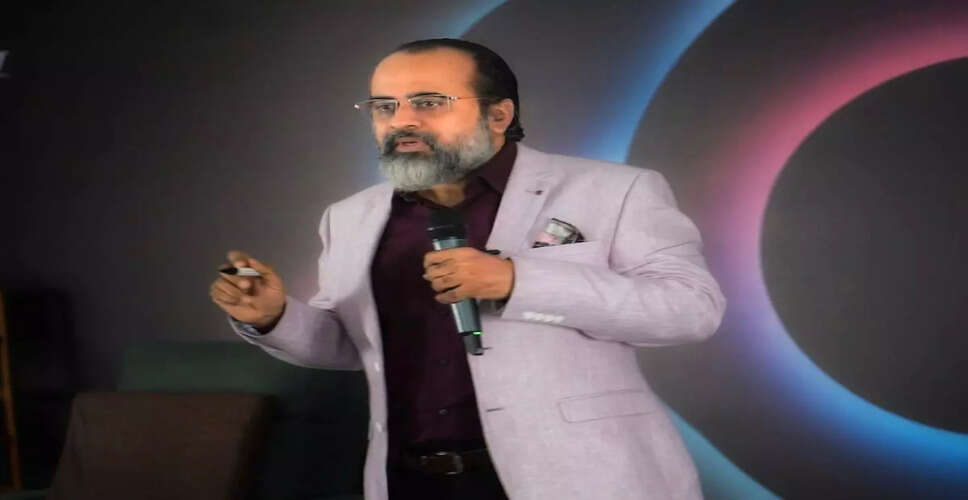
File image of Acharya Prashant(Photo: @Prashant_Advait/X)
Panaji, July 16: Philosopher and author Acharya Prashant has expressed serious concerns regarding the recent NEET paper leak, student suicides, and the ensuing protests. He emphasized that this situation reflects a profound crisis within both our education system and society at large, rather than just an administrative failure.
During ongoing student protests at Jantar Mantar and amidst educationist Sonam Wangchuk's hunger strike, Prashant urged Wangchuk to conclude his fast and called on the government to engage in meaningful dialogue.
In a media interaction in Goa, he stressed that such a significant issue warrants thoughtful consideration rather than hasty responses.
Addressing the human aspect of the crisis, he remarked, "With twenty-two lakh applicants, we are talking about twenty-two lakh families. Many of these students have dedicated years of their lives, sacrificing their childhood and social experiences. The revelation of a leaked paper shatters not just their examination hopes but also their trust in the system."
He noted that this broken trust extends beyond a single moment, leading individuals to believe that integrity and hard work are futile, while dishonesty prevails.
Prashant highlighted that in India, families collectively invest in a student's preparation, meaning the fallout from such incidents affects entire households. While he acknowledged that authorities do respond to such crises by re-conducting exams and making arrests, he pointed out that these recurring issues have eroded the foundational trust of the youth.
Referring to the alarming number of student suicides in recent months, he remarked that the internal struggles faced by individuals often go unrecorded and unnoticed.
Regarding Wangchuk, Prashant praised his dedication, stating, "His life exemplifies sincerity. In the harsh environment of Ladakh, where formal education systems have failed, he has successfully brought children to school, demonstrating that education is about living rightly, not just rote learning."
He urged Wangchuk to prioritize his life, saying, "You can contribute to India far more by remaining alive. Society, Ladakh, India, and the environment need you. Please end your fast."
Prashant called for government dialogue, asserting, "Engaging in conversation is a hallmark of graciousness; it reflects good character. It is unbecoming of a democracy for a respected citizen to risk their life just to be heard."
He then posed a critical question: "While everyone discusses the system's failure and the paper leak, what remains hidden is the deeper issue—someone has taught our youth that the value of a rank surpasses their own life."
He characterized the leak not as a mere market accident but as a product of a flawed value system. "Papers leak only when there are buyers and sellers willing to engage in such transactions. With so many candidates vying for limited seats, it is inevitable that brokers will emerge. This leak is not an isolated incident; it is a symptom of a larger issue where both sides have agreed on the inflated value of this paper."
Prashant questioned who established this market, asserting that it was not merely the brokers or the government, but a value system cultivated within families and social circles. He challenged parents, asking, "When did you transform your ordinary, beautiful child into an entrance-exam project? True love for your child would not tie their self-worth to a single exam result."
He also addressed educators, questioning how they have defined education. He distinguished between two types of education: one that provides a livelihood and another that nurtures life. He criticized the focus on mere survival, which suppresses individual growth.
While he acknowledged the legitimacy of students' demands for justice, he posed a reflective question: "The future model you aspire to, who has shaped it for you? If it were truly your own, why are so many pursuing the same path? This is an imported dream, an implanted desire."
Using a metaphor, he compared society's approach to crises to a driver who, despite being intoxicated, is given better roads and faster ambulances instead of addressing their condition. "We are willing to make external changes but fail to examine the driver—humanity itself. This is the change that is necessary."
While he recognized the need for external reforms, he deemed them insufficient without internal awareness. "Fight against systemic wrongs; that is your right. However, without inner awakening, external changes will only result in superficial alterations. As the saying goes, 'Turning things only on the outside does not carry one very far.' We are the architects of the system. If we are corrupt within, we will only create a façade of a good system while slipping through the cracks we have made ourselves."
He concluded by emphasizing the importance of self-knowledge, stating, "We do not need just vocational training; we require a mass education of the self. If we continue to avoid this, tragedies will persist, and our children will continue to suffer, under various pretexts."
In his closing remarks, he posed a poignant question for India: "Why do we only see the surface of incidents and never their roots? We are quick to assign blame externally, but will we acknowledge our own responsibility?" He concluded, "A system cannot be honest if the individuals who create it are dishonest. To change the system, we must first look within ourselves."
Acharya Prashant, an alumnus of IIT Delhi and IIM Ahmedabad, is the founder of the PrashantAdvait Foundation. His work, which draws from both Indian and global philosophies, has garnered over 110 million followers on social media. He recently completed a significant tour in the UK, engaging in discussions at prestigious institutions such as Cambridge, Oxford, and the London School of Economics on topics related to consciousness, education, and personal transformation. He has been recognized in the Watkins 2026 list of the world's most influential living thinkers.