
A Historic Cricket Match: Garfield Sobers in Assam

A Memorable Day in Jorhat
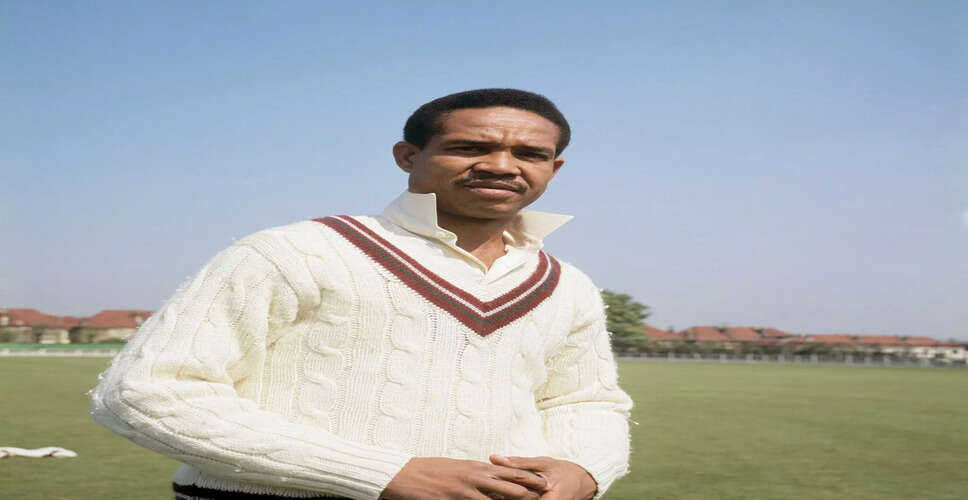
Garfield Sobers. (Photo:'X'/ @abdullah_0mar)
Guwahati, July 20: On a chilly winter morning, January 9, 1959, the small tea town of Jorhat buzzed with excitement.
Long before cricket became a staple on Indian television and years before Guwahati was recognized as an international cricket venue, a large crowd gathered to witness one of the most renowned cricket teams in history. The formidable West Indies had come to play a three-day first-class match against the East Zone.
This illustrious team featured legends like Wes Hall, Sonny Ramadhin, Basil Butcher, Jackie Hendriks, and Lance Gibbs. Among them was a young, cheerful left-handed batsman from Barbados, Garry Sobers.
At that time, few spectators could have predicted that this young talent would eventually be celebrated as the greatest all-rounder in cricket history.
Just eight months prior, Sobers had made headlines by scoring an unbeaten 365 against Pakistan, setting a record for the highest individual score in Test cricket. During their tour of India, the West Indies made a notable stop in Assam after the third Test in Kolkata, facing an East Zone representative team in Jorhat from January 9 to 11, 1959.
Sobers batted at the fourth position, leading the tourists with a stylish 54 runs before being dismissed leg before wicket by DS Mukherjee. Basil Butcher contributed 30 runs, while the dynamic Wes Hall added 27, helping the West Indies to a total of 162 after East Zone was bowled out for 106.
While Sobers showcased his batting finesse, Hall demonstrated his fast bowling prowess, taking 7 wickets for 54 runs in the first innings. Eric Atkinson followed suit with 6 wickets for just 10 runs, leading to the East Zone's collapse for a mere 39 runs in their second innings. The West Indies secured victory by an innings and 17 runs, concluding what was meant to be a three-day match in just two days.
The importance of this match has only increased over the years. It stands as one of the most significant cricket events ever held in Assam, a testament to the fact that long before ODIs and T20s made their way to Guwahati, cricket enthusiasts in the state had already witnessed one of the game's legends in action.
Sobers would go on to redefine the standards of cricket excellence, accumulating 8,032 Test runs at an impressive average of 57.78, taking 235 wickets with both left-arm pace and spin, and holding 109 catches. He captained the West Indies and was the first cricketer to hit six sixes in an over in first-class cricket.
His remarkable adaptability has solidified his status among cricket's all-time greats.
The match in Jorhat also left a lasting impression on Tapan Barua, the only player from Assam in the East Zone team. In a 1983 interview with veteran sports journalist Jiten Gogoi, Barua recounted his experience facing the intimidating Hall.
“I had never faced such fast bowling before. My first over was a maiden. In the next over against Hall, I gained confidence after surviving five balls. The sixth was short, and I couldn't resist the hook. I edged it, and it hit my forehead,” he recalled.
Barua had to retire hurt after scoring one run and did not bat in the second innings.
Reflecting on that historic match, Gogoi remarked that those who witnessed Sobers in Jorhat experienced a priceless moment in cricket history. “It is a matter of pride for Assam that Sir Garfield Sobers played on our soil,” he stated.
As the cricketing community remembers Sir Garfield Sobers, who passed away on July 17, 2026, that January day in Jorhat should also be commemorated. The match's outcome may have been secondary, but what truly mattered was that Assam had the unique opportunity to witness greatness in its early stages, long before Garry Sobers became the legendary Sir Garfield Sobers.