
Vivek Ranjan Agnihotri Embraces New Beginnings After Completing His Trilogy
A Fresh Start for the Filmmaker
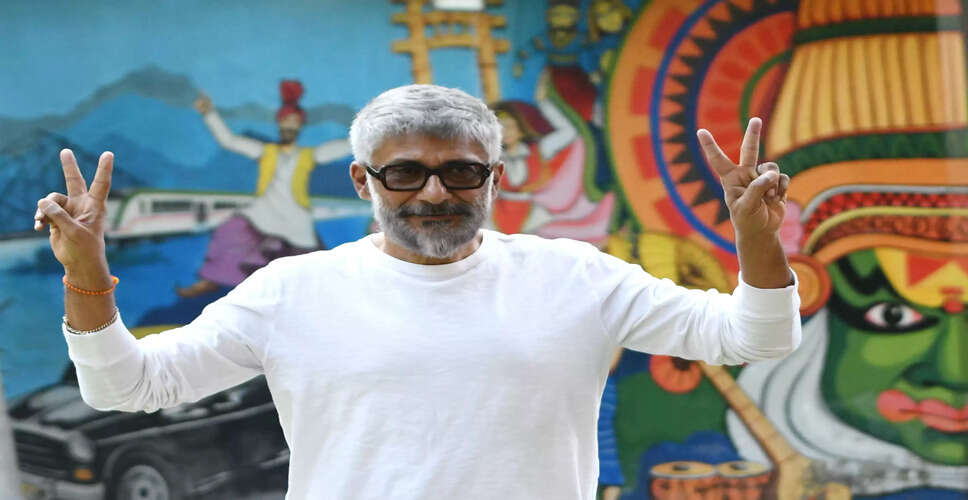
On a pleasant Wednesday morning in Chandigarh, filmmaker Vivek Ranjan Agnihotri made a rare appearance in white attire, stepping away from his usual black clothing. He humorously likened his feelings to that of a father who has just married off three daughters, expressing a desire to enjoy a leisurely walk in the Rose Garden and a brief visit to the Rock Garden, reminiscent of his past experiences in the city.
The Trilogy's Conclusion
His 'three daughters' refer to his notable films: The Tashkent Files, The Kashmir Files, and The Bengal Files. With the final film having completed its theatrical run, Agnihotri is set to host a special screening at Inderdhanush Auditorium in Panchkula, where he will reflect on his controversial yet celebrated journey in filmmaking.
A Journey of Truth and Justice
Agnihotri revealed that the idea for a trilogy emerged in 2012, with each film representing themes of truth, justice, and the value of life, as depicted in The Tashkent Files, The Kashmir Files, and The Bengal Files. He expressed a desire to take a break and focus on himself before embarking on his next project.
Navigating Controversy
His films have elicited mixed reactions; while some praise them for uncovering hidden truths in Indian history, others criticize them as mere propaganda, with calls for bans. Agnihotri candidly remarked, "Those who wish to ban our films often watch them first."
The Role of the State
Regarding protests and attempts to hinder his films' releases, he stated that once a film receives clearance from the Central Board of Film Certification (CBFC), it is the responsibility of the state government to ensure its screening. He emphasized that he does not wish to engage in confrontations, noting that he expected The Bengal Files to be screened widely, which did not happen.
From Commercial to Conscious Filmmaking
Agnihotri's filmography is diverse, spanning from the crime thriller Chocolate to the political satire Buddha in a Traffic Jam. He shared, "Initially, I made films that audiences wanted to see. Now, I create films that I believe people should watch."
Emotional Toll of Filmmaking
Years of exploring India's troubled history have taken an emotional toll on him. He mentioned, "Our nation has endured significant suffering. Through my films, I have carried that pain, which is why I wore black for so long."
Activism Over Filmmaking
With his trilogy inspired by India's national emblem, Agnihotri explained, "The three visible lions symbolize truth, peace, and justice. The fourth lion represents the people of India." He now aims to focus on activism rather than producing another film, stating, "I’m still learning the ropes."
Inspired by the Common Man
He draws inspiration from the resilience of the Indian middle class, saying, "I am deeply moved by the sacrifices of Indian mothers and the perseverance of ordinary people who continue to strive despite numerous challenges."
Addressing Societal Issues with Humor
During a press conference, Agnihotri faced a barrage of questions, ranging from live-in relationships to the reasons behind Indians preferring to send their children abroad instead of improving local conditions. He humorously declined to answer the first question, stating, "I’m not of the age for live-in relationships!" On the second, he asserted that to transform India into a better place, adherence to laws and questioning corruption are essential.
Beyond Political Labels
Agnihotri firmly stated, "Left wing, right wing — these terms belong to politics, not cinema." He believes these labels have been misused to create divisions in society, urging a collective focus on advancing the nation.
The Price of Conviction
He acknowledged that his journey has often been isolating and fraught with danger. "It’s not easy — it’s lonely and often humiliating," he reflected, mentioning the threats he has faced and the security measures he now requires. Despite these challenges, he remains committed to his cause, drawing strength from the spirit of the common man.
Looking Ahead
With his trilogy completed and a shift in wardrobe from black to white, Agnihotri appears poised for a new chapter in his life, one that prioritizes activism while allowing the camera to take a backseat.