
Vaishakh Amavasya 2026: Rituals and Significance

Vaishakh Amavasya 2026 Rituals
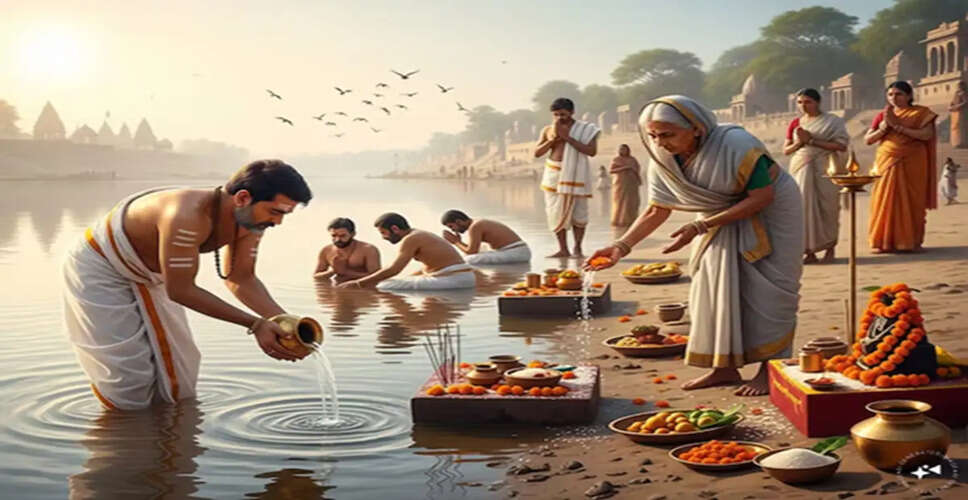
Vaishakh Amavasya 2026 Rituals: Today marks Vaishakh Amavasya. This year, two significant *Yogas* (planetary alignments) are present: *Sarvartha Siddhi Yoga* and *Amrit Siddhi Yoga*. Engaging in ritual baths and charitable acts (*Daan*) during these auspicious alignments is believed to cleanse one of sins and sorrows, leading to spiritual merit.
Vaishakh Amavasya is a day dedicated to honoring ancestors (*Pitras*) and seeking liberation from *Pitra Dosha* (ancestral afflictions). The blessings from ancestors are thought to enhance an individual's growth and prosperity; failing to honor them on this day may result in *Dosha* (affliction). Let’s delve into the auspicious *Yogas*, timings (*Muhurats*), worship rituals, mantras, and other relevant details regarding Vaishakh Amavasya.
Timings for Vaishakh Amavasya 2026
Vaishakh Amavasya 2026 Timings (*Muhurats*)
Start of Vaishakh Amavasya Tithi: Thursday, April 16, from 8:11 PM.
End of Vaishakh Amavasya Tithi: Friday, April 17, at 5:21 PM.
Best Time for Amavasya Bath: 04:25 AM to 05:09 AM.
Best Time for Amavasya Rituals: 11:55 AM to 12:47 PM.
Time for *Shraddh* (Ancestral Rites): 11:30 AM to 02:30 PM.
Sunrise: 05:54 AM.
Vaishakh Amavasya 2026: Two Auspicious *Yogas*
Today, two auspicious *Yogas* are present on Vaishakh Amavasya. The *Sarvartha Siddhi Yoga* lasts throughout the day, while the *Amrit Siddhi Yoga* begins at 05:54 AM and continues until 12:02 PM.
Additionally, the *Vaidhruti Yoga* is active from early morning until 07:22 AM. Following this, the *Vishkambha Yoga* will be in effect from 07:22 AM until the early hours of 03:45 AM on April 18, after which the *Priti Yoga* will commence. The Revati Nakshatra (lunar mansion) is present from early morning until 12:02 PM, after which the Ashwini Nakshatra takes over.
Rituals of Bathing, Charity, and *Tarpan*
**Rituals of Bathing, Charity, and *Tarpan* on Vaishakh Amavasya**
On Vaishakh Amavasya, rise during the *Brahma Muhurat* (the auspicious pre-dawn period), perform your morning rituals, and then take a bath. The *Brahma Muhurat* is considered the ideal time for bathing. If you miss this time, you can bathe after sunrise.
After bathing, don clean clothes. Gather black sesame seeds, white flowers, and water. Meditate on and remember the names of the ancestors (*Pitrs*) to whom you wish to offer *Tarpan* (ritual oblations). Then, wearing a sacred ring (*Pavitri*) made of *Kusha* grass, offer the *Tarpan* to your ancestors using the black sesame seeds, flowers, and water.
Next, bow to your ancestors and express your efforts to satisfy them through your actions; pray for their blessings.
After the *Tarpan*, engage in charitable acts (*Daan*) for your ancestors. Donate food grains and white clothing to a Brahmin. The clothing should be unstitched; you may give items like a towel, *lungi*, *dhoti*, or *gamcha* (thin cotton towel). Additionally, include a single utensil in your donation.
Once you have completed the bathing, charity, and *Tarpan* rituals, set aside some food prepared for the ancestors and offer it to birds, crows, dogs, cows, etc. It is believed that feeding these creatures allows the food to reach the ancestors, who then bless the family with prosperity.
Mantras for Ancestral *Tarpan*
**Mantras for Ancestral *Tarpan***
During the *Tarpan* ritual, chant the mantra: "Om Pitribhyah Swadha Namah." Alternatively, you may also recite: "Om Devatabhyah Pitribhyashcha Mahayogibhya Eva Cha; Namah Swahayai Swadhayai Nityameva Namo Namah."
**Significance of Vaishakh Amavasya**
Performing *Tarpan*, charitable acts, *Shraddh* rituals, and similar rites for one's ancestors on Vaishakh Amavasya helps mitigate *Pitra Dosha* (ancestral afflictions). Those who neglect these rituals may incur *Pitra Dosha*, leading to stagnation and discord within the household. To alleviate *Pitra Dosha*, a specific ritual known as Tripindi Shraddh is recommended.