
Unveiling the Hidden Contributions of Female Artists in History

The Overlooked Legacy of Women Artists
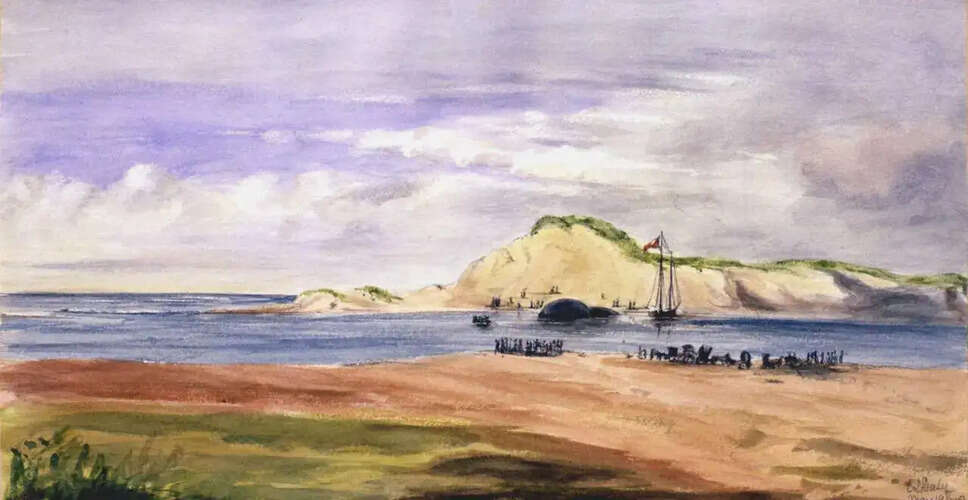
For many years, notable artworks created by female artists have been mistakenly credited to their male counterparts. A prime example is Caroline Louisa Daly (1832–1893), whose sketches were displayed at Canada’s Confederation Centre of the Arts for almost fifty years under the names of two male artists. An article by Ashifa Kassam highlighted that the signatures “C Daly or CL Daly” were wrongly attributed to John Corry Wilson Daly and Charles L Daly. This misattribution was rectified by the gallery, which later organized an exhibition to honor Daly's contributions. This issue extends beyond mere misattribution; historically, women have played pivotal roles in the evolution of artistic styles, often developing innovative techniques and themes. Unfortunately, their contributions have frequently been overshadowed or misrepresented as collaborative efforts. For instance, in 1952, Helen Frankenthaler pioneered the soak-stain technique, where paint was applied directly onto unprimed canvas. This method influenced artists like Morris Louis and Kenneth Noland, yet she was often regarded merely as an influence rather than the originator.
Below are some artworks by female artists that were incorrectly attributed to men.
The Jolly Toper by Judith Leyster (1609–1660)
Judith Leyster, a Dutch master, had her works misattributed to her contemporary, Frans Hals, for an extended period. Active primarily in the early 1630s, it wasn't until two centuries later that her contributions were recognized. This revelation came about due to a legal dispute involving an art dealer, which ultimately clarified that the paintings were indeed by Leyster. She was married to fellow artist Jan Miense Molenaer, and many of her pieces were mistakenly credited to him as well. The Frans Hals Museum acquired this painting, and in 1927, researcher Juliane Harms confirmed its attribution to Leyster.
Self-Portrait as Saint Catherine of Alexandria by Artemisia Gentileschi (1593–1654)
Artemisia Gentileschi, a prominent Baroque artist, created this self-portrait between 1615 and 1617, depicting herself as Saint Catherine of Alexandria, a martyr from the early fourth century. The portrayal reflects resilience, mirroring Gentileschi's own experiences, including her traumatic trial following a rape at 17. After this ordeal, she relocated from Rome to Florence, where this painting was likely completed. The National Gallery in London notes that she frequently incorporated her likeness into her works, with several self-portraits documented in 17th-century inventories. However, it wasn't until 2017 that this painting was formally attributed to her.
Portrait of Charlotte du Val d’Ognes by Marie-Denise Villers (1774–1821)
In 1917, The Met in New York acquired a portrait of a young female artist for $200,000, which was initially attributed to the renowned male Neoclassical painter Jacques-Louis David. This painting, created in 1801, was correctly identified as the work of Marie-Denise Villers by art historian Margaret Oppenheimer in 1996. According to Anastasia Tsalta, art historian Anne Higonnet proposed in 2011 that this painting is a self-portrait of Villers, with the du Val d’Ognes family renaming it only after its purchase. The resemblance of the sitter to Villers’s sister, Marie-Victoire Lemoine, who was also an artist, supports this claim.