
Unraveling the Mysteries of Subhas Chandra Bose and Gumnami Baba
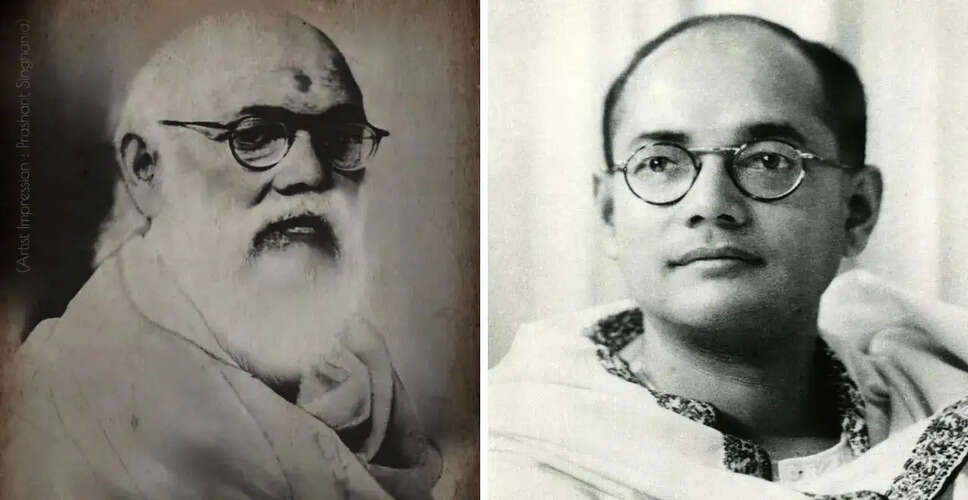
The Enigmatic Connection Between Gumnami Baba and Subhas Chandra Bose
In October 1985, a Faizabad-based daily, Naye Log, published a provocative article suggesting a link between Gumnami Baba and the legendary Subhas Chandra Bose. The Hindi headline posed a question: “Faizabad mein agyaatvaas kar rahe Subhas Chandra Bose nahin rahe??” (Translation: Is Netaji Subhas Chandra Bose, who lived incognito in Faizabad, no longer with us?). This intriguing piece was authored by journalists Ram Tirth Vikal and Chandresh Kumar Shrivastav. Adjacent to it, editor Ashok Tandon contributed an editorial titled simply “Netaji.”
For decades, the circumstances surrounding Bose's death have been shrouded in mystery and speculation. The official narrative claims he perished on August 18, 1945, due to severe burns from a plane crash shortly after takeoff from Taihoku airfield in Taipei. His ashes are reportedly enshrined at the Renkō-ji Temple in Tokyo, Japan. Nevertheless, numerous theories challenge this account.
The Naye Log article boldly asserted that Gumnami Baba, also referred to as Bhagwanji, an ascetic residing in Uttar Pradesh, was indeed Bose, who passed away on September 16, 1985. This sensational claim ignited a competitive frenzy among various newspapers.
In response to the allegations, another local publication, Janmorcha, launched its own investigation but found no substantiating evidence linking Gumnami Baba to Bose. Senior journalist Sheetla Singh recounted visiting Netaji's associate, Pabitra Mohan Roy, in Kolkata in November 1985, stating, “We have explored every sadhu and enigmatic figure in search of Netaji, from Saulmari to Kohima to Punjab. Our inquiries included Babaji at Basti, Faizabad, and Ayodhya. I can confidently assert he was not Netaji Subhas Chandra Bose.”
Lalita Bose, Bose's niece, later visited Ram Bhavan, where Bhagwanji spent his last years. With the assistance of journalists and legal experts, she petitioned the Allahabad High Court to safeguard the belongings of the saint, which she believed included items from her uncle's life. Authors Adheer Som in Gumnami Baba: A Case History and Anuj Dhar and Chandrachud Ghosh in Conundrum provide comprehensive insights into Bhagwanji's life and connections.
Reports indicate that Gumnami Baba's handwriting was analyzed by the Government Examiner of Questioned Documents in Shimla and the State Forensic Science Laboratory in Kolkata, concluding that it did not match Bose's. However, Anuj Dhar, founder of Mission Netaji, referenced two prominent handwriting experts, Curt Baggett and Ashok Kashyap, who publicly affirmed that the writings of Bhagwanji and Netaji were from the same individual, ruling out forgery. Noted expert B Lal Kapoor also supported this view before the Mukherjee Commission, presenting a detailed report backing his findings.
The Mukherjee Commission of Inquiry, established by the Indian government in 1999, was the third investigation into Bose's disappearance. It determined that there was no definitive evidence proving that Bhagwanji or Gumnami Baba was indeed Netaji. Dhirendra K Jha reported that the commission sent Gumnami Baba's teeth for DNA testing at Kolkata's Central Forensic Science Laboratory, which matched blood samples from two descendants on Bose's paternal side and three on his maternal side. The findings, submitted by Dr. V K Kashyap, concluded that the individual from whom the teeth originated did not belong to either lineage of Netaji Subhas Chandra Bose.
The Justice Vishnu Sahai Commission, which operated from 2016 to 2019 under the Uttar Pradesh government's directive, also investigated the claims regarding Gumnami Baba's identity. It concluded that there was insufficient evidence to support the assertion. The enigma surrounding Bose's death persists, with his daughter Anita Bose Pfaff advocating for a DNA test. In a statement to the press, she remarked, “Many Indians still remember and honor the heroes of India’s independence struggle. Numerous freedom fighters had to escape their homeland during colonial rule to evade persecution and continue their fight from abroad. Many never returned. Netaji’s remains, too, were given a ‘temporary’ resting place at the Renkō-ji Temple in Tokyo, Japan.”