
Understanding the Traditions of Nag Panchami 2026
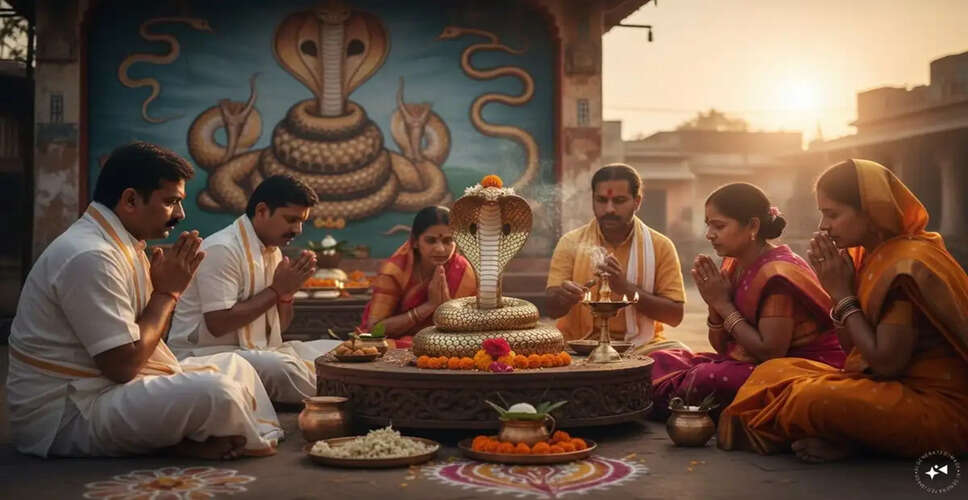

Nag Panchami 2026: A Celebration of Nature and Serpent Deities
Nag Panchami 2026 Tradition: This year, Nag Panchami will be observed on Monday, August 17, coinciding with the *Panchami Tithi* (fifth day) of the bright fortnight (*Shukla Paksha*) in the month of *Sawan*. This festival holds significant importance in Hinduism as it honors the Serpent Deity (*Nag Devta*) and emphasizes the importance of nature. On this day, devotees typically worship the Serpent Deity alongside Lord Shiva. Various customs associated with Nag Panchami are still practiced with great respect across different regions. One notable tradition is the avoidance of making *rotis* (flatbreads) and refraining from placing the *tawa* (griddle) on the stove or hearth. Let's delve into the reasons behind this custom...
Astrological Significance of Rahu and Ketu on Nag Panchami
On Nag Panchami, the astrological influences related to *Sarpa Dosha*, *Kalsarpa Dosha*, and the shadow planets Rahu and Ketu become particularly significant. In astrology, Rahu and Ketu symbolize serpents; Rahu is seen as the serpent's head, while Ketu represents its tail. The *Kalsarpa Dosha* occurs when Rahu and Ketu are positioned unfavorably in a birth chart. Performing rituals to worship the Serpent Deity and Lord Shiva on this day is believed to alleviate the negative impacts of *Kalsarpa Dosha*.
Why Avoid Using the Tawa on Nag Panchami?
As this day is dedicated to the Serpent Deity, there is a tradition of refraining from activities that could harm the earth, plants, or snakes. In certain regions, the use of the *tawa* and other iron tools is also avoided. Astrologically, the *tawa* is viewed as a representation of Rahu and the serpent's hood; hence, it is not placed over fire. Rahu, being a shadow planet, is associated with negativity and confusion, which can lead to various troubles in life.
The Symbolism of the Serpent Deity's Hood and the Griddle
Religious beliefs equate the *tawa* (griddle) with the hood of the serpent deity (*Nag Devta*), making Nag Panchami a festival dedicated to these deities. Consequently, placing a griddle on the fire is seen as disrespecting the serpent deity's hood. Such an act is considered inauspicious and may disrupt one's peace and happiness, potentially inviting misfortune. However, cooking can still be done in deep pots or large vessels (*bhagona*), leading to the tradition of enjoying dishes like *halwa-puri* or *dal-baati* on this day.
Environmental Awareness Through Tradition
The customs surrounding Nag Panchami extend beyond rituals; they also promote the protection of nature and wildlife. During the monsoon season (*Sawan*), snakes emerge from their burrows, and disturbing the ground around these areas could be harmful. Thus, the practice of not digging the earth on Nag Panchami is also viewed as a commitment to environmental conservation.
Is Not Using the Griddle a Universal Rule?
It's essential to recognize that the tradition of avoiding the griddle on Nag Panchami is not universally practiced across all regions. The ways of celebrating this festival differ among various states and communities in India. In some areas, the griddle is entirely omitted, while in others, regular meals are prepared. Therefore, it would be inaccurate to label this as a strict religious mandate for the entire country; it largely reflects local customs and family traditions. The essence of Nag Panchami lies in honoring the serpent deity, respecting nature, and fostering a spirit of protection for all living beings.
PC Social Media