
Understanding the Significance of Tulsi Vivah Rituals in 2026


Tulsi Vivah 2026: A Celebration of Tradition
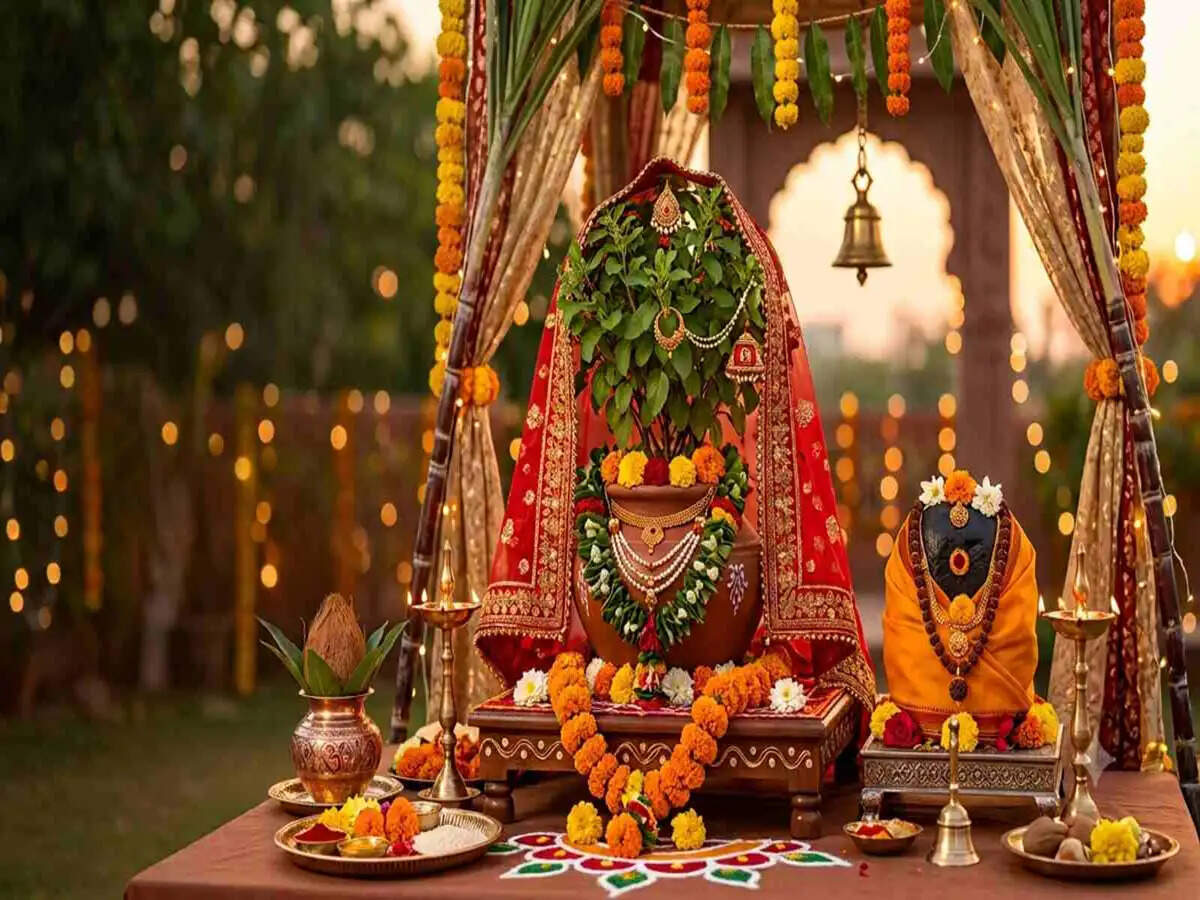
Tulsi Vivah 2026: As the festival approaches, homes and temples begin their special preparations. This occasion marks the ceremonial wedding between Goddess Tulsi and Shaligram, representing Lord Vishnu. During the rituals, the Tulsi plant is beautifully adorned, and a variety of fruits, flowers, and seasonal offerings are presented. Notably, Amla (Indian gooseberry), water chestnut (singhara), and sugarcane are particularly significant.
What led to the inclusion of these three items in the Tulsi Vivah ceremony? Is there a religious story behind them, or do they relate to seasonal changes? Let's delve into the significance of this tradition with insights from Pandit Santosh Shukla.
The Sugarcane Canopy Tradition
The Tradition of Creating a Sugarcane Canopy (Mandap) for Tulsi Vivah
In the Tulsi Vivah ceremony, sugarcane serves not only as an offering but also as a material for constructing a *mandap* (ceremonial canopy). In many households, sugarcane stalks are arranged upright around the Tulsi pot and tied at the top. This canopy is then decorated with flowers and a *chunri* (traditional cloth). In religious customs, this sugarcane *mandap* symbolizes the canopy used in wedding ceremonies. Just as a *mandap* is adorned for a bride and groom, one is prepared for the union of Goddess Tulsi and Lord Shaligram.
The timing of sugarcane's availability also plays a role in this tradition. The new sugarcane harvest coincides with the month of Kartik, leading to its inclusion in worship and offerings. Additionally, sugarcane symbolizes sweetness and prosperity.
The Role of Water Chestnut in the Ritual
Why is Water Chestnut (Singhara) Offered During Tulsi Vivah?
Water chestnut (*singhara*) is a seasonal fruit that becomes available during Kartik. It thrives in water and is plentiful as winter approaches. Its inclusion in the Tulsi Vivah ritual is primarily due to its seasonal nature. In Hindu customs, offering seasonal fruits and grains to the Divine during festivals is a common practice, serving as a gesture of gratitude for nature's bounty.
In various regions, water chestnuts (*singhara*) may be offered raw, while others prefer to boil them or serve them with other *prasad* (offerings). The methods of worship can differ significantly across families and locations.
The Sacredness of Amla
What is the Religious Significance Behind Offering Amla (Indian Gooseberry)?
*Amla* is integral to the rituals of *Tulsi Vivah*, which celebrates the union of the Tulsi plant with Lord Vishnu. The season for *amla* begins in Kartik, aligning it closely with the worship of Lord Vishnu and the religious observances of this month.
According to tradition, *amla* is regarded as an auspicious and sacred fruit. There is also a custom of venerating the *amla* tree during Kartik. Many people perform rituals and share meals beneath an *amla* tree on *Akshaya Navami*.
Offering *amla* during *Tulsi Vivah* is a continuation of this seasonal and religious practice. In some areas, it is distributed as *prasad* after being presented to the Divine.
Connection to Nature
All Three Items Share a Special Connection with Nature.
The tradition of offering *amla*, water chestnuts, and sugarcane during *Tulsi Vivah* is tied to the seasonal harvests available in Kartik:
Sugarcane: Represents the new harvest, sweetness, and the tradition of constructing the *vivah mandap* (wedding pavilion).
Water chestnut (*singhara*): A seasonal fruit available during Kartik.
*Amla*: Associated with the worship rituals of Kartik and traditions like *Amla Navami*.
PC Social Media