
Understanding the Significance of the Kalash Ritual in Hindu Weddings

Exploring the Kalash Ritual in Hindu Weddings
Hindu weddings are rich in traditions and rituals that have been practiced for generations. Many of these customs are seen as auspicious indicators of a family's prosperity. While the deeper meanings of some rituals may not always be clear, they continue to be cherished.
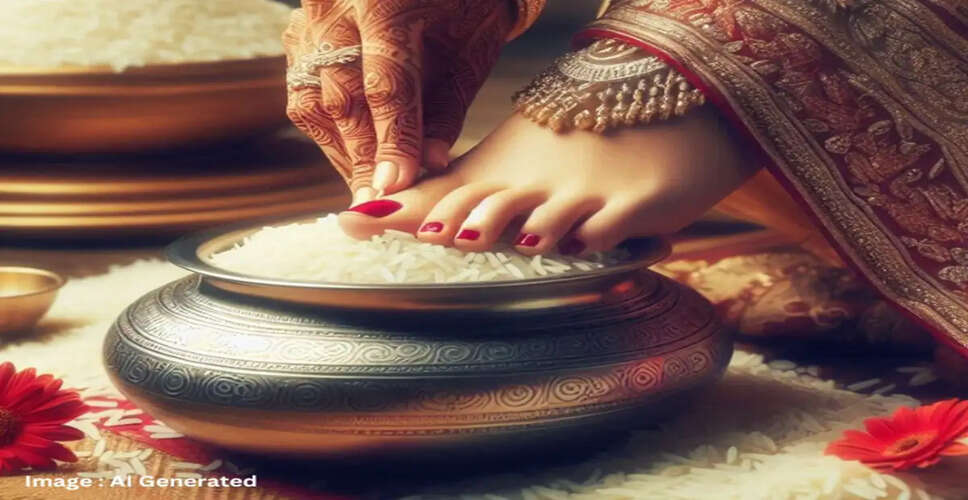
One notable tradition involves the bride using her right foot to tip over a vessel (kalash) filled with rice as she steps into her husband's home post-wedding. This age-old custom symbolizes the connection between her maternal family and her new household.
Commonly known as the 'Kalash Rasam' (vessel ritual), this ceremony is essential for the wedding to be deemed complete. Let’s delve into the significance of this ritual and its underlying meanings.
**The Bride as the Embodiment of Goddess Lakshmi**
Upon entering her new home, the bride is believed to embody Goddess Lakshmi. The act of tipping the rice-filled vessel with her foot signifies the arrival of wealth, joy, and prosperity.
The rice within the vessel symbolizes the abundance of both families; its spilling is interpreted as a promise that the household will always be blessed with food and wealth.
By using her right foot to tip the rice, the bride is said to invoke the auspiciousness associated with Goddess Lakshmi. This ritual is referenced in the *Grihya Sutras*, which indicate that this act signifies her commitment to embracing the customs of her new home.
**The Meaning Behind Tipping the Vessel of Rice**
In Indian tradition, a bride is often referred to as 'Grihalakshmi' (the Goddess of the household). By tipping the vessel of rice, she is believed to invite good fortune and abundance—represented by the spilled grains—into her new home.
This ritual beautifully intertwines Vedic traditions with cultural symbols and beliefs, promoting harmony between the bride and groom. Additionally, the *Kalash* symbolizes the universe and the inception of new life, akin to the womb. The grains placed inside the *Kalash* during the bride's *Griha Pravesh* (home entry) represent Goddess Annapurna, life energy, and enduring prosperity. Thus, when the bride nudges the *Kalash* inward, she invites all that positive energy into her new home.
The bride's entry into her marital home is viewed as a highly auspicious event, heralding both prosperity and happiness.
PC Social Media