
Understanding the Significance of Panchmukhi Ganesh Ji
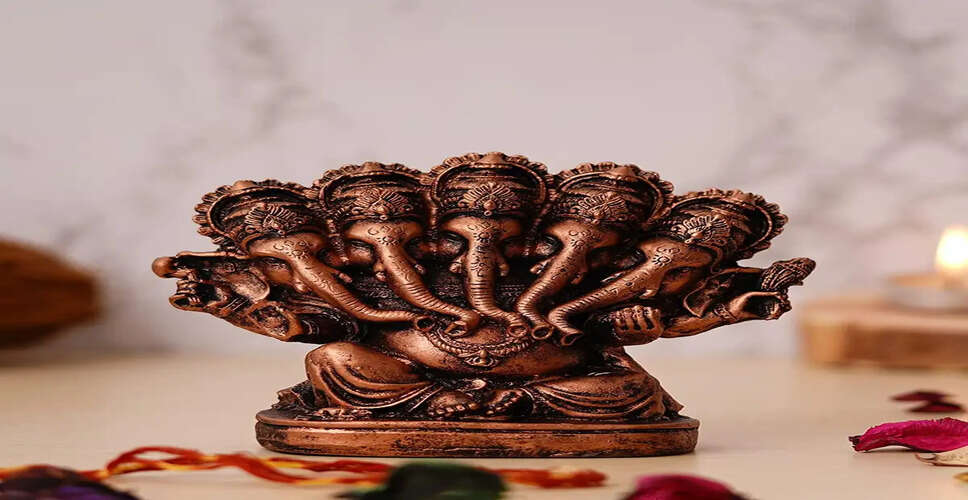

Exploring Panchmukhi Ganesh Ji
Panchmukhi Ganesh Ji: Lord Ganesha is revered in various forms across households, yet the concept of 'Panchmukhi Ganesh' (the five-faced Ganesha) often intrigues many. What does the five-faced Ganesha signify? Is it just a religious emblem, or does it hold deeper spiritual meanings? In ancient Hindu traditions and Vedic scriptures, the Panchmukhi representation of Ganesha is deemed extremely auspicious and benevolent. This form is believed to not only eliminate obstacles but also embodies the harmony of mind, intellect, and spirit.
According to religious beliefs, placing a Panchmukhi Ganesh idol or image in one's residence or worship space generates positive energy and motivates individuals to overcome life's challenges. This is why many people today prioritize the worship of this specific form.
Spiritual Importance of Panchmukhi Ganesh
Panchmukhi Ganesh is seen as a divine manifestation of Lord Ganesha, where the five faces symbolize various aspects of existence. This form is believed to offer protection in all four cardinal directions and represents the five levels of human awareness. Worshipping Panchmukhi Ganesh encourages positive thinking, boosts self-confidence, and fosters mental stability, which is why many choose to place these idols in their homes, workplaces, and prayer areas.
Understanding the 'Panchakosha' Principle
1. Annamaya Kosha
In Vedic philosophy, the Annamaya Kosha pertains to the physical body and the material realm, encompassing the earth, celestial bodies, and the entire physical universe. It forms the basis of human physical existence.
2. Pranamaya Kosha
The second layer is the Pranamaya Kosha, regarded as the center of life energy and vital force (*prana-shakti*). It is believed that this energy sustains consciousness and bodily functions.
3. Manomaya Kosha
The third layer, the Manomaya Kosha, relates to the mind, emotions, and thoughts. This level influences an individual's behavior, decision-making, and mental state. Maintaining a disciplined lifestyle and positive mindset is essential for balancing this *kosha* (sheath).
*Vijnanamaya Kosha*
The fourth sheath, the *Vijnanamaya Kosha*, embodies discernment, knowledge, and self-awareness. It is experienced when one transcends external limitations and engages in introspection and the quest for truth.
*Anandamaya Kosha*
The fifth and final level is the *Anandamaya Kosha*, symbolizing inner peace, contentment, and supreme consciousness. In this state, individuals are said to experience profound joy and spiritual balance.
Symbolism of the Five Faces
According to religious traditions, the five faces of *Panchamukhi* Ganesha represent the *Pancha Mahabhutas*—the five great elements: Earth, Water, Fire, Air, and Ether (Space). These elements are considered the foundation of creation. Additionally, this form conveys messages of balance, protection, and prosperity. *Panchamukhi* Ganesha is viewed as the protector of the four cardinal directions and cosmic energy, making worshipping this form particularly auspicious for new beginnings, moving into new homes, and ensuring success in business and domestic harmony.
Beliefs About Keeping *Panchamukhi* Ganesha at Home
Many families choose to place a *Panchamukhi* Ganesha idol in their prayer rooms, believing it creates a positive environment and reduces negative energy. However, scriptures emphasize that the true essence of worship lies in faith, virtuous actions, and consistent devotion.
PC Social Media