
Understanding the Sacred Symbol of Swastika in Hinduism
The Significance of the Swastika
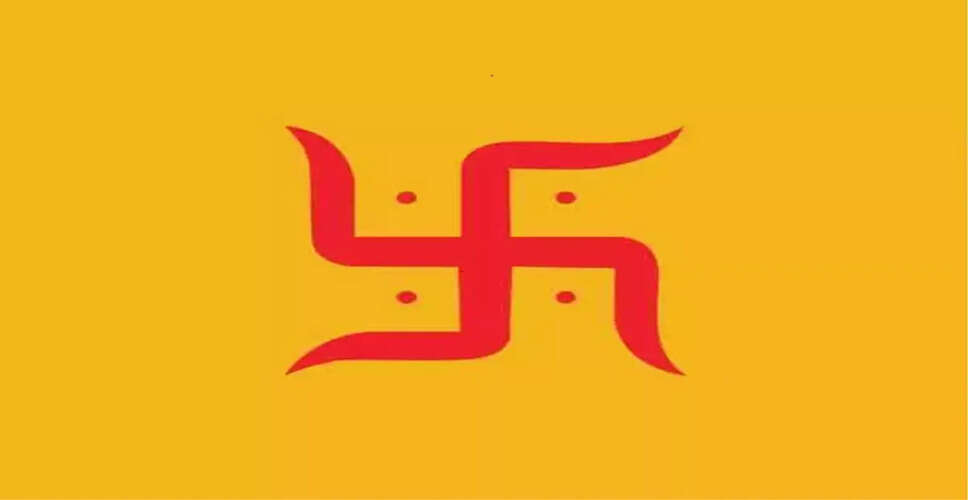
The Swastika is revered as a highly sacred symbol within Hinduism, commonly used during worship, festivals, and other auspicious ceremonies. This emblem signifies happiness, prosperity, positive energy, and good fortune. However, many individuals make small mistakes when drawing it, which can diminish its spiritual importance. Scriptures emphasize the necessity of accurately depicting the Swastika and ensuring it is oriented correctly.
Common Mistakes in Drawing the Swastika
It is often noticed that people overlook the direction of the lines or the overall shape of the Swastika when creating it. Some may draw it in reverse or fail to bend its arms appropriately, leading to a representation that conveys inauspiciousness instead of auspiciousness. Therefore, understanding the traditional guidelines and structure of the Swastika is essential to fully harness its spiritual benefits.
How to Properly Draw a Swastika
**Correct Method for Drawing a Swastika**
Religious teachings state that the Swastika should always be drawn in a clockwise direction. Each of its four arms must be of equal length, with a slight bend at the end of each arm. Additionally, placing dots at the four corners is deemed auspicious, representing the four cardinal directions and positive energy. Using red *sindoor* (vermilion), *kumkum*, or turmeric to draw the Swastika is particularly favorable.
The Inauspicious Nature of Incorrect Swastikas
**Why is an Incorrect Swastika Considered Inauspicious?**
When the Swastika is drawn in an anti-clockwise direction, it is viewed as inauspicious. This form is referred to as the "Sauvastika," which is used in specific Tantric rituals. Additionally, a crooked or incomplete Swastika can disrupt the flow of positive energy. Thus, it is vital to ensure that the Swastika is drawn neatly and symmetrically.
Appropriate Contexts for Drawing the Swastika
**When and Where Should the Swastika Be Drawn?**
The Swastika is typically drawn in home shrines (temples), on doorways, on *puja* platters, and at the beginning of new ventures. It holds special importance during auspicious events such as Diwali, *Griha Pravesh* (housewarming ceremonies), and weddings. Drawing the Swastika facing North or East is considered particularly auspicious, as these directions are traditionally linked with positive energy. Regularly drawing the Swastika is believed to foster happiness, peace, and prosperity within the home.
Conclusion
PC Social Media