
Understanding the Prohibition of Ketaki Flower in Shiva Worship

The Significance of Sawan Month
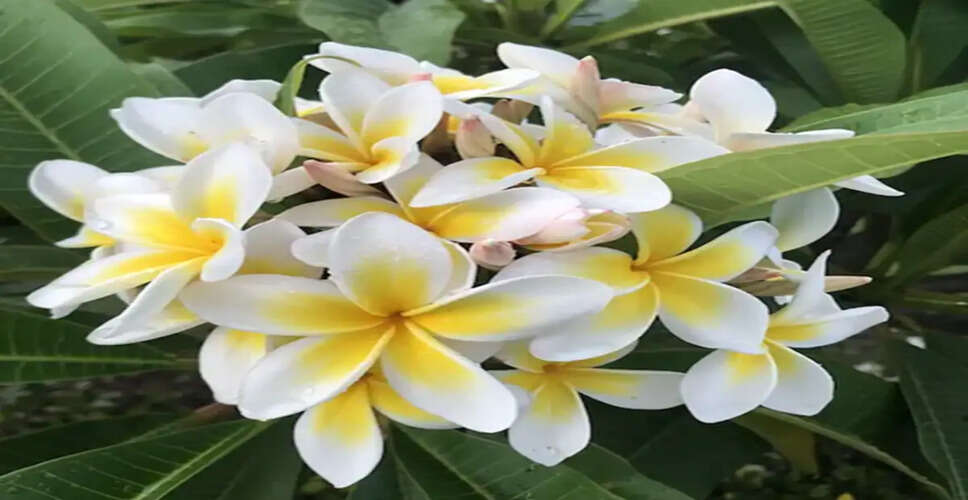
The sacred month of Sawan, cherished by devotees of Lord Shiva, is currently being observed. During this time, worshipping Bholenath is particularly meaningful. Although the Lord is easily satisfied with just a single offering of water, followers often present items that are considered auspicious and dear to Him at the Shivling. However, there are certain items that are deemed inappropriate for Shiva worship, with the Ketaki flower being one of them. Religious traditions state that while the Ketaki flower is favored by Lord Vishnu, it is never offered to Mahadev. Instead, devotees typically present *Belpatra* (wood apple leaves), *Dhatura*, *Aak* flowers, and *Bhang* to the Shivling.
The Myth Behind the Prohibition
Astrologer Anand Bhardwaj from Ujjain explains that the exclusion of the Ketaki flower from Shiva worship is rooted in a mythological tale involving a conflict between Brahma and Vishnu, which led to Lord Shiva's anger. Let's delve into the reasons behind this prohibition.
The Tale from Shiva Purana
The *Shiva Purana* is a revered scripture that recounts a significant story. It narrates a dispute between Brahma, the Creator, and Vishnu, the Preserver, over who was superior. This disagreement escalated to the point where it reached Mahadev. In response, Lord Shiva manifested a massive and infinite Shivling and proclaimed that whoever could find its beginning and end would be deemed the greatest. Brahma descended while Vishnu ascended, but neither could uncover the start or end of the Shivling. Ultimately, Vishnu recognized the truth, bowed to Mahadev, and acknowledged his mistake, affirming Shiva's supremacy.
The Deceit of the Ketaki Flower
The Ketaki Flower Told a Lie
After Vishnu's admission of defeat, Brahma approached Mahadev. Despite his efforts, he too could not find the beginning or end of the Shivling. On his way back, he encountered the Ketaki flower and, in a bid to salvage his reputation, convinced it to falsely support his claim. Thus, he decided to deceive Shiva.
The Curse of Lord Shiva
The Flower Cursed
Accompanied by the Ketaki flower, Brahma presented himself before Lord Shiva, falsely claiming to have discovered the end of the infinite light and using the flower as evidence. However, Lord Shiva was aware of the deceit. Furious at the Ketaki flower's involvement in the lie, He severed Brahma's fifth head and cursed the flower, declaring that it would never be used in His worship. As a result, the Ketaki flower is considered forbidden in the worship of Lord Shiva.
Conclusion
PC Social Media