
Understanding the Absence of Lord Shani Idols in Homes
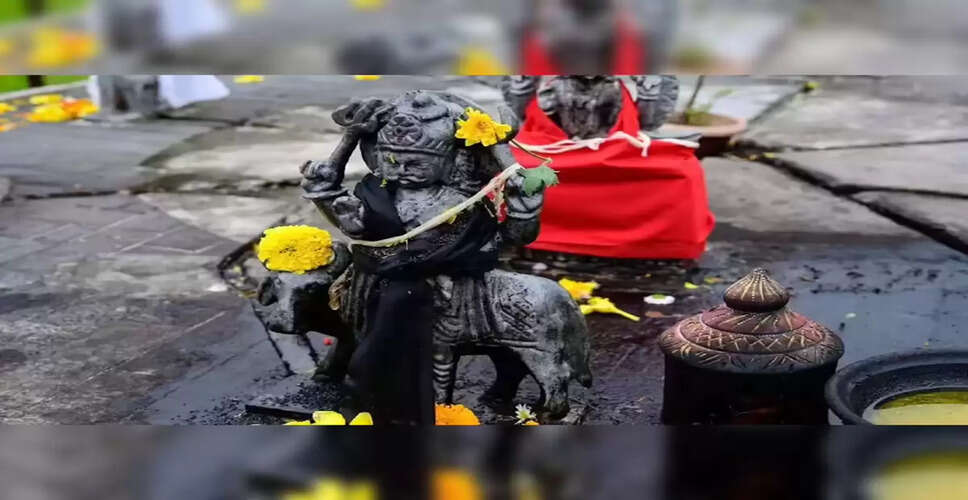
Why Lord Shani Idols Are Not Found in Homes
It is a common observation that while many deities have their idols or images in home shrines, Lord Shani (Saturn) is notably absent. This absence is attributed to a curse, which raises the question: why are representations of Lord Shani not welcomed in households? Mythological and astrological traditions suggest that having an idol of Lord Shani at home could lead to misfortune, family discord, financial troubles, and heightened stress.
In Hindu customs, creating a prayer space at home and engaging in daily worship is deemed highly beneficial. Idols or images of deities such as Vishnu, Shiva, Lakshmi, and Ganesha are believed to foster mental tranquility. However, Lord Shani is subject to a unique guideline within this practice. Scriptures and Puranas advise against keeping any idol, image, or yantra (mystical diagram) of Lord Shani, as it is viewed as inauspicious. The belief is that a curse is linked to having such representations in one’s home. While one can perform Aarti (a ritual involving lamps) and recite mantras dedicated to Lord Shani, possessing his idol is strictly forbidden. Let’s delve into the reasons behind this tradition.
According to mythological narratives, Lord Shani was a devoted follower of Lord Krishna. One day, while he was deeply engaged in meditation, his wife approached him. Ignored despite her attempts to gain his attention, she became furious and placed a severe curse upon him. The legend states that she cursed him so that anyone who gazed upon him would encounter hardships in life. Consequently, seeing Lord Shani is often associated with fear, and to avoid his direct gaze, it is deemed inappropriate to have his image or idol in the home.
This curse is believed to bring misfortune wherever Lord Shani's gaze lands. If an idol or image of him is present in a household, it is thought that his gaze could fall upon the family members, leading to unforeseen issues, illnesses, and negative omens. Astrological and religious beliefs indicate that if Saturn's direct gaze is upon a home, it may result in excessive spending, mounting debts, and business failures. This fear extends to the belief that Lakshmi, the goddess of wealth, may not choose to reside in such a house. Thus, individuals seeking prosperity and harmony typically refrain from keeping a Saturn idol in their homes.
Nonetheless, some individuals opt to keep a Saturn Yantra (a sacred geometric diagram) in their residences. This yantra is believed to mitigate the adverse effects of Saturn's Sade Sati and Dhaiya phases, offering relief from difficulties. However, it should only be placed in the home following appropriate consecration and rituals conducted by astrologers and priests. The Saturn Yantra is traditionally positioned on a Saturday, facing either north or west.
According to Vastu Shastra, idols in the home should emanate peace and positive energy. Given that Lord Saturn is perceived as having a formidable presence and immense power, it is believed that the home cannot adequately balance this energy, potentially leading to Vastu defects. Therefore, while visiting Lord Saturn in temples is considered auspicious, it is advisable not to keep his idol at home.