
Understanding Holashtak: Significance and Guidelines for 2026
The Importance of Holashtak
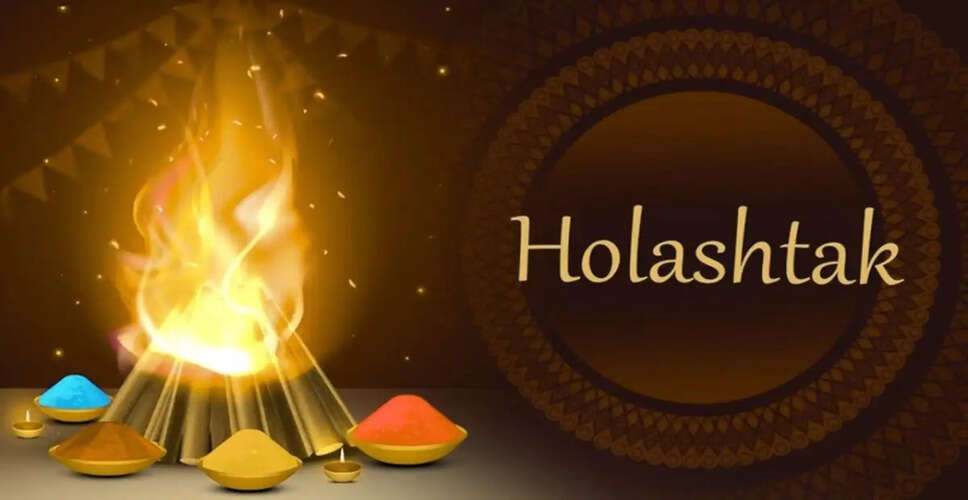
The Holashtak period holds significant importance in the Hindu calendar, yet it is deemed unfavorable for conducting auspicious ceremonies. In 2026, this period commences on February 24 and concludes on March 3. Various guidelines are associated with this time; let’s delve into them.
Prohibitions During Holashtak
What should be avoided during Holashtak?
It is advisable to refrain from holding auspicious events such as weddings, engagements, tonsure ceremonies, and naming rituals during Holashtak. Additionally, activities like purchasing a new home, conducting groundbreaking ceremonies, housewarming events, or acquiring a new vehicle should also be avoided. Starting a new business is discouraged during this timeframe, and one should steer clear of any negative actions.
Recommended Practices During Holashtak
What can be done during Holashtak?
During this period, it is encouraged to donate food and clothing to those in need, according to one’s ability. Devotees are also advised to worship Lord Vishnu and Lord Shiva. Chanting the mantra "Om Namo Bhagavate Vasudevaya" is considered particularly auspicious during these days.
Astrological and Spiritual Insights
Insights Related to Holashtak
Astrologically, the alignment of the Sun, Moon, Mars, Mercury, Jupiter, Venus, Saturn, and Rahu during these eight days is intense, suggesting that significant undertakings should be postponed. From a religious perspective, it is believed that devotee Prahlad faced immense suffering at the hands of his father Hiranyakashyap during this time, marking it as a period unsuitable for auspicious activities. Spiritually, while it is seen as inauspicious for celebrations, it is a fruitful time for worship, meditation, and charitable acts.
Engagement with the Community
PC Social Media