
Understanding Holashtak 2026: Significance and Remedies
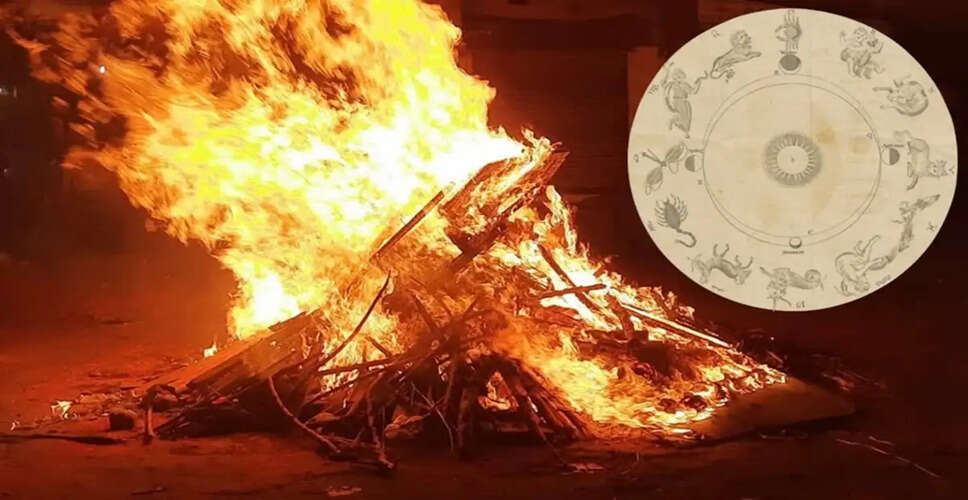
Holashtak 2026: An Overview
Holashtak 2026: Today marks the second day of Holashtak, a period characterized by the Sun being in a powerful position. For the eight days of Holashtak, the eight planets are believed to be in a fierce and Rudra state, which is why auspicious ceremonies are avoided during this time. Holashtak refers to the eight days leading up to Holi in the month of Phalgun, starting this year on February 24 and concluding on March 3. Holika Dahan is scheduled for March 2 in some regions and March 3 in others. Astrologically, the Sun's fierce state on the second day of Holashtak suggests that performing specific rituals can enhance its influence in one's horoscope, leading to greater respect and honor. Let's explore how to appease the Sun…
The Fierce Nature of Planets During Holashtak
Planets are fierce during Holashtak.
According to spiritual beliefs, the planetary alignments during Holashtak are deemed fierce. Astrology indicates that the timeframe from Falgun Shukla Ashtami to Purnima is considered inauspicious. During this span, the eight planets are in a fierce state: the Moon on Ashtami, the Sun on Navami, Saturn on Dashami, Venus on Ekadashi, Jupiter on Dwadashi, Mercury on Trayodashi, Mars on Chaturdashi, and the elusive Rahu on Purnima. Consequently, no auspicious activities are conducted during these eight days.
What is Holashtak?
What is Holashtak?
Holashtak begins eight days prior to Holi and lasts until Purnima. It is a common belief that significant events such as weddings, housewarming ceremonies, and the initiation of new ventures should be postponed during this time. Astrologers assert that the shifts in planetary movements during these days can influence human lives.
Understanding Surya Dosha
When is Surya Dosha considered?
In astrology, the Sun symbolizes the soul, father figures, government roles, leadership, and prestige. Surya Dosha occurs when the Sun is positioned unfavorably in the birth chart, particularly if it is in a low zodiac sign, afflicted by negative planets, or weakly placed in the sixth, eighth, or twelfth houses. This condition may lead to issues such as eye problems, diminished self-esteem, conflicts with paternal figures, or career challenges.
Effective Remedies for Surya Dosha
Main Remedies for Surya Dosha
Offer water to the Sun: In the morning, offer water, red flowers, and unbroken rice grains to the Sun God using a copper vessel. While doing so, chant the mantra "Om Ghrini Suryaya Namah."
Reciting the Aditya Hridaya Stotra: Reciting this stotra after offering water to the Sun God today can enhance mental strength and self-confidence.
Do Charity: Donating items such as wheat, jaggery, copper, or red clothing on the second day of Holashtak is considered beneficial.
Fasting and Abstinence: Observing a fast and consuming salt-free meals today is also regarded as auspicious.
Surya Namaskar: Regularly performing Surya Namaskar not only enhances physical health but also brings positive energy.
Conclusion
PC Social Media