
Understanding Food Digestion: How Long Does It Really Take?
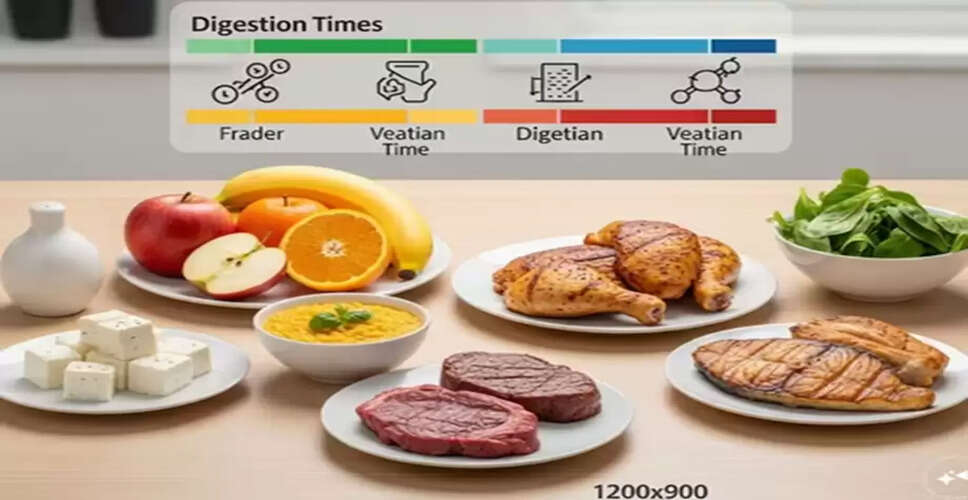
The Food Digestion Process Explained
Food Digestion Timeline: Many individuals, attracted by the flavors of their meals, often ignore their stomach's capacity and continue eating until they feel full. This behavior can lead to discomfort. While some may attribute their stomach issues to specific foods, health professionals suggest that these problems often stem from careless eating habits. Therefore, it is crucial to reflect on our food choices and understand the digestion time associated with them before consuming more.

Clinical dietitian Khushboo Verma emphasizes that the digestion duration varies for different foods, whether it’s water, cheese, or meat. It’s essential for everyone to be informed about how long it takes for various foods to digest and their journey through the body. Let’s delve deeper into this topic:
How the Digestive System Functions
The digestive system processes the food we consume, transforming it into nutrients that our body can utilize. Essentially, it breaks down food into these vital nutrients.
The Path Food Takes in the Body
Food travels to the stomach through the esophagus, where it combines with gastric juices and digestive enzymes. This step is crucial for breaking down food particles. After this gastric phase, the food moves to the small intestine, where digestive enzymes and bile further decompose it into nutrients such as proteins, carbohydrates, and fats within four to six hours. Subsequently, water, fiber, and undigested remnants proceed to the large intestine. Here, over a period of 12 to 48 hours, water and electrolytes are extracted from the waste, resulting in feces.
Digestive Times for Various Foods
Water: Water is absorbed into the bloodstream almost instantly, typically within 10 to 20 minutes. However, drinking water right after a meal can extend digestion time to about 2 hours.
Potatoes: According to experts, potatoes require 90-120 minutes for digestion, which is comparable to chicken. In contrast, cooked vegetables digest much quicker, taking only about 40 minutes. Those with digestive issues should opt for cooked vegetables.
Green Vegetables: Consuming green vegetables is highly beneficial for overall health and can help ward off various diseases. Health professionals note that these vegetables take approximately 40 to 60 minutes to digest.
Fruit Juices: Fruit and vegetable juices are digested rapidly, typically within 15-20 minutes, making them a healthy addition to one’s diet.
Dairy Products: Full-fat milk and its derivatives take significantly longer to digest, usually around 2 to 3 hours. It’s advisable to consult a professional if experiencing stomach issues related to dairy.
Fish: Cooked fish is digested in about 45-60 minutes, making it a quicker option compared to other meats, allowing for more frequent consumption.
Red Meat: Red meat can take anywhere from 3 to 5 hours to digest, which is considerably lengthy. In contrast, chicken takes about 1.5 to 2 hours. Individuals with digestive concerns should limit their intake of beef.
PC Social Media