
Understanding Adhik Mass 2026: Significance and Rituals

Adhik Mass 2026 Overview
Adhik Mass 2026: As per the Hindu Panchang, the concept of *Malmas* or *Adhik Mass* is rooted in the celestial movements of the Sun and Moon. The solar calendar spans 365 days plus about 6 hours, while the lunar calendar is shorter at approximately 354 days. This results in an 11-day difference annually, accumulating to a full month over three years. To address this discrepancy, an additional lunar month, known as *Malmas*, is introduced every three years. Lord Vishnu is honored as the deity presiding over this month, also referred to as *Purushottam Mass*, named after one of his titles. Scriptures suggest that devotion to Lord Vishnu during this period brings significant spiritual benefits.
The Sacred Shaligram
**The Shaligram: A Divine Representation of Lord Vishnu**
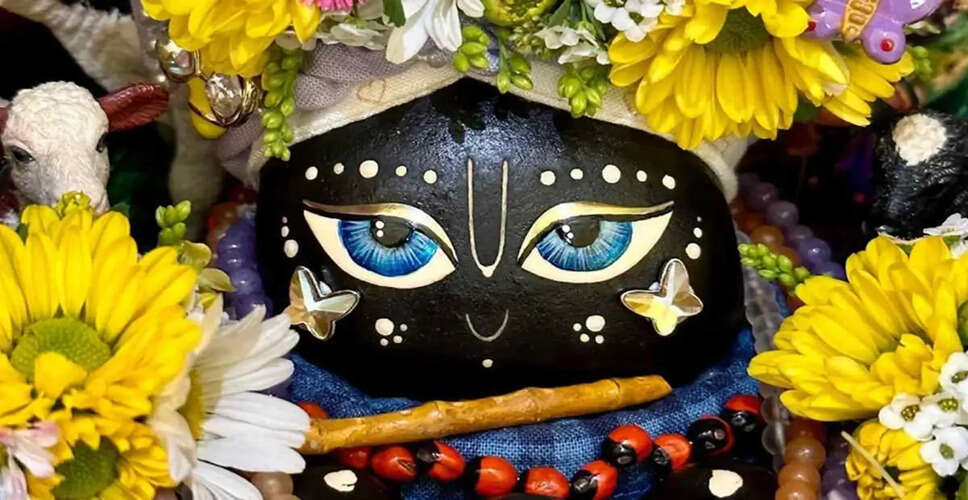
According to the *Skanda Purana*, the *Shaligram* is viewed as a self-manifested embodiment of Lord Vishnu. This sacred stone, typically found in the Gandaki River, is highly revered. It is believed that wherever a *Shaligram* is placed, Lord Vishnu makes that location his eternal home. The *Padma Purana* states that worshipping the *Shaligram* is as meritorious as conducting numerous *Yajnas* (sacrificial offerings). During *Purushottam Mass*, performing *Abhishek* (ritual bathing) of the *Shaligram* with water, *Panchamrit* (a sacred blend of five ingredients), sandalwood paste, and *Tulsi* (holy basil) leaves is particularly auspicious. Reciting the mantra "Om Namo Bhagavate Vasudevaya" during this time is believed to quickly please Lord Vishnu.
Tulsi: The Abode of Goddess Lakshmi
**The Abode of Goddess Lakshmi in the Tulsi Plant**
As per the *Padma Purana* and the *Brahma Vaivarta Purana*, the *Tulsi* plant is honored as a manifestation of Goddess Lakshmi. It is a common belief that worshipping Lord Vishnu is incomplete without *Tulsi* leaves. Legend has it that Goddess Tulsi underwent severe penance to win Lord Vishnu as her husband, leading to her eternal companionship with him. Thus, *Tulsi* is essential in every offering (*Bhog*) and worship directed towards Lord Vishnu. During *Purushottam Mass*, honoring the *Tulsi* plant by providing water and lighting a lamp (*Diya*) at dusk is thought to bring tranquility, harmony, and prosperity to households.
Observances and Their Importance During Purushottam Mass
The Significance of Worship and Observances During Purushottam Mass
The *Narada Purana* states that adhering to the prescribed rituals while worshipping Lord Vishnu during Purushottam Mass can absolve one of sins accumulated over lifetimes. This month is considered particularly auspicious for bathing at dawn, donning yellow attire, and venerating the Shaligram stone and the sacred Tulsi plant. Offerings such as yellow flowers, split Bengal gram (Chana Dal), *Panchamrit*, and Tulsi leaves are made to Lord Vishnu. Additionally, reciting the *Vishnu Sahasranama*, *Srimad Bhagavatam*, and *Bhagavad Gita* holds special significance. Observing fasts, engaging in charitable acts, and participating in spiritual gatherings (*Satsang*) during this month is believed to yield lasting spiritual merit.
Spiritual Rewards of Joint Worship
**The Special Spiritual Rewards Described in the Scriptures**
The *Skanda Purana* mentions that those who engage in the joint worship of the Shaligram and Tulsi during Purushottam Mass receive the blessings of both Lord Vishnu and Goddess Lakshmi. This practice is believed to attract wealth, grains, happiness, prosperity, and positive energy into one's home. From a spiritual standpoint, this month is viewed as a prime opportunity for self-purification, devotion, and spiritual practice (*Sadhana*). This is why devotees place immense importance on the worship of Lord Vishnu and Tulsi throughout the duration of Purushottam Mass.
Food & Recipe
Food & Recipe