
Transforming Travel: The Future of the Delhi-Lucknow Route with High-Speed Rail
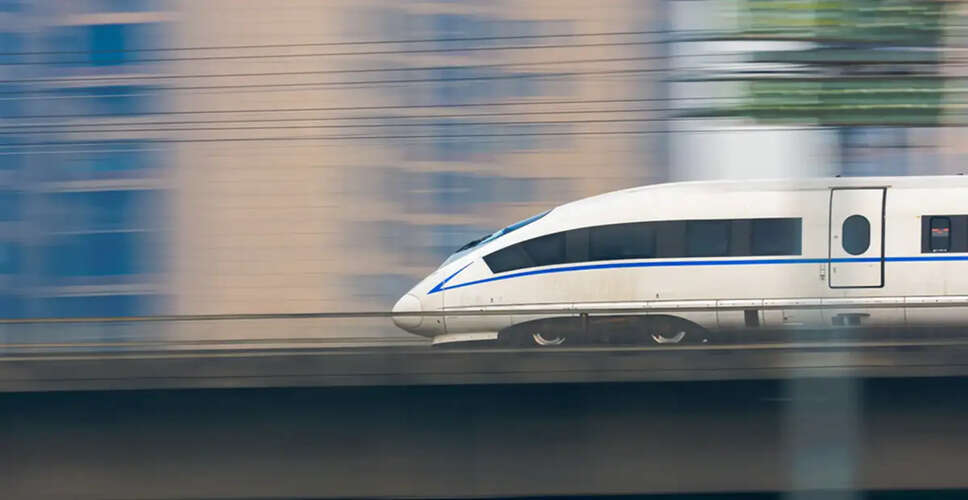

Revolutionizing the Delhi-Lucknow Journey
Distance Between Delhi and Lucknow: The travel experience for countless passengers moving between Delhi and Lucknow is poised for a significant upgrade in the upcoming years. As part of the expansion of the nation’s high-speed rail network, the central government is expediting the development of the Delhi-Varanasi bullet train corridor. Once completed, this initiative aims to cut the travel time between Delhi and Lucknow to around two hours, a stark contrast to the current duration which is much longer whether by train, road, or air.
At present, various trains including the Vande Bharat, Rajdhani, Shatabdi, and Tejas operate on this route, with travel times typically ranging from 5.5 to 9 hours. By road, the journey can take between 6 to 8 hours, influenced by traffic conditions. Although flights take about 1 to 1.5 hours, the overall travel time increases due to airport commutes and check-in procedures.
If the bullet train corridor is completed as planned, it could significantly enhance travel, tourism, trade, and investment opportunities in North India. Let’s explore the current travel durations, the proposed route, and the anticipated ease of this journey in the future.
Current Travel Times from Delhi to Lucknow
Travelers currently have three primary options for commuting between Delhi and Lucknow:
1. Trains, which take about 6 to 9 hours, depending on the specific service.
2. Flights, where the actual flying time is 1 to 1.5 hours, but total time is longer when factoring in airport procedures.
3. Road travel, which can also take 6 to 9 hours, subject to traffic conditions.
This is why the high-speed rail initiative is being celebrated as a transformative project.
Understanding the Bullet Train Corridor
The Delhi-Varanasi High-Speed Rail Corridor is among the most ambitious rail projects in North India. The objective is to link key cities—Delhi, Noida/Jewar, Agra, Kanpur, Lucknow, Prayagraj, and Varanasi—through a high-speed rail service. The final stations and route will be established based on the project’s design and necessary approvals.
Benefiting Cities
Several major cities are anticipated to gain from this high-speed rail network, including:
- Delhi
- Noida/Jewar
- Agra
- Kanpur
- Lucknow
- Prayagraj
- Varanasi
This development could streamline travel for business, tourism, education, healthcare, and employment.
Impacts on Passengers
If the project proceeds as planned:
- The journey from Delhi to Lucknow could be completed in about two hours.
- Business trips and weekend getaways could become more accessible.
- The burden on roadways and traditional rail systems could lessen.
- Tourism and the local economy are expected to flourish.
PC Social Media