
The Unsung Legacy of Edavalath Kakkat Janaki Ammal: A Pioneer in Sugarcane Research
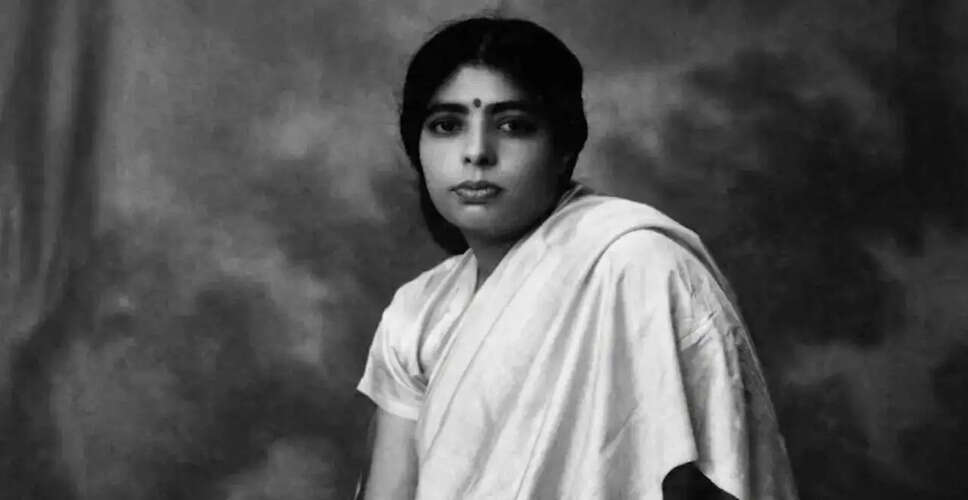
A Trailblazer in Botanical Science
Edavalath Kakkat Janaki Ammal was a remarkable scientist whose groundbreaking work remained largely unrecognized for many years. Despite the significant contributions of women in science often being overshadowed, Janaki Ammal played a crucial role in developing high-yield and sweeter sugarcane varieties, propelling India to become the second-largest sugar producer globally. Her life story is one of extraordinary achievement that deserves greater acknowledgment.
Born in 1897 in Kerala, Janaki Ammal hailed from the Thiyya community and spent her childhood in Tellichery, now known as Thalassery. Raised in a joint family, her father, EK Krishnan, served as a High Court sub-judge in the Madras Presidency. Despite her community being classified as a Backward Caste, she overcame caste barriers to pursue her ambitions.
In the early 20th century, it was uncommon for women to seek higher education abroad. However, in 1924, Janaki Ammal earned a scholarship to the University of Michigan in the United States. She attended the university twice, first as a Barbour Scholarship recipient for Oriental Women and later as a Barbour Fellow.
The Barbour Fund, established in 1917 by Levi Lewis Barbour, aimed to educate women from Eurasia, with the hope that they would return home to apply their knowledge for the betterment of their communities. Historian Vinita Damodaran notes that this scholarship was highly competitive, requiring a thorough evaluation of each applicant.
Janaki Ammal made history as the first Indian woman to obtain a doctorate in botanical science. After nearly a decade of study abroad, she returned to India and joined the Sugarcane Breeding Station in Coimbatore. However, her early career was fraught with challenges due to both her gender and caste. In a letter dated August 1938, she recounted the difficulties she faced following a visit from biologist Reginald Ruggles Gates, which complicated her work and led her to consider leaving her position.
At that time, India was reliant on importing the sugarcane variety Saccharum officinarum from Java. With Janaki Ammal's expertise, the Institute was able to cultivate its own sweet sugarcane varieties, reducing dependence on imports and enhancing India's sugarcane self-sufficiency. As noted by Leila McNeill in Smithsonian Magazine, Ammal's research into hybridization enabled the Institute to identify local plant varieties for cross-breeding with Saccharum, resulting in sugarcane better adapted to India's tropical climate.
Through her extensive experimentation, Ammal crossed numerous plants to discover which Saccharum hybrids produced higher sucrose levels, establishing a foundation for consistent sweetness in domestically grown sugarcane. Additionally, she developed several hybrids by crossing various grass genera, including Saccharum–Zea, Saccharum–Erianthus, Saccharum–Imperata, and Saccharum–Sorghum.