
The Unlikely Reality of Kamikaze Dolphins in Military Strategy
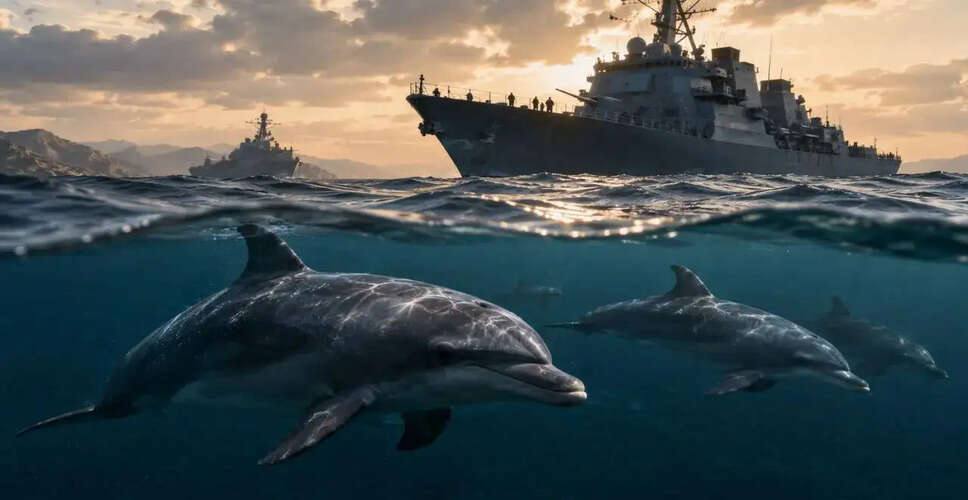

Understanding Kamikaze Dolphins
During a recent Pentagon press briefing, the conversation took an unexpected turn, straying from typical geopolitical discussions to something that sounded almost satirical. Officials found themselves addressing bizarre reports about Iranian 'kamikaze dolphins,' leading many to believe they were listening to a science fiction tale. However, this concept of weaponized marine mammals has historical roots in military practices that are more profound than one might think.
What Are Kamikaze Dolphins?
Recent intelligence reports describe kamikaze dolphins as trained bottlenose dolphins outfitted with explosives, programmed to execute suicide missions against enemy naval vessels. The term 'kamikaze' originates from Japanese pilots in World War II who crashed planes loaded with explosives into enemy ships.
Imagine a scenario where dolphins are equipped with mines or explosive devices, trained to approach specific targets such as enemy submarines and warships. This strategy leverages the dolphins' natural intelligence, speed, and stealth, effectively transforming them into living weapons. Reports indicate that the training involves conditioning dolphins to recognize specific sounds and visual cues. Once a target is identified, the dolphins swim close enough for the explosives to inflict significant damage, with detonation triggered either remotely or via a timer.
Historical Context: The Soviet Union's Marine Mammal Program
This concept isn't entirely new; it traces back to the Cold War when the Soviet Union developed marine mammal military capabilities. Trainers in Crimea successfully taught dolphins to differentiate between friendly and enemy submarines based on the unique sounds produced by their propellers.
Declassified documents reveal that these dolphins were equipped with harpoon-like devices and trained to confront enemy divers and carry explosives to enemy ships. Their ability to dive deep, navigate murky waters, and approach targets stealthily made them invaluable compared to mechanical devices. Following the Soviet Union's collapse in 1991, many of these trained dolphins were abandoned or sold, with reports indicating that Iran acquired some of these assets and the necessary expertise to continue such programs.
The U.S. Involvement in Marine Mammal Programs
Complicating matters further, the U.S. has operated its own marine mammal program for decades. Established in the 1950s, the U.S. Navy's Marine Mammal Program trains bottlenose dolphins and California sea lions for various naval operations, including mine detection and underwater surveillance.
These animals have reportedly been deployed in conflicts such as the Vietnam War and the Iraq War, although the Navy has consistently denied using them for lethal purposes, asserting that their roles are limited to detection and marking operations.
Recent Controversies Surrounding Kamikaze Dolphins
The Pentagon's discussion was prompted by a recent report claiming that Iran was considering reviving Soviet-era marine mammal programs, allegedly involving dolphins trained to transport mines towards enemy vessels in the Strait of Hormuz. U.S. Defense Secretary Pete Hegseth dismissed these claims, while the Chairman of the Joint Chiefs of Staff, Dan Caine, humorously remarked, "Like sharks with laser beams, right?" Nevertheless, the strategic rationale for such tactics is plausible for a nation like Iran, as traditional naval confrontations with U.S. forces would be impractical given America's maritime dominance. Kamikaze dolphins could theoretically pose a threat to significantly larger vessels.