
The Unlikely Political Influence of Dhirendra Brahmachari in India
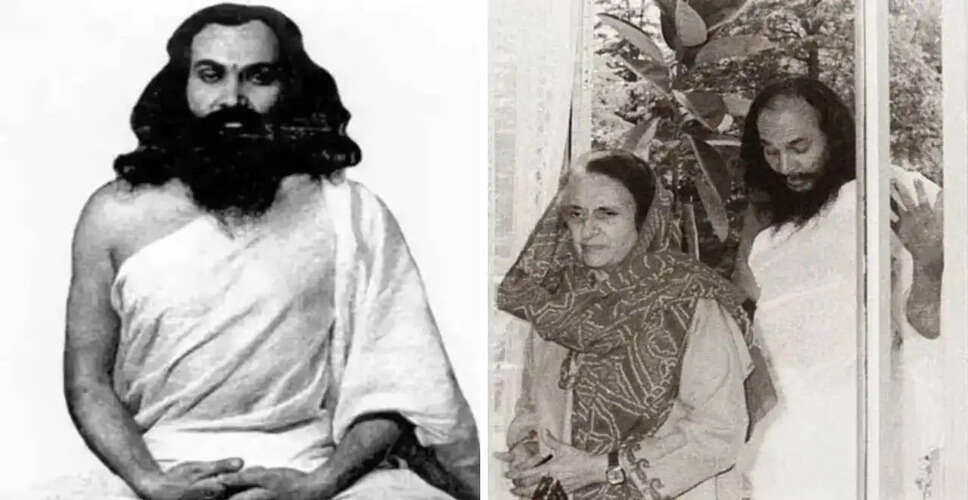
Dhirendra Brahmachari: A Yoga Teacher's Political Journey
Dhirendra Brahmachari, a yoga instructor hailing from Bihar, emerged as an unexpected figure in the political landscape of New Delhi. His significant influence was particularly felt during the Emergency period in India, which lasted from June 25, 1975, to March 21, 1977, a time marked by considerable controversy in the nation's history. Brahmachari served as the yoga mentor to Indira Gandhi, extending his reach beyond the realm of yoga into the spheres of politics and governance. Journalist Shekhar Gupta remarked on his podcast, stating, 'He was the official yogi of India during Indira's time.' Gupta noted that Brahmachari's influence persisted even after Sanjay Gandhi's prominence faded, continuing into Indira Gandhi's post-Emergency tenure and into the Rajiv Gandhi era, where he became less visible until his death in 1994.
Often referred to as the 'Rasputin of India,' Brahmachari's power was likened to that of Rasputin, who was said to have swayed the decisions of the Russian royal family. Gupta elaborated on this comparison, highlighting Brahmachari's substantial influence during Indira Gandhi's administration.
Born Dhirendra Sharma in 1925 in Bihar's Madhubani district, he left home at just 13 to pursue yoga in Varanasi, where he trained under Maharshi Kartikeya and became proficient in Hatha yoga. In the 1960s, he was invited to the Soviet Union to instruct cosmonauts in yoga. He authored several books, including Yogic Sukshma Vyayama and Yogasana Vijnana, which delve into yogic techniques and postures.
His introduction to Jawaharlal Nehru led to an invitation to teach yoga to Indira Gandhi. A report highlighted his political ascent during the Emergency, noting that he not only influenced Mrs. Gandhi's decisions but also managed popular yoga centers across northern India, benefiting from his connections with her.
Brahmachari was among the few who could meet Indira Gandhi privately. An article in a prominent publication in 1981 described him as a yoga teacher to the Nehru family, whose fortunes were closely linked to the Prime Minister's. Before her ousting in 1977, he supported Sanjay Gandhi's controversial initiatives. Following her defeat, he faced allegations of influence-peddling and was sued for personal matters related to his ashram. However, he claimed he was targeted due to his proximity to the Gandhi family.
He also pioneered yoga on television, hosting a weekly program called Yogabhyaas on Doordarshan in the late 1970s, promoting yoga's benefits to a wider audience. Tragically, he passed away in a plane crash in 1994 at the age of 70. His unique blend of spiritual guidance and political clout remains a fascinating chapter in modern Indian history.