
The Unbelievable Story of Project A119: America's Plan to Bomb the Moon
The Ambitious Project
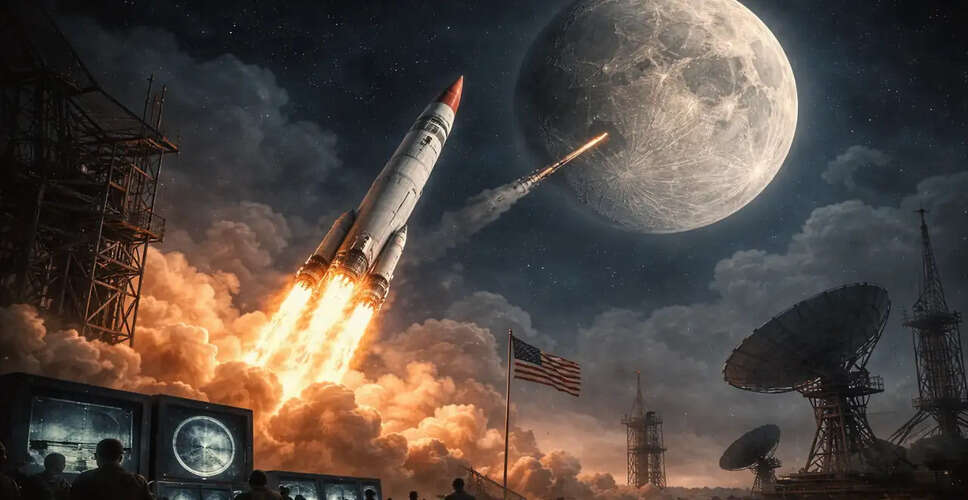
In 1958, a group of ten scientists was assembled by the United States Air Force in Chicago to explore the implications of detonating a nuclear bomb on the moon's surface. This initiative, known as Project A119, was officially referred to as "A Study of Lunar Research Flights." The primary aim was not scientific inquiry but rather to create a dramatic spectacle. The intention was for the explosion to be visible from Earth, sending a clear message to the world, especially the Soviet Union, about American dominance. Among the team was a young Carl Sagan, who would later become a renowned science communicator.
The Catalyst: Sputnik
Sputnik Changed Everything
To grasp the motivations behind such a drastic proposal, one must look back to October 4, 1957, when the Soviet Union launched Sputnik, the first satellite to orbit Earth. Shortly after, a second satellite carried a dog named Laika into space, while America's Vanguard rocket met a disastrous failure on the launch pad. This series of events left the United States trailing in the burgeoning space race, prompting fears that the Soviets might even consider detonating a hydrogen bomb on the moon. Whether or not this was true, it spurred the Air Force into action, leading to a covert study on lunar nuclear detonations by the Armour Research Foundation at the Illinois Institute of Technology.
The Team Behind the Plan
The Team
Leonard Reiffel, a physicist who would later serve as deputy director of NASA's Apollo program, led the project. His team included astronomer Gerard Kuiper and his doctoral student, Carl Sagan. Sagan's role involved modeling the expansion of a dust cloud resulting from a nuclear explosion on the moon's surface, as the Air Force sought to determine if the flash would be visible from Earth. The plan involved using an intercontinental ballistic missile to deliver the atomic bomb to the moon, with the explosion set to occur along the terminator line, where the light and dark sides meet, maximizing visibility.
The Project's Cancellation
Why It Never Happened
By early 1959, the Air Force quietly scrapped the project due to the significant risks involved. A failed launch could result in a nuclear warhead crashing back to Earth. The Soviets had a similar plan, known as Project E-4, which they also abandoned for the same reasons. Both superpowers independently concluded that a successful moon landing would serve as a far more effective propaganda victory than a moon bombing.
The Aftermath and Legacy
The details of Project A119 remained classified for over four decades, only coming to light due to a slip by Carl Sagan when he applied for a fellowship at Berkeley, inadvertently listing classified project titles. This revelation led to a confirmation from Reiffel, who expressed regret that the project had been uncovered. British nuclear historian David Lowry remarked on the absurdity of the idea that humanity's first contact with another world could have been through a nuclear explosion.
A Cautionary Tale
The Moon We Almost Lost
In 1967, the Outer Space Treaty prohibited nuclear weapons in space. The story of Project A119 is one that seems almost too bizarre to be true, yet it is. Ironically, the very scientist who calculated the dust cloud's behavior would later advocate for the protection of all celestial bodies. Carl Sagan transformed into a voice of cosmic responsibility and wonder, reminding us that history often reflects not our best instincts but the wisdom of the paths we choose to abandon.