
The Tragic Tale of Sushmita Banerjee: A Journey from Escape to Return

A Viral Video Sparks Concern
A video featuring an American woman named Alex Sunny, who expressed her intention to relocate to Afghanistan to join her husband, has gone viral, amassing millions of views. While the authenticity of her claims remains unverified, the video has raised significant alarm among viewers. Many have cautioned her about the dangers of moving to a Taliban-controlled nation, urging her to stay informed about the situation there. Regardless of the video's legitimacy, it highlights the grim reality faced by women under Taliban rule, where basic rights are severely restricted. As Meryl Streep poignantly remarked, 'a squirrel has more rights than a girl in Afghanistan today.' This situation echoes the life of the late Bengali author Sushmita Banerjee, whose narrative intertwines India, Afghanistan, women's rights, and the Taliban.
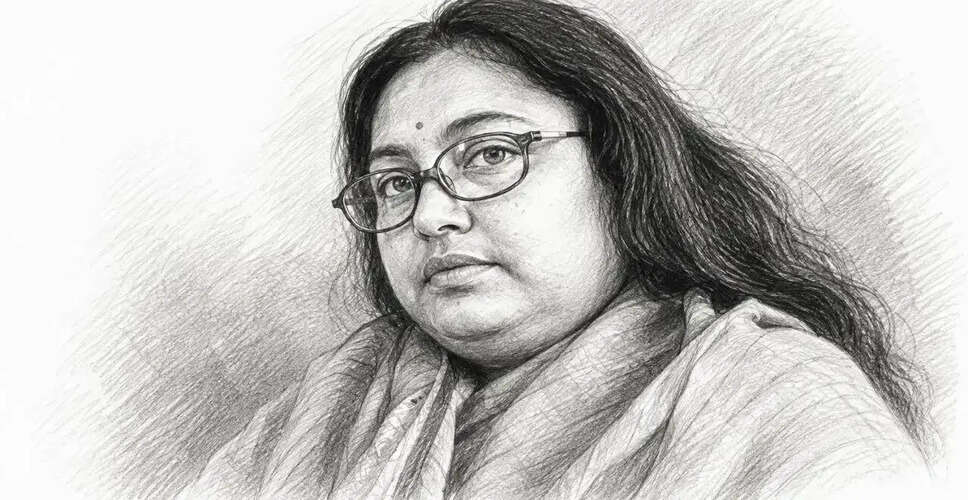
Sushmita Banerjee's Life and Struggles
Born in 1963 in Kolkata, Sushmita's life took a dramatic turn when she married Afghan businessman Jaanbaaz Khan in a secret ceremony, defying her family's opposition to their interfaith union. Their marriage was formalized under the Special Marriage Act on July 2, 1988. Upon her family's discovery, Sushmita faced immense pressure to divorce, but instead, the couple chose to move to Afghanistan, a decision that would alter her life irrevocably.
Upon arrival, Sushmita learned that she was Khan's second wife, living alongside his first wife and their extended family. Raised in a progressive environment, she found the realities of rural Afghanistan shocking. The first wife, Gulgutti, had been married to Khan for over a decade and had children with him. Despite the challenges, Sushmita adapted and took on the name Sayeda Kamala until civil war erupted in 1993, leading to a drastic deterioration in living conditions.
The Taliban's Oppressive Regime
As the Taliban seized control, life for women became a nightmare. They were barred from working, attending educational institutions, or appearing in public without a male escort. Entertainment forms like television and music were banned, and even hospital visits were restricted for women.
Witnessing the suffering of women, Sushmita opened a small clinic to provide medical assistance, despite lacking formal training. She faced severe repercussions for her defiance, including beatings for refusing to wear a burqa. This prompted her to plan an escape from Afghanistan.
A Desperate Escape
In May 1995, Sushmita reached the Indian High Commission in Islamabad but was sent back due to lacking proper documentation. After multiple failed escape attempts, she finally fled her captors and sought refuge with a village leader, whose son had been killed by the Taliban. Eventually, she made it to Kabul, where she managed to secure travel documents and returned to Kolkata in August 1995.
Throughout her ordeal, Sushmita documented her experiences, leading to the publication of her memoir, Kabuliwalar Bangali Bou. She later authored other works, including Taliban Atyachar – Deshe o Bideshe and Mullah Omar, Taliban O Ami.
A Return to Afghanistan and a Tragic End
Nearly two decades after her escape, Sushmita made the surprising choice to return to Afghanistan in 2013 to reunite with her husband and their adopted daughter. She began documenting the lives of Afghan women through her work. However, her life was cut short when she was abducted and murdered by masked assailants on September 4, 2013, in Paktika Province. Her body was discovered shortly after, marking a tragic end to her courageous journey.
Sushmita Banerjee's story is one of remarkable bravery and tragic irony, as she returned to the land she once fled, only to lose her life there.