
The Timeless Legacy of Muslin: India's Cultural Treasure
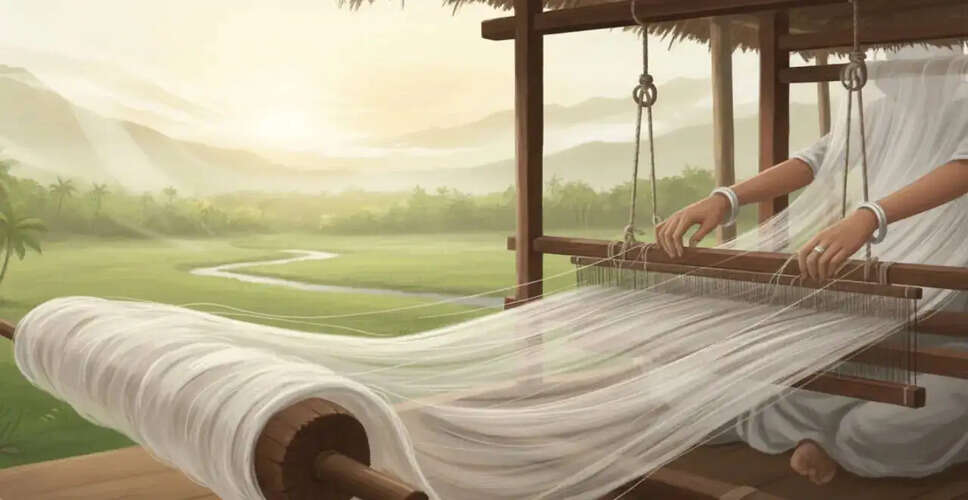
Muslin: A Marvel of Indian Textiles
India is renowned for its rich heritage, which encompasses not only artifacts but also a variety of spices and textiles. Among these, muslin stands out as a remarkable fabric that originated in the fertile plains of Bengal. This exquisite material was so delicately woven that it earned the nickname 'woven air,' reflecting its ethereal quality. Today, muslin is celebrated as one of India's most significant contributions to global textile history.
The Origins of the Name 'Woven Air'
Why was muslin nicknamed ‘woven air’?
Muslin is distinguished by its unparalleled finesse, with a complete saree weighing less than 100 grams. Its ability to pass through a ring with ease led to poetic descriptions such as “Aab-e-Rawan” (flowing water) and “Baft Hawa” (woven air). The term 'muslin' is derived from Mosul, where European traders first encountered it, while in India, it is affectionately referred to as malmal, a term deeply embedded in the textile lexicon.
A Symbol of Royalty
Muslin was the pride of Indian royalty
This luxurious fabric was not meant for the common people; it symbolized prestige among the Mughal emperors. Akbar and his queens wore muslin garments, which were not only soft and breathable but also perfectly suited for the region's tropical climate. Muslin's allure extended to European nobility, where it was regarded as a luxury item, valued similarly to gold, and its handwoven nature was almost unbelievable.
Historical Significance
Rooted in Indian history
Muslin's rich history is well-documented. The Greek historian Megasthenes, during his visit to Chandragupta Maurya's court, noted the exquisite textiles worn by the locals. Archaeological findings, including terracotta figurines from Bengal, further indicate the fabric's ancient roots.
The Impact of Colonialism
Colonial exploitation
Despite its global acclaim, muslin's decline began with British colonial rule. The arrival of the British East India Company drastically altered the landscape of this flourishing craft. The influx of British textiles devastated local artisans, many of whom fell into poverty, struggling to sustain their livelihoods. The cultivation of Phuti Karpas diminished, leading to the near extinction of muslin.
Reviving a Lost Craft
A faded craft struggling to return
In the modern era, muslin is striving to regain its lost prominence. Contemporary attempts to recreate the fabric typically achieve a thread count of 40 to 80, while even the best revival efforts reach only 700, far below the historical peak of 1200. However, UNESCO has spotlighted this art form, and artisans in India and Bangladesh are diligently working to revive traditional techniques and restore muslin's former glory.
Muslin: More Than Just Fabric
Not just a fabric, but India’s legacy
Muslin represents a vital aspect of India's cultural heritage, crafted with meticulous care and timeless elegance. In today's fast-paced world, it serves as a poignant reminder of India's historical significance prior to colonial decline. Artisans are hopeful that by reviving this exquisite craft, they can reconnect us with our rich past through these delicate threads.