
The Significance of Delayed Funerals: A Look at Khamenei and Nicholas II

Understanding the Impact of Delayed Funerals
For many, a funeral signifies the conclusion of a life journey. However, there are instances when history refuses to turn the page. As Iran initiates the long-awaited funeral services for former Supreme Leader Ali Khamenei—delayed for several months due to war, security issues, and political instability—the world is reminded of how conflict can disrupt even the most ancient human customs. In Islamic culture, burials are typically conducted swiftly, making this delay particularly noteworthy. Yet, history has witnessed even longer postponements of funerals.
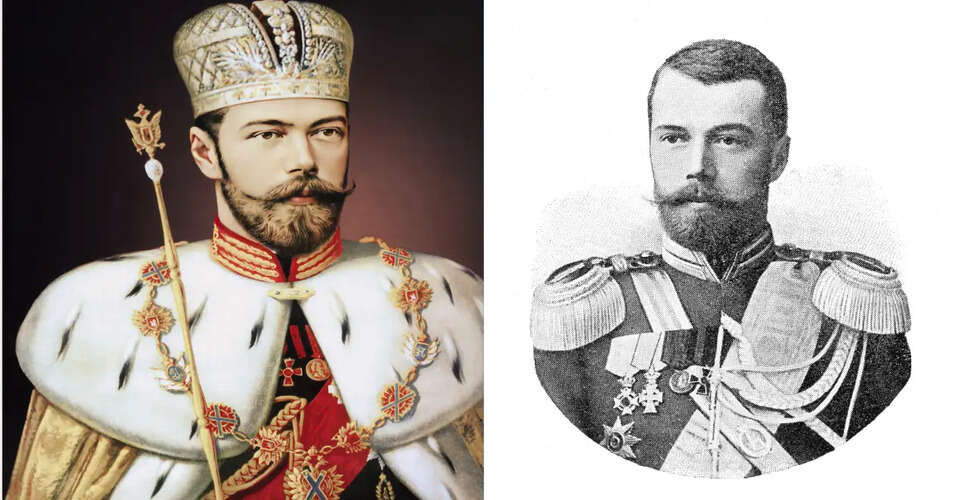
One of the most extraordinary cases is that of Russia's last emperor, Nicholas II, whose funeral occurred nearly 80 years after his demise.
The Remarkable Funeral of Nicholas II
On the night of July 17, 1918, amidst the upheaval of the Russian Revolution, Tsar Nicholas II, his wife Alexandra, their five children, and four loyal aides were abruptly awakened in the basement of the Ipatiev House in Yekaterinburg. They were informed of a relocation due to the advancing anti-Bolshevik forces. Instead, they faced a firing squad. Within moments, the Romanov dynasty, which had ruled Russia for over three centuries, met a brutal end. Their bodies were hastily moved to a forest, stripped of valuables, treated with acid, and buried in secrecy, hidden from view. The Bolshevik regime showed little interest in granting the imperial family a dignified farewell, opting instead to erase them from public consciousness as symbols of the former regime.
For decades, speculation thrived. Did the youngest daughter, Anastasia, survive? Were any family members able to escape? Were the remains ever located? Books, films, and conspiracy theories kept the enigma alive, while the Soviet government largely remained silent. It wasn't until the Soviet Union's collapse that investigators began to reveal the truth.
Discovery of the Grave
In 1991, a grave that had been discovered years earlier was officially excavated near Yekaterinburg. Forensic scientists employed DNA testing, a relatively new investigative method at the time, to identify the remains of Nicholas II, Empress Alexandra, and three of their daughters. Samples from living relatives, including members of European royal families connected through Queen Victoria, helped confirm their identities with high certainty.
Finally, on July 17, 1998, exactly 80 years after their execution, the imperial family received the state funeral they had been denied. Their coffins were brought into the Peter and Paul Cathedral in St. Petersburg, the traditional burial site for Russian emperors. President Boris Yeltsin attended the ceremony, labeling the Romanovs' murder as 'one of the most shameful pages' in Russian history and acknowledging the nation's prolonged silence regarding the crime. Representatives from various European royal families were also present, transforming the funeral into both a national reckoning and an international moment of commemoration.
The narrative did not conclude there. In 2007, the remains of the last two missing Romanov children, Tsarevich Alexei and one of his sisters, were discovered nearby, finally completing the family's tragic story. While delayed funerals are uncommon, history illustrates that they often evolve into something far more significant than mere mourning ceremonies. They become powerful statements about memory, justice, and politics.
Khamenei's postponed funeral mirrors the realities of a nation emerging from conflict, where security concerns overshadowed age-old burial customs. In contrast, Nicholas II's funeral was only made possible after an entire political system collapsed, allowing Russia to confront a past it had long sought to bury. Sometimes, a funeral transcends the act of laying someone to rest; it becomes a nation's decision to finally give history the farewell it deserves.