
The Royal Legacy: How India's Maharajas Shaped Football Culture
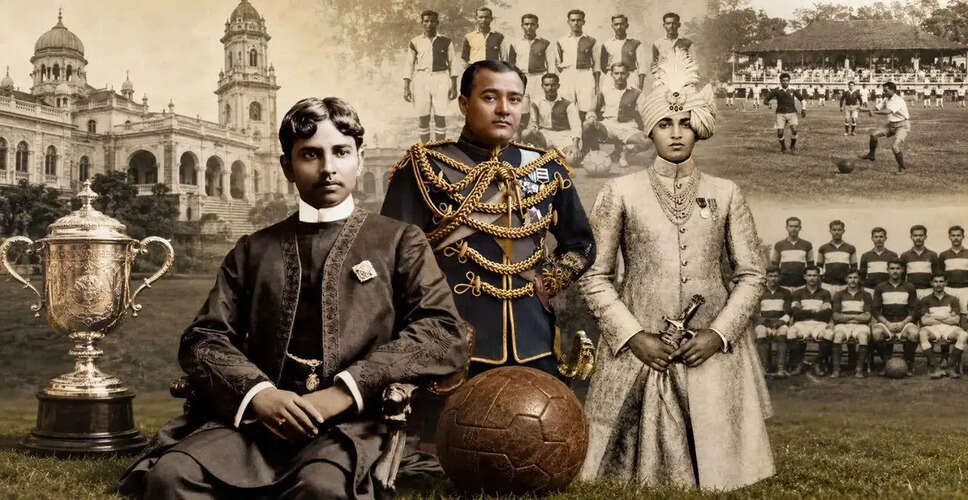

The Influence of India's Maharajas on Football
The Maharajas of India's former princely states had a unique passion for various pursuits, including cars, hunting, sports, and architecture. Their immense wealth allowed them to construct opulent palaces, amass rare automobiles, and sponsor extravagant hunting trips. Many of these royals were enthusiastic sportsmen, and as the 2026 FIFA World Cup approaches, it’s a fitting moment to reflect on their significant contributions to the development of football in the region.
The Santosh Trophy, a prestigious national football championship for men, honors the Maharaja of Santosh, Sir Manmatha Nath Roy Chowdhury (1883–1939). This tournament was established in 1941. According to the Olympics website, Maharaja Roy Chowdhury was instrumental in founding the renowned East Bengal football club and served as president of the Indian Football Association (IFA) for several years, becoming one of the foremost supporters of Indian football during its early days.
Cooch Behar, a princely state in Bengal, was celebrated for its rich football culture. The British introduced sports like football and cricket to India, and Thomas Babington Macaulay's 1835 Minute on Education aimed to cultivate a class of Indians educated in English and British ideals, which also fueled the popularity of British sports, including football.
Maharaja Nripendra Narayan Bhup Bahadur (1863–1911) of Cooch Behar, who received his education in Britain, was a fervent advocate for these sports. He played a crucial role in promoting football within the state, with his palace grounds in Calcutta (now Kolkata) frequently hosting matches between Indian and British teams. In 1893, he inaugurated the Cooch Behar Cup football tournament in Calcutta and was a patron of the Mohun Bagan football club. His successor, Maharaja Jagaddipendra Narayan (1915–1970), continued this legacy, actively participating in the Indian Football Association and even captaining the Cooch Behar XI cricket team. In 1939, he established the Cooch Behar Football Association Cup tournament, which took place on the palace grounds in Cooch Behar.