
The Remarkable Legacy of Madhavrao: Rebuilding the Maratha Empire

A Young Leader's Burden
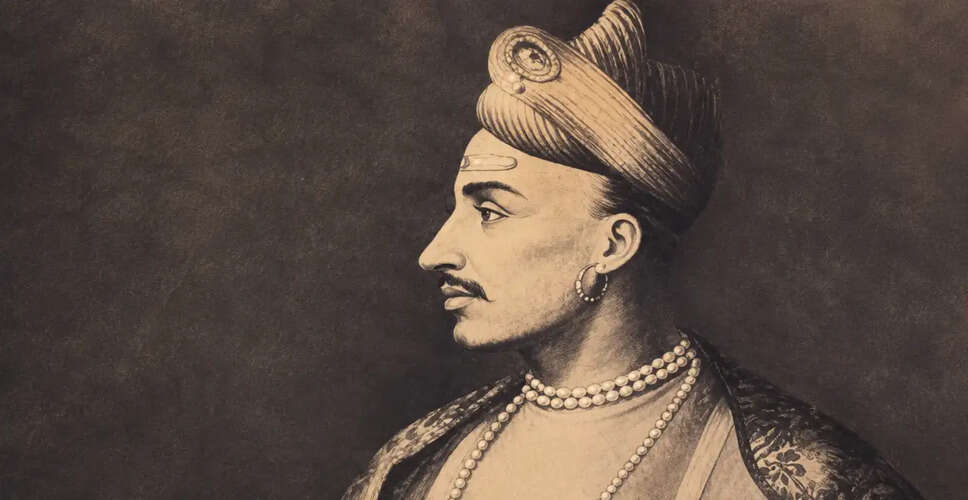
In just one year, a young boy faced unimaginable losses. In January 1761, his elder brother, who was set to inherit the most powerful position in the land, was killed during the battle at Panipat. His uncle, who led the army, also perished in that tragic event. Shortly after, his father, the reigning Peshwa, succumbed to grief and died within months. Thus, in mid-1761, a sixteen-year-old named Madhavrao found himself at the helm of a Maratha empire that had just endured its most devastating defeat. The fact that he managed to rebuild it over the next eleven years is nothing short of extraordinary. History would later reveal that his untimely death would impact the Marathas even more severely than the loss at Panipat.
The Challenge of Leadership
The Empire He Was Handed
To grasp the enormity of Madhavrao's challenge, one must first understand the devastation. On January 14, 1761, Ahmad Shah Abdali's forces annihilated a significant Maratha army on the plains north of Delhi. Tens of thousands lost their lives that day, including Madhavrao's brother Vishwasrao and his uncle Sadashivrao Bhau, a distinguished commander. The empire, which had once extended its influence nearly to the Khyber Pass, was left severely weakened, its treasury depleted, and its authority over local chieftains in jeopardy. Madhavrao's father, Peshwa Nanasaheb, overwhelmed by sorrow, passed away that June, leaving a teenager to navigate through the ruins.
Family Rivalry
The Uncle Who Wanted His Throne
His initial adversary was not an external foe but rather his own uncle, Raghunathrao, who harbored ambitions for the Peshwa's position. Acting as regent, Raghunathrao quickly became a rival. Their conflict escalated into open warfare, and at one point, Madhavrao faced defeat and was compelled to submit. Many would have faltered, but Madhavrao, with patience and strategic thinking, gradually undermined his uncle's support and regained control of the state. He understood that securing his own household was essential before he could reclaim the empire.
The Maratha Revival
The Maratha Resurrection
What followed is referred to by historians as the Maratha Resurrection, largely attributed to Madhavrao's efforts. He restored financial stability and reformed the administration, earning a reputation for his strict sense of justice. In 1763, he defeated the Nizam of Hyderabad at Rakshasbhuvan and engaged in three challenging campaigns against Hyder Ali of Mysore, ultimately forcing him to negotiate. Most notably, he dispatched his forces north under the capable Mahadji Shinde, recapturing Delhi in 1771 and reinstating the Mughal emperor Shah Alam II as a Maratha vassal. A decade after the catastrophic battle of Panipat, the Marathas regained their dominance over Delhi, effectively reversing the earlier disaster.
A Tragic End
The King Of Diseases
However, Madhavrao's health deteriorated. In 1770, he contracted tuberculosis, known at the time as rajayakshma, or the king of diseases, for which there was no remedy. His health waned during military campaigns, and he eventually retreated to the Ganesh temple at Theur, near Pune, where he passed away on November 18, 1772, at the young age of twenty-seven. He and his wife Ramabai had no children, and during his cremation, she chose to join him in death by walking into his funeral pyre as a sati. Thousands from Pune gathered to mourn a ruler who had barely reached adulthood.
The Impact of His Death
Why His Death Cut Deeper Than A Defeat
The paradox of Madhavrao's story lies in the aftermath of his death. While Panipat had claimed lives and armies, those could be replaced, and Madhavrao had successfully done so. His passing, however, removed the one irreplaceable element: Madhavrao himself. Within a year, his younger brother and successor, Narayanrao, was assassinated in a palace conspiracy involving their uncle Raghunathrao. This led to intrigue, factionalism, and civil unrest, paving the way for British intervention. The loss at Panipat was a battle; the death at Theur stripped the Marathas of the steady leadership that proved a battle could be survived.
A Lasting Memorial
What The River Still Marks
A modest stone memorial still stands by the river at Theur, a quiet tribute to a man who deserved a longer life and greater recognition. Madhavrao took charge of a crumbling empire at sixteen and restored it by twenty-seven, only to witness its decline almost immediately after his departure. The Marathas would continue to fight for another sixty years, but never again with such assured leadership. It is in the disparity between what Madhavrao achieved and what his successors squandered that a British historian later concluded that the most devastating blow to the Marathas was not a lost battle, but the illness that claimed a young man at a temple near Pune.